
From Niger’s uranium and Botswana’s diamonds to African cinema, climate finance and demands for Security Council reform, a striking theme ran through New York during UNGA week: Africa wants a greater say over its resources, its capital and the institutions that shape its future.
NEW YORK | For more than half a century, uranium extracted from Niger helped light European cities. Back home, millions of Nigeriens still live without electricity.
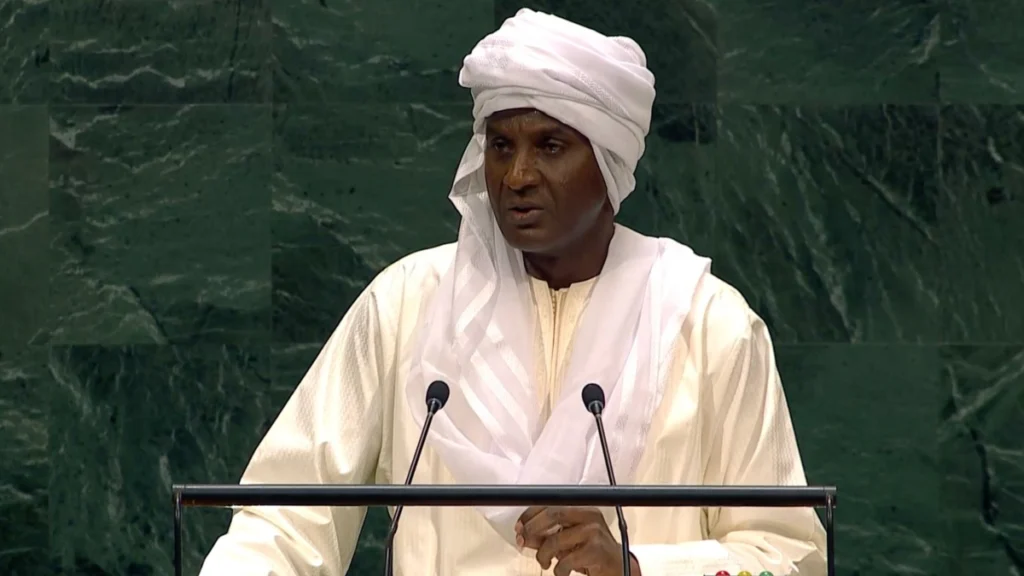
When Niger’s Prime Minister Ali Mahaman Lamine Zeine stood before the United Nations General Assembly in New York, he chose that contradiction to make his point.
“Uranium, this miraculous substance, Niger’s uranium, has lit the cities of Europe, while our cities have remained in darkness,” he told delegates.
“That injustice is now over.”
Niger took state control of uranium producer SOMAÏR in 2025, following an increasingly bitter dispute with France’s Orano, and has said it intends to sell its uranium on international markets. Zeine told the General Assembly that revenues from the country’s resources should instead help finance electrification, agriculture, water, education, health and security at home.
The politics surrounding Niger’s military government, and its rupture with France, remain deeply contested. The question contained within Zeine’s intervention is harder to dismiss.
Who should capture the value created by Africa’s resources?
It was a question that followed leaders across New York during the 81st United Nations General Assembly and Climate Week.
Sometimes it concerned what comes out of the ground. Elsewhere it was about the cost of borrowing, the structure of the Security Council, ownership of African films, climate finance or the trade routes connecting Africa and the Caribbean.
The subjects were different. The frustration – around the consistent unjust terms – underneath them was often familiar.
For decades, Africa has been encouraged to attract investment, increase exports and integrate further into the global economy. What could be heard in New York this year was a more pointed conversation about what happens after the investment arrives, where value accumulates, and how much influence African countries have over the systems governing it.
Beyond extraction
Niger was far from alone.
Sierra Leone’s President Julius Maada Bio used his UNGA address to focus on the minerals required for the global energy transition.
“The green transition must not reproduce the extractive terms of the past,” Bio said.
His argument was that processing, technology transfer and manufacturing should happen closer to the source of the minerals, creating industries and skilled employment rather than repeating the familiar cycle in which raw commodities leave the continent and return as more valuable finished products.
It is an increasingly important debate.
Copper, cobalt, lithium, graphite and other critical minerals will be needed in vast quantities as the global economy electrifies. African countries hold significant deposits of many of them. The transition creates an enormous commercial opportunity, but it also raises the prospect of an old economic relationship being reproduced in a new industry.
Namibian President Netumbo Nandi-Ndaitwah put it more directly while speaking with investors in New York. Companies interested in Namibia’s critical minerals, she said, should be prepared to process them there.
“You have to put up a processing plant in our country,” she said.
Botswana arrived in New York with a related argument about an industry it knows intimately.
Diamonds helped transform Botswana after independence, funding roads, hospitals, schools and public services. Yet the country moves to now participate in the parts of the diamond economy that happen after a stone leaves the mine.
During Botswana’s Diamond Jubilee celebrations in New York, Minerals and Energy Minister Bogolo Joy Kenewendo spoke about expanding the country’s participation in cutting and polishing, technology, traceability, design, marketing and ownership.
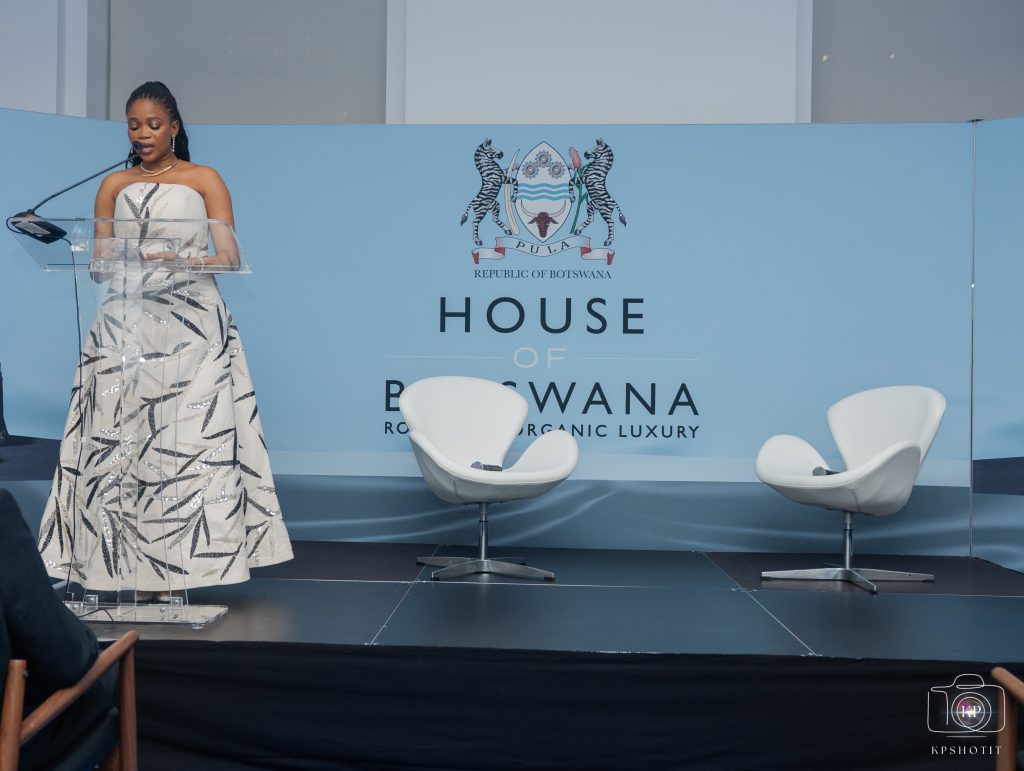
“Botswana is no longer content simply to be the place where diamonds are mined,” Kenewendo said. “We want to help shape how diamonds are understood, valued, designed, marketed and experienced around the world.”
Her choice of words captured something that was present throughout the week. The conversation is moving beyond extraction. The ambition is to own more of what happens next.
Then there is the price of money
That ambition runs into another reality. Building processing facilities, power generation, transport networks and new industries requires enormous amounts of capital.
For many developing economies, that capital is expensive.
Kenyan President William Ruto used his UNGA appearance to connect Africa’s development ambitions with the structure of global finance.
He pointed to the pools of capital that already exist within Africa, including pension funds, insurers, sovereign wealth funds and banks, and argued that far more African capital should be mobilised into productive investment. His criticism did not stop there.
Developing economies continue to face borrowing costs that can consume money otherwise available for health, education, infrastructure and climate adaptation. Ruto’s response was to connect debt to representation.
“If Africa has a stake in the burden of debt,” he said, “Africa must have a share in the decisions on how that debt is acquired.”
That discussion was also taking place several blocks away from the General Assembly.
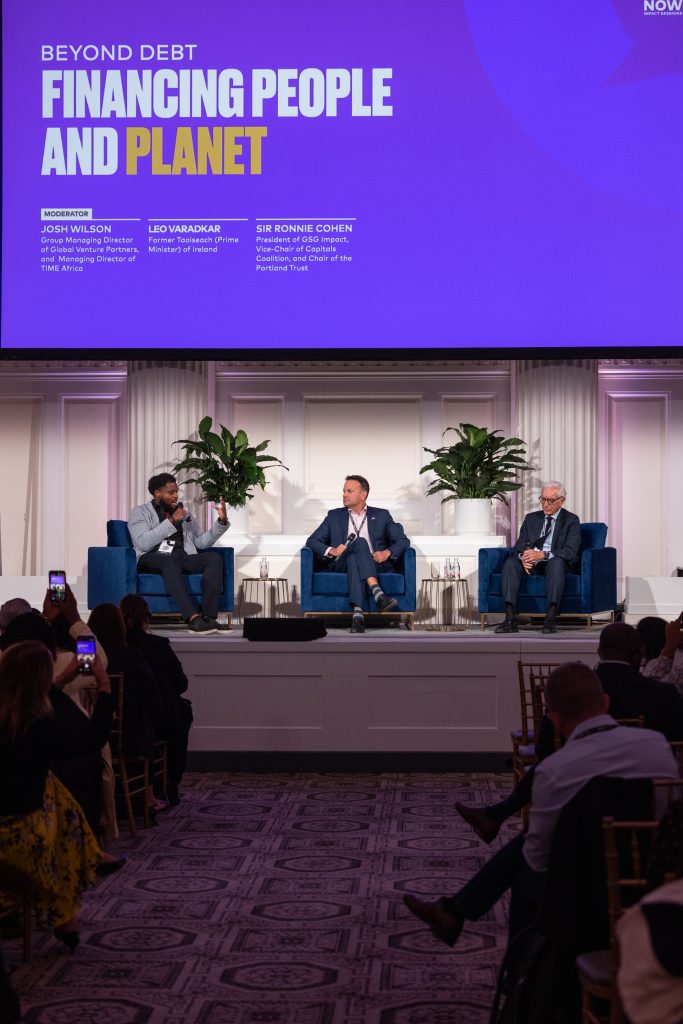
At Global Citizen NOW: Impact Sessions on September 23, TIME Africa Managing Director Josh Wilson moderated a conversation with former Irish Taoiseach Leo Varadkar and impact investing pioneer Sir Ronald Cohen focused on financing and debt in emerging economies.
Global Citizen framed this year’s Impact Sessions around a practical question: how can ambition be converted into measurable progress when international cooperation is under growing pressure? The organisation says the gathering produced $208.8 million in financial commitments.
The debt discussion exposed one of the difficulties behind much of the week’s rhetoric.
A climate shock can force a government to borrow at precisely the moment its economy is under the greatest pressure. Debt service then competes with the spending required to rebuild, adapt and develop. For countries already paying a premium to access international capital, the cycle can become punishing.
That leaves emerging economies trying to finance several transformations at once. They need electricity, transport, housing, digital infrastructure and jobs. They are also expected to adapt to a changing climate and participate in an energy transition that requires further investment.
The question is not only whether money is available. The terms on which it arrives can determine what a country is able to build, how much fiscal space remains afterwards and, eventually, who owns the resulting assets.
The argument reaches the Security Council
There is another form of ownership that cannot be measured on a balance sheet.
Africa has 54 member states at the United Nations. It still has no permanent member of the Security Council.
The contradiction was repeatedly raised during UNGA.
The President of the General Assembly, Khalilur Rahman, used his opening address to say Africa could no longer be expected to wait indefinitely for greater representation.
“Africa needs to be at the table, not on the menu,” he said.
African leaders picked up the argument from there.
Ghanaian President John Dramani Mahama questioned how the international system could continue to speak about sovereign equality while maintaining institutions designed around the geopolitical realities that followed the Second World War.
Nigeria also pressed the case for permanent African representation.
The African Union’s long-standing position calls for at least two permanent African seats and five non-permanent seats on the Security Council, with permanent members receiving the same privileges as existing members for as long as the veto remains.
For African governments, the issue has become difficult to separate from the other frustrations expressed in New York.
The continent is frequently the subject of Security Council deliberations. African states contribute to peacekeeping and are directly affected by decisions taken by the Council. Yet no African government holds permanent membership in the institution.
The same imbalance that leaders describe in trade and finance therefore appears, in another form, in global governance.
Who writes the rules, who sits at the table and who lives with the consequences?
The ownership debate has reached culture too
One of the more interesting things about UNGA week was how far beyond government this conversation had spread.
At Unstoppable Africa 2026, the flagship gathering of the Global Africa Business Initiative, the question appeared in an industry far removed from uranium mines or multilateral finance: film.
TIME Africa participated as a media partner at the gathering.
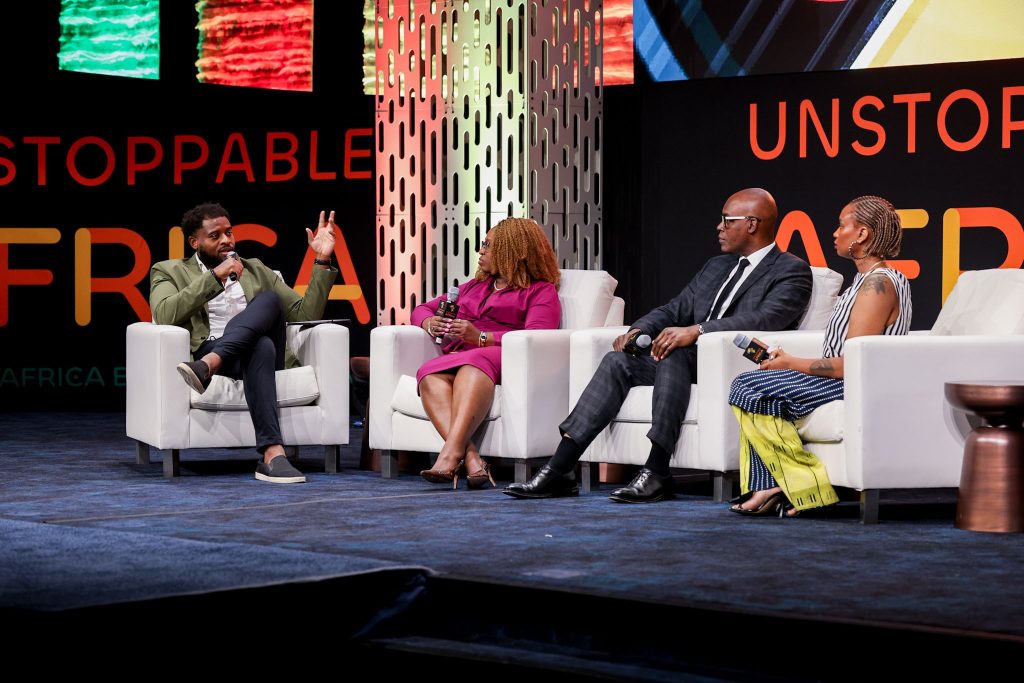
During Streaming Out, Financing In: Funding Africa’s Next Screen Stories, Wilson moderated a conversation with Toronto International Film Festival CEO Cameron Bailey, Next Narrative Africa founder Akunna Cook, filmmaker and AFROBUBBLEGUM co-founder Wanuri Kahiu and Pan-African Film Fund CEO Lavaille Lavette. The official programme placed the discussion within a wider examination of Africa’s creative industries moving “from culture to capital.”
African film is at an interesting point.
The enthusiasm that brought major international streaming platforms into African originals has cooled in parts of the market. At the same time, new sources of Africa-focused capital are emerging, including Afreximbank’s $1 billion Africa Film Fund and the Next Narrative Africa Fund.
The panel’s discussion went beyond finding replacement money.
For years, the international conversation around African cinema has focused on whether African stories can travel. There is now ample evidence that audiences will cross borders, cultures and languages for stories that connect with them.
The commercial question comes afterwards.
Who owns the intellectual property? Who controls distribution? Where are the production companies headquartered? Who participates in the upside when a film or series becomes a global success?
Bailey pointed to South Korea, where sustained investment in filmmakers, production and cultural infrastructure helped build an industry capable of competing at the highest levels of international cinema.
The comparison is useful because Korea’s cultural influence was not built around one breakout film. An ecosystem came first.
Africa’s filmmakers now face their own version of a question being asked elsewhere on the continent. It is one thing to produce something the world wants. It is another to own the infrastructure around it.
Africa and the Caribbean look across the Atlantic
Perhaps no leader in New York connected these debates as naturally as Barbados Prime Minister Mia Amor Mottley.
Mottley has spent years challenging the international financial architecture through the Bridgetown Initiative, particularly the terms on which climate-vulnerable developing countries borrow.
During UNGA week, she widened that argument to the economic relationship between Africa and the Caribbean.
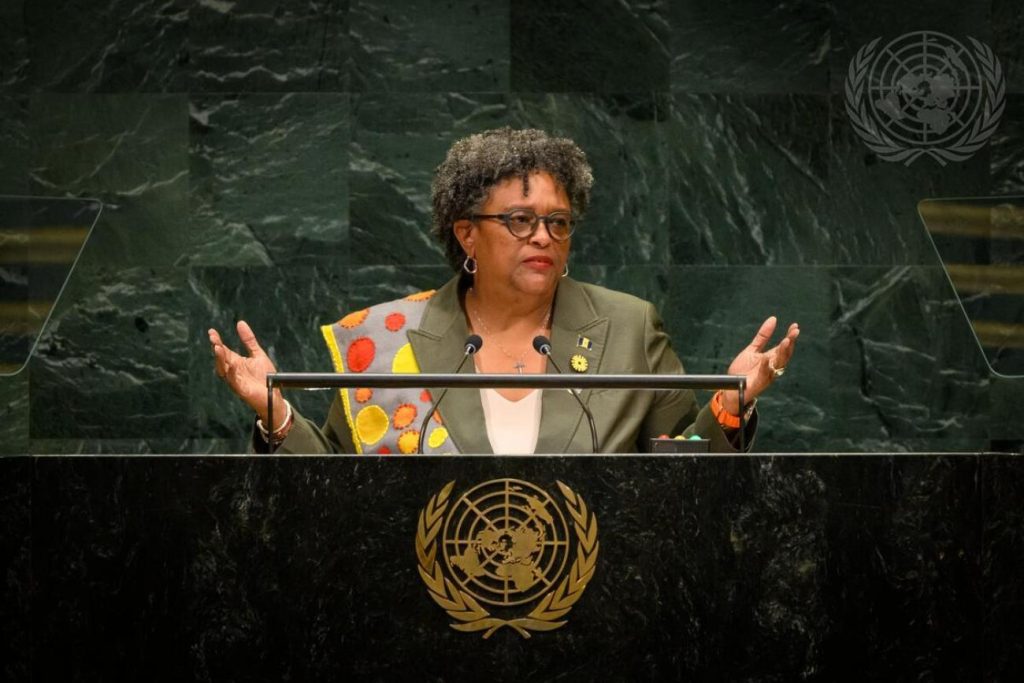
Photo: © UN Photo
Speaking alongside Afreximbank President George Elombi, Mottley called for the two regions to build their own trade routes and financial relationships rather than continually looking north for capital and commercial infrastructure.
“We have been indoctrinated to look north before we look east or west,” she said.
The geography supports her argument.
Mottley pointed out that Barbados is around six hours by air from Dakar, seven from Accra and roughly seven and a half from Lagos. Yet trade, banking relationships and investment links across the Atlantic remain underdeveloped.
Her concern was as much psychological as logistical.
Africa and the Caribbean, she argued, need institutions they trust, their own commercial bridges and a willingness to invest in one another. In another discussion during the week, she warned against countries becoming “tenants in their own economies.”
It is difficult to find a better description of the wider debate that unfolded in New York.
Cuba and a Caribbean under pressure
Mottley’s General Assembly speech also reflected the geopolitical pressures facing the Caribbean.
She called for the region to remain a “zone of peace” and warned against it becoming a theatre for confrontation or unilateral force. She addressed Haiti’s continuing security crisis and the difficult path towards political renewal there.
Cuba occupied a prominent place in her remarks.
Mottley spoke about the humanitarian pressures facing Cubans as deaths mount on the island and repeated Barbados’s opposition to the US embargo and other unilateral coercive measures.
The intervention came during an unusually charged UNGA for US-Cuba relations. President Donald Trump used his own General Assembly address to intensify his criticism of Cuba’s government, while the Cuban delegation walked out during his speech.
Days later, Cuban Foreign Minister Bruno Rodríguez told the General Assembly that Havana remained open to dialogue and to commercial relationships with American companies, even as he rejected Washington’s approach towards the island.
Mottley’s position is not identical to Cuba’s, nor are CARICOM states uniform in their approach to every regional issue. Her broader point was about preserving the Caribbean’s ability to determine its own future amid intensifying geopolitical competition.
Once again, the language returns to agency.
From culture to capital
That phrase was visible across Unstoppable Africa too.
More than 3,000 participants, including heads of state, executives, investors, entrepreneurs and UN officials, were expected at this year’s gathering, with conversations spanning trade, energy, technology, sport and the creative economy.
What was notable was how frequently those discussions had moved beyond the old pitch for Africa as a destination for investment.
There is still a position for foreign capital. There is still a position for international partnerships. No serious account of Africa’s financing requirements suggests otherwise. But a more mature conversation is emerging around what those partnerships should produce.
Does investment build African companies?
Does financing create assets that countries can sustain?
Does the energy transition produce African manufacturing?
Do African pension funds participate in African growth?
Does a successful African film create African-owned intellectual property?
Does a mineral deposit create an industrial cluster around it?
These are harder questions than how much money was pledged at a conference.
They are also more consequential.
Who owns the future?
There is no single African view of the world.
Fifty-four countries arrived in New York with different governments, alliances, economies and priorities. Their leaders disagree on plenty. The Caribbean is no more monolithic.
Nor does demanding greater ownership answer the difficult policy questions that follow. Processing minerals locally still has to be commercially viable. Debt still has to be repaid. Film funds still need distribution capable of generating returns. Security Council reform still requires agreement among states with little incentive to surrender power.
Yet after a week of speeches, panels, dinners and negotiations across Manhattan, certain questions were difficult to escape.
Why should minerals needed for the next industrial revolution leave Africa with little processing taking place there?
Why should countries exposed to climate shocks pay heavily for the capital required to recover from them?
Why should African filmmakers reach global audiences without building businesses that retain more of the intellectual property behind their work?
Why should 54 African states remain without permanent representation on the world’s most powerful security body?
And why, as Mottley asked in another context, should countries remain tenants in economies built around their own people and resources?
Niger’s answer concerns uranium.
Botswana’s concerns diamonds.
Namibia wants processing.
Sierra Leone wants the green transition to produce African industry.
African filmmakers are talking about IP and distribution.
Ruto is talking about capital.
Mahama and Nigeria are talking about representation.
Mottley is talking about financial architecture and building new economic bridges across the Atlantic.
Different countries. Different industries. Different politics.
Yet a common idea was visible in New York.
For much of the past several decades, the question posed to Africa has been how the continent can participate more fully in the global economy.
The question Africa increasingly appears to be asking back is different.
If we are participating, how much of it do we own?