

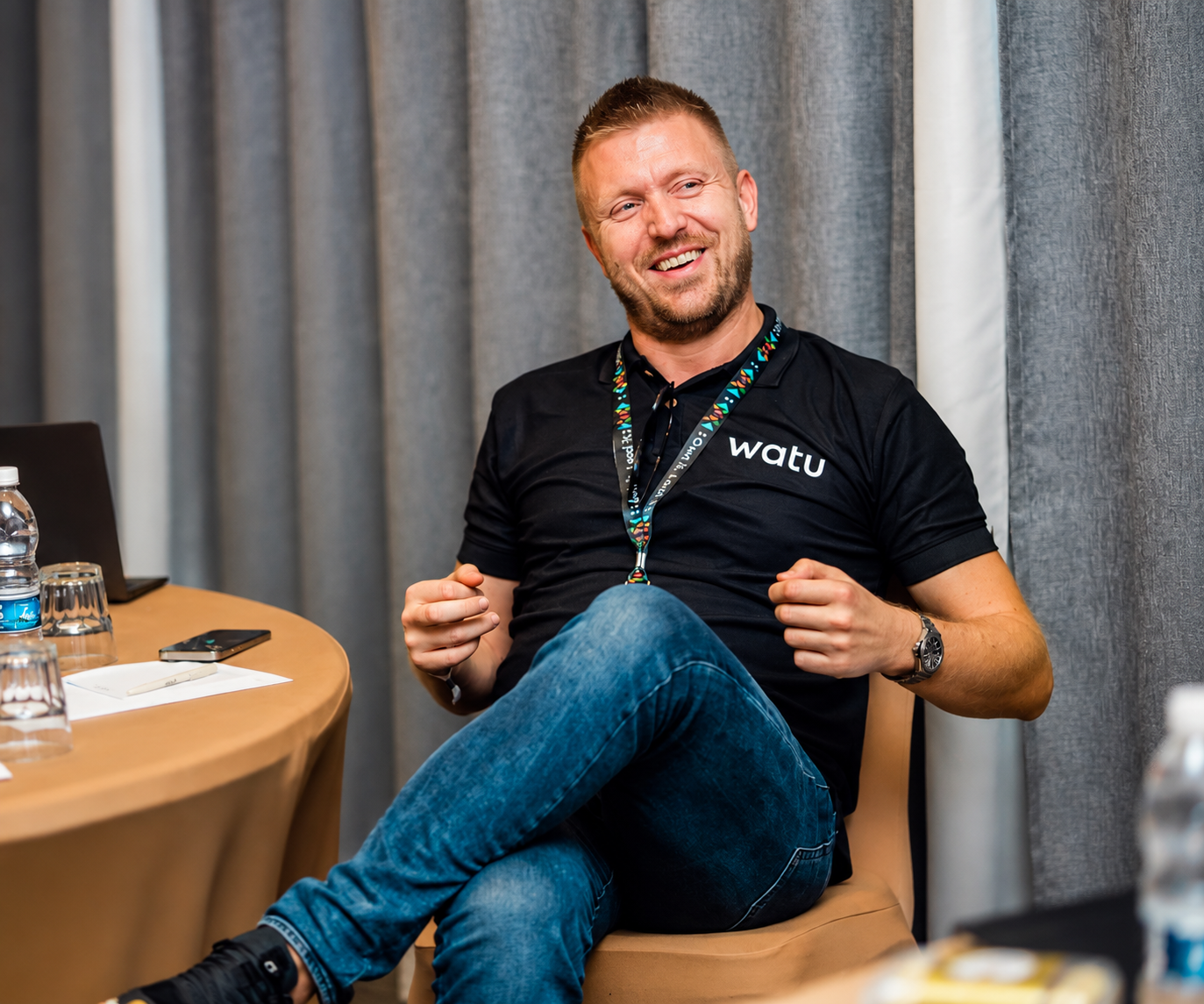
In 2014, Andris Kaneps—a European hedge fund manager and lawyer by training—landed in Mombasa, Kenya, at the invitation of his business partner. What he saw in East Africa changed his view of Microfinance, in that credit, structured well, could build livelihoods.
The broader microfinance landscape in Kenya at the time was dominated by traditional, group-lending models that had been imported from 1980s South Asia. These legacy setups relied heavily on physical cash, tedious handwriting, and endless paper ledgers. Paradoxically, this analogue approach existed right alongside a hyper-modern telecommunications landscape powered by M-Pesa, the world-leading mobile money network.
Kaneps recognized an immense structural gap between these two realities. The traditional banking infrastructure was systematically failing the working class. Mainstream lenders assessed creditworthiness through: collateral, land title deeds, vehicle logbooks and established bank accounts. An applicant without a credit history had no way in. To a traditional banker, an applicant without a credit history was presumed to be a default risk.
Kaneps saw the world differently, grounded in a fundamental philosophical conviction: “Most people are good, most people want to do the right thing”.
The eureka moment that birthed Watu came during Kaneps’s daily commutes in coastal Kenya. Chatting with local tuk-tuk (three-wheeler) and boda-boda (motorcycle taxi) drivers, he discovered a quiet economic tragedy. Almost none of the drivers owned their vehicles. They were locked in a cycle of perpetual rent—paying daily fees to absentee owners for three, five, or more years, without ever acquiring a single percentage of equity in the very tool that generated their daily bread.
Sitting down, Kaneps ran a simple calculation. If an independent company could lend directly to a driver at a rate equal to their existing daily rental cost, that driver could fully own their vehicle in 12 to 18 months.
Driven by this insight, Watu was born.

Built in the field.
Starting in 2015 out of a small apartment with just four people, the founding team operated in the purest startup mode imaginable. They manually input loans, hand-sent text messages, and personally met every client in the field.
When Watu launched its core mobility product in 2017, the proposition was so unfamiliar that prospective clients routinely suspected a scam. Unbanked drivers, accustomed to endless bureaucratic rejection, couldn’t fathom that they could walk into an office without title deeds and drive away with a brand-new, income-generating asset in under two hours. Clients would arrive accompanied by skepticism-laden friends just to verify that the offer was real.
The underlying bet was never on paper collateral, it was on human nature and the inherent drive for economic independence. Watu built its operational systems around empathy rather than punishment.
When unexpected life events occurred, or when the COVID-19 pandemic froze global commerce, Watu offered fee-free asset storage and credit holidays rather than predatory foreclosures. Most borrowers resumed repayments as soon as they could return to work. By treating drivers as trustworthy entrepreneurs, Watu unlocked a massive, previously untapped market.
As the mobility asset model scaled, Watu recognized that the barrier to financial inclusion extended far beyond physical vehicles. Across Africa, the majority of the working population operates within the informal economy—”hustling” across diverse, daily micro-projects. In this environment, access to a smartphone isn’t a luxury, but a fundamental productive asset linked directly to income, education, and market access.
Building on its core philosophy, Watu expanded into device financing (Simu), by deploying smart technology, such as phone-locking mechanisms and streamlined asset financing. This expansion created a dramatic second inflection point in the company’s trajectory. Whether providing a motorcycle to a delivery driver or a smartphone to a digital entrepreneur, the underlying thesis remained identical: finance productive assets that immediately boost the borrower’s daily earning capacity.
Furthermore, Watu realized that by submitting borrower repayment histories to credit reference bureaus, they were providing clients with their very first formal credit footprint. A successful Watu loan served as a bridge, allowing previously invisible individuals to enter the formal financial ecosystem and access broader banking services.
By 2020, Watu’s rapid, highly disciplined expansion caught the attention of Paras Patel, a seasoned Kenyan venture capitalist and entrepreneur who stepped in to become Co-CEO. Paras had evaluated thousands of startups across the continent, but Watu immediately stood out. The company had achieved massive scale organically without relying on hyper-dilutive equity raises or imposing ill-fitting Western models onto African markets.
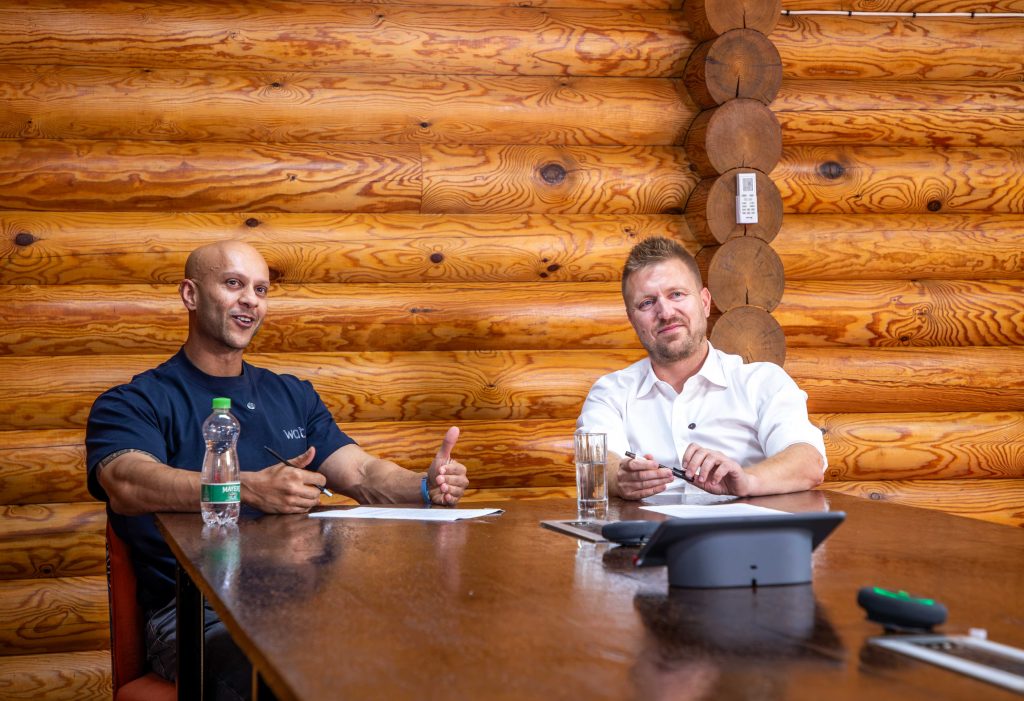
“A lot of successful Western businesses have tried to bring models that work well elsewhere into African markets, but those models do not always translate directly,” notes Paras. “What was different about Andris was that the product was built in the field, shaped by the realities of the customers and markets we serve. That ethos of developing and refining products on the ground remains very much part of how we operate today.”
This commitment to field-level realities is embedded deep within Watu’s corporate DNA. Management teams are explicitly instructed to avoid designing strategy behind closed boardroom doors. Instead, they spend their days on the ground, engaging directly with operators, listening to feedback, and adapting to real-world friction.
“The most efficient day that I can have is spent with our customers or potential customers,” Kaneps explains. “You will hear compliments and sometimes you will hear hard criticism, but that’s how you keep connected and keep improving.”
This relentlessly customer-centric model proved that social impact and commercial viability are mutually reinforcing. Rather than relying on external subsidies, Watu proved that building a sustainable, profitable business is the only true way to deliver long-term, scalable impact across emerging markets.
What began as a localized operation in coastal Kenya has transformed into a global powerhouse operating across eight African countries and two Latin American nations (Brazil and Mexico).
This rapid international expansion highlights a powerful truth, that the appeal of Watu’s product ecosystem is universal. The fundamental friction Watu solves—hard-working people in the informal economy earning low daily incomes, lacking traditional credit histories or physical collateral, yet needing productive assets to survive and grow—is not a unique local challenge. It is a universal reality shared by billions of unbanked individuals across frontier and emerging markets globally.
By deploying smart technology, such as phone-locking mechanisms and streamlined asset financing, Watu provides a standardized solution to a problem that exists in virtually every developing market on Earth.
“Most of the people on this planet face the same problem which our first customers were facing,” Kaneps notes. “We are potentially talking about billions of people who could not access this sort of credit. If whatever we do works in Kenya, why cannot it work in Tanzania, Sierra Leone, Nigeria, or Brazil?”
The company’s cultural foundation is anchored in the Swahili word Watu, meaning “people”. This ethos manifests in what the leadership terms the “Watu Family”—a non-negotiable commitment to hiring empathetic, ethical people who prioritize human dignity above short-term profit extraction.
“We are looking for good people,” says Kaneps. “You must be empathetic, you must be truly thinking about what it is that we are creating. We need to remember that people are the biggest value.”
Looking forward, Watu—or “Watu 2.0″—is setting its sights on broader horizons, expanding into small business financing and pioneering green transition initiatives by financing electric vehicles (EVs) across urban and rural corridors. The company’s strategic metric has shifted from onboarding individual clients to driving measurable GDP growth across entire regions.
“Even though we are quite a global organization, we still have this startup mentality,” Paras reflects. “I often joke that we’re often naive enough to believe that we can really change everything and make a change on a GDP level.”
For Kaneps, this journey reflects a fundamental evolution in how the company measures its success, shifting the metric from individual transactions to macroeconomic empowerment.
“From four people initially in coastal Kenya, today, when we think about Watu, we think in categories of how this product will benefit the GDP of a country, of a continent,” Kaneps reflects. “Our thinking has changed from onboarding 100 clients to how our next product can contribute to the GDP growth of an entire region.”
With a proven track record, unyielding ambition, and a vast world of opportunity ahead, that grand vision is well within reach—a milestone that Kaneps admits will make him personally, profoundly proud.
In turning trust into economic power, Watu has built much more than a global financial player, it has sparked a movement that proves when you invest in people, entire nations can rise alongside them.