
For decades, Nigeria, Africa’s largest oil producer, has been locked into an unsustainable development model that focuses predominantly on resource extraction: exporting crude oil while importing most of its refined petroleum products at higher prices. But now, in a notable shift in trade patterns, Nigeria has emerged as a significant exporter of gasoline and jet fuel, not only to neighboring African nations but also to crucial markets in Europe and North America. The country is meeting growing regional demand, as well as helping to alleviate global supply disruptions and shortages resulting from US President Donald Trump’s war of choice against Iran.
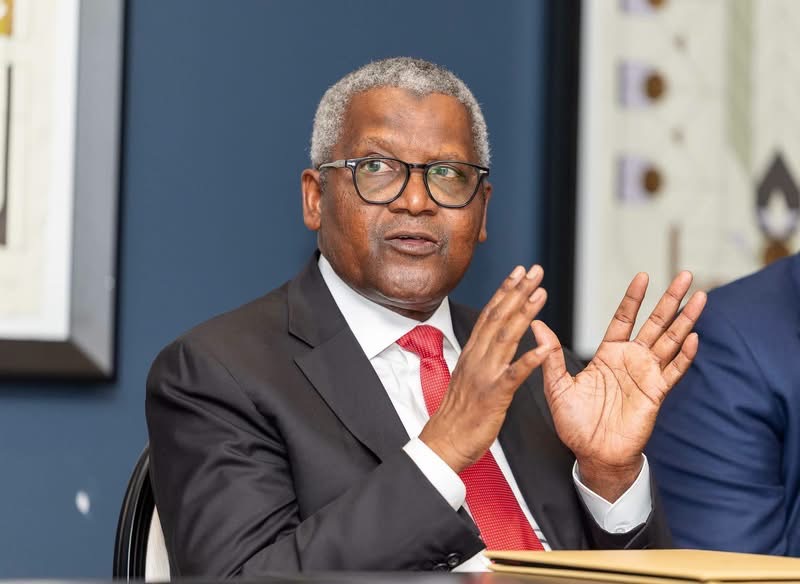
This shift underscores the transformative role homegrown entrepreneurs can play in reshaping Africa’s economic fortune. None has led this process more effectively than Aliko Dangote, president of the Dangote Group, who has established himself as the most consequential Pan-African industrialist. He is leading an African industrial renaissance by developing globally competitive manufacturing and petrochemical industries across vital strategic sectors such as cement, fertilizer, and refined petroleum.
The Dangote Refinery – one of the world’s largest single-train refineries has repositioned Nigeria as a prominent player in the international hydrocarbon market, beyond the nation’s traditional role as a crude-oil supplier. This shift toward commodity-based industrialization, in which African nations use their commodity wealth as the foundation for structural transformation, has advanced Nigeria along the global value chain. This has alleviated the substantial deadweight losses that have historically exerted considerable pressure on Nigeria’s foreign exchange reserves, weakened its trade balance, and systematically exported value creation, ultimately stunting growth and negatively shaping the country’s risk profile.
Regrettably, Nigeria’s economic paradox, where a major oil-producing nation relies on foreign refineries to meet a substantial share of its domestic energy needs is common across Africa, highlighting the enduring legacy of the colonial development model centered on resource extraction. For much of its modern economic history, Africa has been relegated to a role in the international division of labor akin to its colonial-era position: an exporter of natural resources and an importer of manufactured goods.
This historical role has confined Africa to the lower rungs of global value chains, making it the world’s most commodity-dependent region, with a median commodity export share of 90%. This figure is slightly below Nigeria’s 96%, but remains well above the 60% threshold that designates a nation as commodity-dependent. According to UNCTAD, a country is classified as commodity-dependent when more than 60% of its merchandise exports consist of commodities.
Classical economic theory posited that nations should specialize according to their comparative advantage – a core principle in international economics that defines a country’s capacity to produce a specific good or service at a lower opportunity cost than its counterparts. However, Africa’s continued reliance on commodities shows that applying this concept has limited the region’s economies to static comparative advantages rooted in pre-existing factor endowments, such as natural resources and extensive land.
Dangote’s success in advancing his business up the industrial development ladder and within global value chains challenges the prevailing notion that Africa should remain permanently specialized in commodities because that is where its comparative advantage lies. That notion persists even as the growing diffusion of knowledge and technology reshapes the international division of labor and production structures elsewhere. As the extraordinary rise of East Asian economies demonstrates, comparative advantage need not be static, it can evolve as economies acquire productive capabilities.

By challenging the notion of a fixed production hierarchy in Africa, Dangote’s success shows that countries across the region can emulate East Asia, which used dynamic comparative advantages to increase its share of global growth, narrow the income gap with advanced economies, and relegate the developed-versus-developing-countries dichotomy to a relic of the colonial history. This development marks a new paradigm in which African nations shift from a static endowment defined by natural resources or historical circumstances to a dynamic comparative advantage. The latter will be driven by Africa’s ability to leverage not only natural resources but also investment, innovation, technology, and industrial capacity to build new competitive strengths for greater value-added production and export diversification.
Transitioning from an inherited comparative advantage rooted in resource extraction to a cultivated competitive advantage based on Africa’s productive capabilities will accelerate the region’s economic development. Historically, development has not merely been about increasing the output of existing products; rather, it involves reallocating labor and capital from lower-productivity activities toward increasingly-productive ones with higher potential for economic growth.
This may signal a substantial shift in Africa’s strategic approach to economic development. It could fundamentally reshape regional economies and ultimately influence global growth and trade patterns, especially since Africa remains one of the world’s most resource-rich regions and has the fastest growing population. As an increasing number of entrepreneurs and investors leverage commodity-based industrialization to convert resource wealth into manufacturing capacity, translate that capacity into regional exports, and develop regional markets into globally competitive industrial hubs, the continent will secure a larger share of the value generated through resource processing and expand its share of global trade.
The IMF estimates that the Dangote refinery will expand employment opportunities, help moderate cost-push inflation, improve Nigeria’s current account, support technology transfer and productivity growth, and boost the nation’s GDP. Additionally, IMF projections indicate that the refinery will boost non-oil GDP through direct manufacturing activities and spillovers into other economic sectors.
In effect, Dangote’s large industries generate powerful multiplier effects across the economy, creating extensive supplier networks, stimulating demand for local goods and services, and encouraging investment in logistics, engineering, finance, transportation, and technology. Moreover, petrochemical products are important inputs for industries such as plastics, packaging, manufacturing, and construction, and may act as growth catalysts. These spillover effects support the gradual development of industrial ecosystems critical to endogenous growth, beyond isolated business successes.
The notable advantages of shifting from exporting low-value-added crude oil to higher-value-added petroleum products further underscore the importance of expanding the commodity-based industrialization model to other sectors, including pharmaceuticals, agribusiness, and mining, where growth and structural transformation potential are also significant. For instance, in the mining sector, iron ore valued at US$2.8 trillion at the mine gate becomes US$25.4 trillion after processing into steel.
Expanding commodity-based industrialization will enable Africa to harness innovation and technology to accelerate structural change, broaden fiscal space, improve its trade balance, and sustainably grow its foreign exchange reserves. This, in turn, will enhance the business and operating environment of a region that has historically faced challenges such as foreign exchange shortages and persistent exchange-rate pressures. Beyond improving Africa’s overall risk profile, these structural changes will bolster its resilience and global bargaining power, expand employment opportunities, and transform demographic potential into demographic dividends.
Dangote’s achievement is also a testament to his resilience and perseverance. Building globally competitive industries on the continent has required overcoming enormous obstacles, including unreliable infrastructure, regulatory uncertainty, financing constraints, and logistical hurdles.The African Continental Free Trade Area (AfCFTA) offers an unprecedented opportunity to harness economies of scale and build continental value chains that can support globally competitive industries. To fully realize the growth potential of commodity-based industrialization, regional governments must deepen integration and foster an environment conducive to entrepreneurship and innovation by investing in higher-quality education and vocational training, efficient institutions and regulations, access to affordable long-term financing, and reliable infrastructure.
This month’s IPO of Dangote Refinery, which has propelled Dangote to a new record of personal wealth, is a noteworthy milestone in Africa’s quest for economic sovereignty and inclusive development. It turns the continent’s savings into productive capital and links Africa’s industrial progress to the broader democratization of wealth. Dangote, who has consistently urged Africans to be courageous and lead the charge in developing their continent, described the public share offering as historic, calling it a “people’s IPO”.
Dangote’s success is often measured by the magnitude of his wealth, which, according to Forbes, has grown by more than 500% since 2020, making him Africa’s wealthiest individual since Mansa Musa. However, the most notable aspects of this accomplishment are the advances toward economic sovereignty and strategic autonomy, and the psychological shifts that make Africa’s transition to a genuinely post-colonial economic order increasingly tangible.
In his 1936 book The General Theory of Employment, Interest and Money, John Maynard Keynes wrote: “The difficulty lies, not in the new ideas, but in escaping from the old ones.” For Africa, the antiquated notion that has perpetuated cycles of intergenerational poverty and dependency is the historically-ingrained colonial development paradigm focused on resource extraction. Dangote’s extraordinary rise is more than a business success story. It is both an awakening moment and a blueprint for Africa to move out from under the shadow of colonialism toward a future defined by confidence, capability, and self-determined development.