
Seven-Up Bottling Company is carrying its legacy forward through people-first leadership, community investment, and disciplined transformation across its national business.
For 66 years, Seven-Up Bottling Company has grown alongside Nigeria, but its legacy extends beyond the beverages it produces or the nine plants it operates. Across generations, the company has invested in people, communities, customers and suppliers, building relationships that helped transform a single-plant operation into a national manufacturing and distribution network. As it enters its next phase, the same focus on people and communities is shaping how the company evolves.
The El Khalil family’s roots in Nigeria predate the company itself. In 1926, founder Mohammed El Khalil arrived in Nigeria, laying the foundations for the family’s long-term presence in the country. Seven- Up Bottling Company followed in 1960 and produced its first 7Up bottle on the day Nigeria gained independence. Its first sales team returned having sold only 14 crates, an early lesson in persistence. More than six decades later, that long-term mindset continues to shape how the company invests in Nigeria and the communities around its operations.
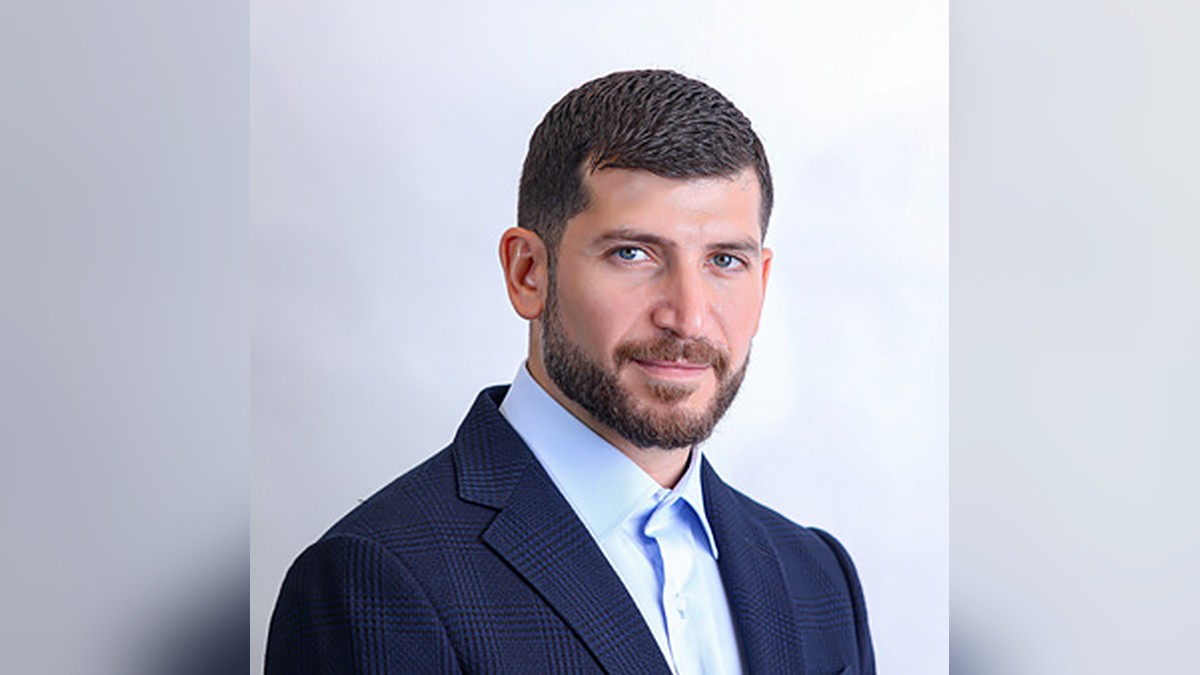
That continuity is now being carried forward by Managing Director and Chief Executive Officer Sari El Khalil, a third- generation leader of the family business. His career spans sales, manufacturing, operations, distribution, finance and transformation, alongside international beverage industry experience, including at PepsiCo. He returned to Nigeria in 2020 with a clear purpose: to help evolve the business for a new era of growth and transformation. In 2022, he established the company’s first transformation function, bringing greater focus to technology, smarter ways of working, better use of data and the culture needed to sustain change.
El Khalil sees transformation as a process of steady, cumulative progress. “Whatwe’re looking for is not a revolution, but an evolution, small changes that can make a lasting impact,” he says. He began his tenure with a listening tour across the company’s regions, holding town halls with plant employees and frontline sales teams to understand their realities and set a clearer direction. During those engagements, he introduced five strategic pillars: People First, Deep Customer Relationship, Product Leadership & Consumer Connection, Thirsty for Growth, and One SBC Family. The emphasis begins with people.
El Khalil maintains an open-door policy that allows employees to book time directly on his calendar. “My time is their time,” he says. That accessibility reflects a broader conviction that culture and performance are closely connected. “If you fix the culture, performance will follow,” he says. The philosophy is underpinned by values that have shaped the business over time: mutual trust and respect, commitment, ownership, teamwork, and a people-first mindset. Together, they connect the company’s transformation agenda to the people carrying it forward.
“Our people are the heart of our business. If you fix the culture, performance will follow.”
That commitment reaches beyond the workforce. For 16 years, Seven-Up Bottling Company has funded a full scholarship for one Nigerian admitted to Harvard Business School each year, with no contractual obligation for recipients to join the company afterwards. The intention is broader: to create opportunities that can contribute to Nigeria’s development. Community programs extend that approach through the youth-led Green Skills Schools Challenge, the Plastic Waste for Products initiative and projects supporting access to clean water and sanitation in host communities.
That philosophy also supports the company’s commercial evolution. Seven-Up Bottling Company uses detailed data to identify market gaps, strengthen route- to-market decisions and align production with local demand. “Data governs our decisions,” El Khalil says. Greater precision across its national network is intended to support capacity expansion, stronger distribution and access to underserved consumers while ensuring that growth remains responsive to the needs of a large and varied market. Its 2024/25 results provide further evidence of that long-term approach. Seven-Up Bottling Company reduced Scope 1 and 2 emissions by 10.9%, lowered its water-use ratio by 4% and integrated more than 30% recycled plastic into its packaging.
Local suppliers accounted for 91.9% of procurement, while social and community investment rose by 263% from the previous financial year. Half of its Category A suppliers have also undergone environmental, social and governance due diligence, strengthening responsibility across a highly localized supply base. Together, these measures connect responsible production and local sourcing with the company’s wider commitment to long-term value creation in Nigeria.
As Seven-Up Bottling Company looks ahead, its priorities are to expand capacity, strengthen distribution, develop people and capture underserved demand across Nigeria. Its next chapter, however, remains rooted in the relationships with employees, customers and communities that have sustained the business for 66 years. Growth and transformation are therefore extensions of that history rather than departures from it. El Khalil’s outlook captures the long- term perspective: “The opportunity is here,” he says. “But you have to have a long-term mindset.”

🌐 www.sevenup.org
✉️ communications@sevenup.org
LinkedIn: Seven Up Bottling Company