

Leading experts in law, technology, and finance give their view on a new dawn for Africa’s commercial interests
Ahead of this weekend’s G20 summit in Johannesburg, South Africa and more than ten years after former US President Barack Obama addressed the African Union in Addis Ababa, Ethiopia, the words from his speech are more relevant than ever:
“It is long past time to put aside old stereotypes of an Africa forever mired in poverty and conflict. The world must recognize Africa’s extraordinary progress. Today, Africa is one of the fastest-growing regions in the world. Africa’s middle class is projected to grow to more than one billion consumers. With hundreds of millions of mobile phones, surging access to the Internet, Africans are beginning to leapfrog old technologies into new prosperity. Africa is on the move, a new Africa is emerging.” Barack Obama, July 2015.
Now, leading experts in their fields of investment, law and fast-growing technologies of Decentralised Finance (DeFi) and SpaceTech address the challenges and the strides that the industry heads must make to continue developing into a continent of not just promise and potential, but one of opportunity and prosperity.
Josh Wilson: “Africa needs to attract capital that is catalytic.”

As leaders from all corners of the world prepare for the G20 Summit in Johannesburg, the conversation around global growth has reached a familiar crossroad — economic growth, financial inclusion and strengthening global ties to make trading easier.
However, another reality exists: widening inequality, sluggish recovery for developing economies and global capital still flowing disproportionately toward established markets.
If political ties and affiliations amount to anything tangible, it must be measured by how foreign investment reaches — and transforms — the real economies of the Global South. For Africa, the challenge is not simply attracting capital but ensuring that capital is catalytic — that it builds industries, empowers entrepreneurs, and narrows the divide between those who are integrated into the financial system and those who remain outside it.
Despite accounting for 18% of the world’s population, Africa receives less than 3% of global foreign direct investment (FDI). The imbalance is not just numerical; it reflects deep structural barriers — from high perceived risk to inadequate credit systems and limited cross-border financial infrastructure. The result is a pattern of investment that often skims the surface: focusing on extractive sectors and short-term returns, rather than inclusive industrialisation and digital or SME growth.
The purpose of the G20 summit is to open doors for moral and strategic opportunities, bringing together the greatest minds and greatest leaders in one environment and actively seeking mutual partnerships and relationships for the greater goal of achieving global infrastructure and investment.
Meanwhile, African nations must continue to strengthen governance, transparency and innovation ecosystems to attract and retain patient capital.
If the G20 Summit is to be remembered as a turning point, it must move beyond rhetoric to practical action. That means measurable targets for inclusive investment, for example, a commitment to double Africa’s share of foreign direct investment by 2030 or to dedicate a percentage of G20 development finance to SMEs and women-led enterprises.
True inclusion is not charity. It is a strategy. It recognises that sustainable growth depends on the participation of all — not just the powerful few. The global economy cannot thrive while half the world is financially invisible. The next decade of prosperity will belong to those who see inclusion not as a slogan but as a smart investment in shared resilience.
Josh Wilson is the Founder and Managing Director of Global Venture Partners and advisor to WSA’s permanent observer mission to the United Nations. Josh was also listed in Forbes 30 under 30 in 2018.
Nicholas Cherryman: “Africa’s Infrastructure Boom Will Be Won or Lost in the Fine Print.”
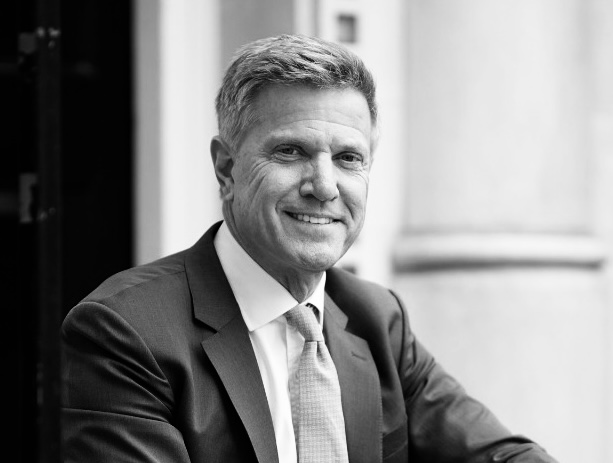
In 2023, Nigeria came within a judge’s signature of having to pay more than US$10 billion to a little-known company, P&ID, over a collapsed gas project. A London court eventually tore up the arbitration award, finding it tainted by fraud. For Nigeria, that decision meant the difference between a disastrous hit to its public finances and a painful lesson in how easily badly structured deals can go wrong.
That case was unusual in its scale, but not in its underlying problem. Across Africa, the success or failure of major infrastructure projects is being determined less by heroic visions or glossy launch events, and more by what is buried in the fine print: how contracts are drafted, how disputes are resolved, and how any eventual judgment or award can be enforced.
The continent’s infrastructure needs are beyond doubt. There is demand for power plants, transmission lines, ports, roads, data centres, water projects and the facilities needed to process critical minerals. Demographics and urbanisation point in one direction: more people living in cities who need reliable electricity, transport and digital connectivity. The open question is whether investors can commit long-term capital and still sleep at night.
In practice, the answer lies in three things: how the commercial risk is structured, how the legal enforcement route is built, and how both are reinforced by the wider international framework.
The first task is to design contracts that can bend without breaking. Infrastructure projects can stretch over decades. Economic assumptions that are calibrated and hedged on day one – about political change, inflation, commodity prices, exchange rates or demand – rarely survive contact with reality. Well-structured agreements recognise this and include mechanisms that allow the financial model to be recalibrated if key variables move outside agreed ranges.
Those provisions can take many forms: tariff adjustment clauses, re-balancing mechanisms, or triggers for re-negotiation in tightly defined circumstances. Executed wisely, they give both sides a way to preserve value when the world changes, rather than forcing them into default or dispute. Alongside that, investors increasingly insist on clear rights of assignment, so that projects can be sold, in whole or in part, to strategic buyers who may be better placed to operate or finance them over the long term.
The second task is to assume from the outset that enforcement may one day be necessary. That means thinking about where and how disputes will be heard, which law will govern the contract and what assets could realistically be reached if the state, or a state-owned enterprise, refuses to pay.
In African infrastructure deals, English law remains a common choice for major contracts, not out of sentiment but because it is predictable, tested and widely understood by commercial courts and investors. Just as important are waivers of sovereign immunity. Without a clear, effective waiver by both the state and its commercial entities, an investor who wins an arbitration or court case may find there is no way to attach assets abroad. With it, an award becomes more than paper. It becomes a claim that can be monetised and pursued against commercial property – from bank accounts to cargoes – in jurisdictions that have signed up to key enforcement treaties.
That leads to the third layer: public international law. Bilateral investment treaties, and multilateral instruments such as the New York and ICSID Conventions, provide the legal plumbing that allows arbitration awards to be recognised and enforced in dozens of countries. In the best-designed structures, a successful claim is not only enforceable by the original investor but can be sold or shared with litigation funders, specialist hedge funds or sector players who bring their own deep pockets, appetite for risk, leverage and local knowledge to bear in securing payment.
For investors, this opens the way to a more flexible and confident investment approach. They can carry a project through the early, risky years and know that, in a downside scenario, they hold an asset – a credible legal claim – that can be monetised rather than written off. For states, the same framework should be a discipline as much as a threat. Governments that want to attract capital at scale cannot simply rely on speeches and investment summits. They need to show that, if things go wrong, there is a clear and lawful route to resolution.
None of this happens in a vacuum. Multilateral development banks and other international financial institutions continue to play a significant role in African infrastructure, both as funders and as influential observers. Their involvement can deter the worst forms of opportunism and, in some cases, provide quiet but effective pressure on states to honour their obligations.
At the same time, the above-mentioned P&ID vs Nigeria gas case shows that the system is capable of rejecting abusive claims. When courts are prepared to look carefully at how an award was obtained, and to set it aside where the process has been corrupted, it becomes harder for dubious actors to treat arbitration as a one-way bet against the public purse. That is in the interests of both taxpayers and serious investors.
Africa’s infrastructure story over the next two decades will not be decided by catchy slogans or the number of memoranda signed at conferences. It will be decided by the quality of the contracts, the enforceability of the dispute mechanisms and the seriousness with which both governments and investors treat those disciplines.
For those willing to invest the time and care to get that framework right, the continent offers projects that can deliver returns and withstand shocks. For those who do not, the risk is not only financial. It is another cycle of disillusionment in which promising schemes collapse into disputes, and opportunities that should have been bankable end up in court.
The fine print will not make the headlines. But in Africa’s infrastructure boom, it will decide who ultimately wins.
Nicholas Cherryman is an International Barrister and Advocate who specialises in Litigation and Arbitration
Chris Newlands: “Africa in Space – Collaboration and Innovation are key to exploiting the new frontier.”
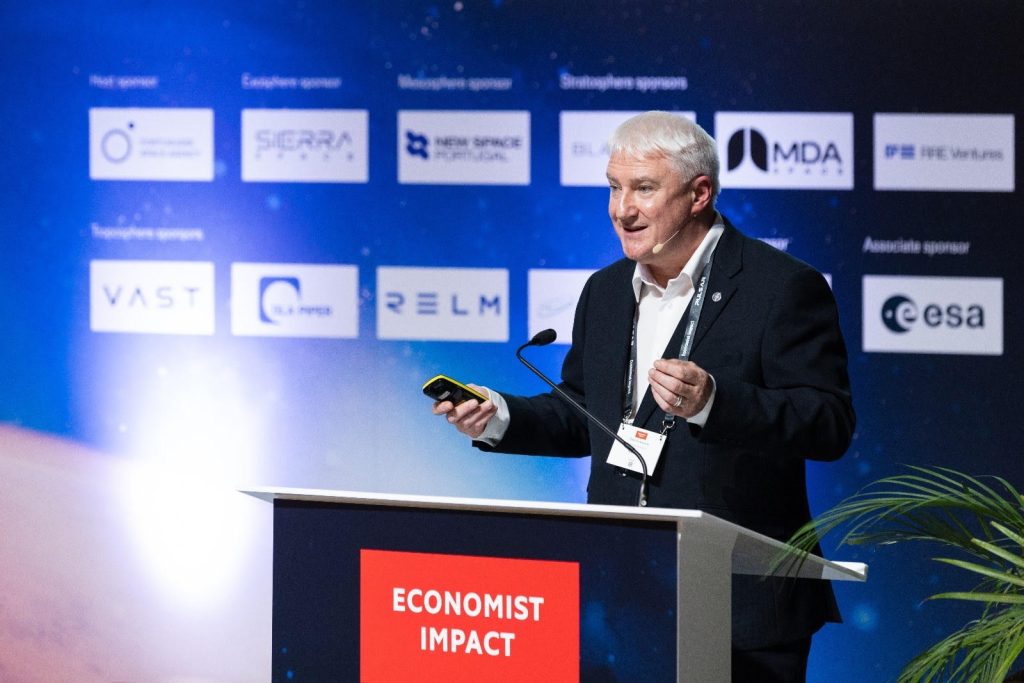
With the global space economy expected to grow from a current c.$630bn to c.$1.8tn in value by 2035 (*WEF/McKinsey, 2025), its impact on all aspects of global society will be significant. While the US and China are the undoubted leaders in both investment and launch terms for communication and EO imaging satellites, around 80 other countries have established their own Space agencies, with the vast majority investing in and operating their own sovereign constellations.
While the African continent has taken a while to start the catch-up process, recent progress has been significant. Around 21 African nations have established their own Space Agency and c.18 have successfully launched their own satellites (around 65 in orbit), mostly in partnership with established space nations and commercial constellation partners. To keep up with the projected global 9% annual Space industry market growth, more collaboration, investment and innovation to drive real, tangible commercial, societal and security benefits will be key to Africa’s success in achieving this.
The recent Africa-European Union Space Partnership programme, with an accompanying 100 million Euro budget, is a valuable part of that objective, supported by more US and European commercial constellation owners looking to develop funded partnerships with sovereign governments to underpin their own launch and commercial ambitions. The key is, why? What tangible benefits to improve security, food production, economic growth, water and environmental security, and society overall can be delivered in Africa as a whole? Where will the return on any increased investment be seen?
The key is to not just invest in launches for the sake of scale, it’s the invest in accompanying specific technology, applications and innovation to deliver very specific, measurable benefits and outcomes. As an example, some African nations are in discussions around specific innovations to better protect Oil & gas production assets to reduce the huge losses currently being incurred to theft (e.g. Nigeria lost an estimated $10bn to theft in the first 6 months of 2024 alone) as well as better monitoring of production assets to mitigate and reduce environmental damage currently costing $m’s in punitive fines.
In the Earth Observation satellite sector, new data modelling and Artificial Intelligence tools are being developed and deployed continuously to add greater utility and analysis capabilities, further accelerating the benefits real-time satellite imagery can provide.
Our own business, Space Aye, also offers the unique, patent-protected capability to identify people, assets, and vehicles using location, biometrics, and other IoT data merged with real-time satellite imagery. We are based in Glasgow, Scotland, known as a “satellite city” colloquially. Glasgow is a relatively modest city by size and population (1.1 million); however, it is now the third largest manufacturer of satellites globally. Whilst Africa has made significant strides in the development of new satellite capability and related technologies, with its huge, still mostly untapped potential in terms of technology innovation and manufacturing, this Glasgow story should provide further inspiration for what can be achieved.
Accelerating investment in skills, manufacturing and sovereign capability in space alongside the adoption of new technologies and innovations – working in collaboration with global partners- will deliver undoubted, real and significant benefits across the whole spectrum of society and commerce, throughout Africa. Instead of playing catch-up, Africa could be the next powerhouse of space technology, development and innovation.
Chris Newlands is the CEO of Space Aye and is cited as one of the world’s top space entrepreneurs
Felicity Gerry: “Africa’s lawyers have become innovators, using advocacy as a living force for interpreting major instruments for clients in landmark cases.”
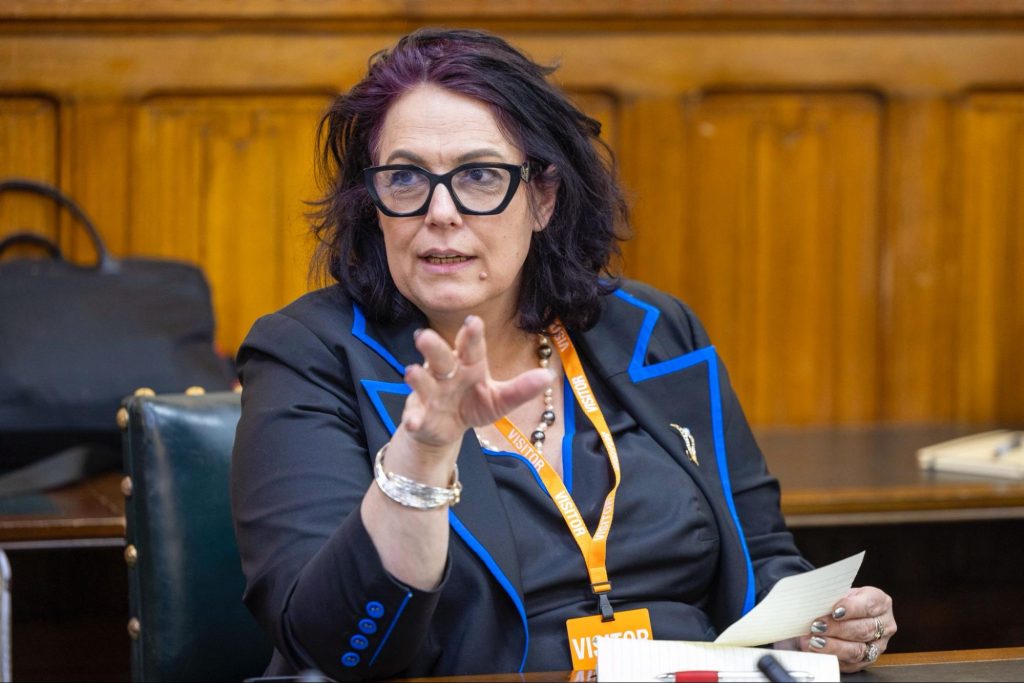
Across Africa, lawyers are driving development: From citizenship rights to climate litigation, anti-corruption and cybersecurity, generationally significant cases are transforming courtrooms into arenas of social change envisaged by the African Union 2063 Agenda, which is a “blueprint and master plan for transforming Africa into the global powerhouse of the future.” Alongside strategic frameworks that aim to deliver inclusive and sustainable development, strategic litigation and legal innovation are redefining what justice means for the continent and globally.
In May 2025, the South African Constitutional Court ruled in favour of an application for the retention of citizenship for those with dual nationality. It means that all South Africans who inadvertently lost their citizenship by not having a ‘retention’ letter have the right to have their citizenship restored. Legislation for automatic loss of citizenship was effectively unconstitutional. With millions of South Africans with a second nationality, this was a significant success for lawyers representing the applicants and is an example for other jurisdictions to recognise that constitutions can protect those who belong to a nation state and citizenship/statelessness is not a political toy. This recognition of Constitutional rights also fits with the pan African vision for 2063 of “An integrated, prosperous and peaceful Africa, driven by its own citizens”. It is recognised that citizens represent a “dynamic force” in the international arena, now definitely including dual nationals. Add to this that it is a South African legal team that has brought a genocide case against Israel in the International Court of Justice, and we can see the drawing together of the MENA region with the rest of the continent.
Human rights are being protected by applications to the African Court on Human and Peoples’ Rights (The African Court), which was established to ensure the protection of human rights in Africa. From 1 January to 31 December 2024, the Court received ten (10) new cases. It also held several capacity development and promotional activities, which included raising awareness among stakeholders about its existence and activities, so, whilst it is currently notoriously slow, its workload and influence are likely to increase as challenges are brought.
The African Court compliments the African Commission on Human and Peoples’ Rights which itself issued a decision in 2024 on a 2009 compliant by a Rwandese citizen for arbitrary detention, torture and other cruel, inhuman and degrading treatment in Uganda, finding that there had been violations of the African Charter and requesting Uganda conduct prompt, independent and impartial investigations, to prosecute and punish all the perpetrators, pay adequate compensation and apologise to the victim and to ensure non-repetition, alongside adopting and implementing procedural safeguards for the prevention of torture and other forms of ill-treatment. The Commission expects to be informed of the measures taken to implement the decision.
On the ground, capacity building is dynamic. In Tanzania, Lawyers Without Borders, including myself, led by in-country managers, work with the Anti Trafficking Secretariat to build capacity and bring human trafficking cases to court through judicial and advocate training on key topics for human trafficking cases with subject matter expertise. This is all part of the 10-year action plan to eradicate child labour, forced labour, human trafficking and modern slavery in Africa. The Action Plan seeks to contribute to and support the acceleration of progress towards the achievement of the Agenda 2063.
Legal challenges which might hitherto have been labelled as ‘legal activism’ are not limited to citizens’ Constitutional and human rights and protection from human trafficking. Legal practitioners are also leading Africa’s turn toward Environmental, Social, and Governance (ESG) standards.
The idea that lawyers have bought into is “the increased unity of Africa, which makes it a global power to be reckoned with”. Africa’s lawyers have become innovators, using advocacy as a living force for interpreting major instruments for clients in landmark cases. In some cases, it has come with intimidation and threats. But their resilience has underscored Africa’s aspirations for a prosperous Africa based on inclusive growth and sustainable development, reshaping Africa’s future, one case at a time.
Felicity Gerry is an internationally recognised senior counsel and consultant whose practice and research sit at the intersection of criminal law, commercial integrity, and human rights.
Hatu Sheikh, CEO of CoinTerminal: “Web3 and DeFi are Influencing Africa Like Never Before.”

President Obama’s speech to the African Union in 2015 was inspiring and prophetic, but I felt a little ahead of the curve. As we approach 2026, Africa is moving faster than ever compared to the United States of America and the European Union in terms of regulations. This is what attracts capital to the continent, particularly in the Web3 and DeFi industries.
Web3 can be positioned as the first global market that African builders can access without much compliance or permission from other entities.
Regulation is improving across Africa, with South Africa’s FSCA leading the way by allowing crypto providers to register through the regulation of crypto asset service providers (CASPs) in a phased and structured manner, a process which began in 2024.
The increased use of blockchain technology throughout Africa is succeeding in bypassing any kind of manipulation from governments. This is also prevalent when it comes to credit scoring and Know Your Client (KYC) checks.
Real World Assets (RWAs) are opening up access for all African investors, global market access, commodities and more through these blockchain rails. The Interoperability between payment rails between mobile and cryptocurrency wallets is also getting more intuitive and easier to use, even for those who are less savvy in using blockchain, yet can still navigate the technology for their day-to-day use.
Stablecoins have become Africa’s alternative to volatile local currencies, similar to what happens in markets in Latin America. Informal and formal markets using the USDT/USDC stable coins as functional mediums of exchange have fuelled commerce in Nigeria, Kenya, Ghana, and South Africa.. This works for international payments between B2Bs, Freelancers and more. Meaning instant transfers with minimal fees. The gaming, creator economies and those with micro-jobs, including web3-native jobs, have benefited the most from this, with contributions, Play-to-earn (P2E) incomes across all these emerging markets, making sure that Africans can get paid more easily.
Platforms such as the one I founded, CoinTerminal, are designed to connect African startups to global liquidity, investors, and communities, effectively bypassing the old gatekeepers. Smart contracts allow lending, savings, swaps, and remittances without requiring local financial institutions, enabling financial automation where infrastructure gaps persist.
Other examples include decentralized insurance and on-chain insurance pools, which address real-world and geographical issues such as crop failure, logistics risk and business interruption.
Nigeria is one of the world’s fastest-growing DeFi user bases, and DeFi AMMs are emerging as alternative FX markets for African users, enabling instant swaps between stablecoins and local digital assets, bypassing liquidity bottlenecks in traditional currency markets. Open liquidity pools act as public infrastructure, allowing anyone to plug financial tools into the same shared base layer, a shift compared to traditional banking.
And we know from painful experience that the traditional banking system in Africa has not worked for the vast population, and that is why decentralised finance is the answer for the continent to thrive and move at speed.
Hatu Sheikh is the founder of CoinTerminal, an open-access cryptocurrency launchpad with more than 650,000 users that has quickly established itself as one of the most reliable in the industry