

A war can be measured in territory gained and lost. Sudan’s war should be measured differently: in empty water jerrycans, in clinics without antibiotics, in women made targets, in families forced to choose between hunger and the road.
The world has grown accustomed to describing Sudan as a “power struggle” between the Sudanese Armed Forces (SAF) and the Rapid Support Forces (RSF). That framing is true, but dangerously incomplete. The defining reality is that Sudanese civilians are trapped between armed actors who treat civilian life as negotiable. And the most urgent question is no longer what is happening — the evidence is overwhelming — but why Africa has allowed it to continue for so long.
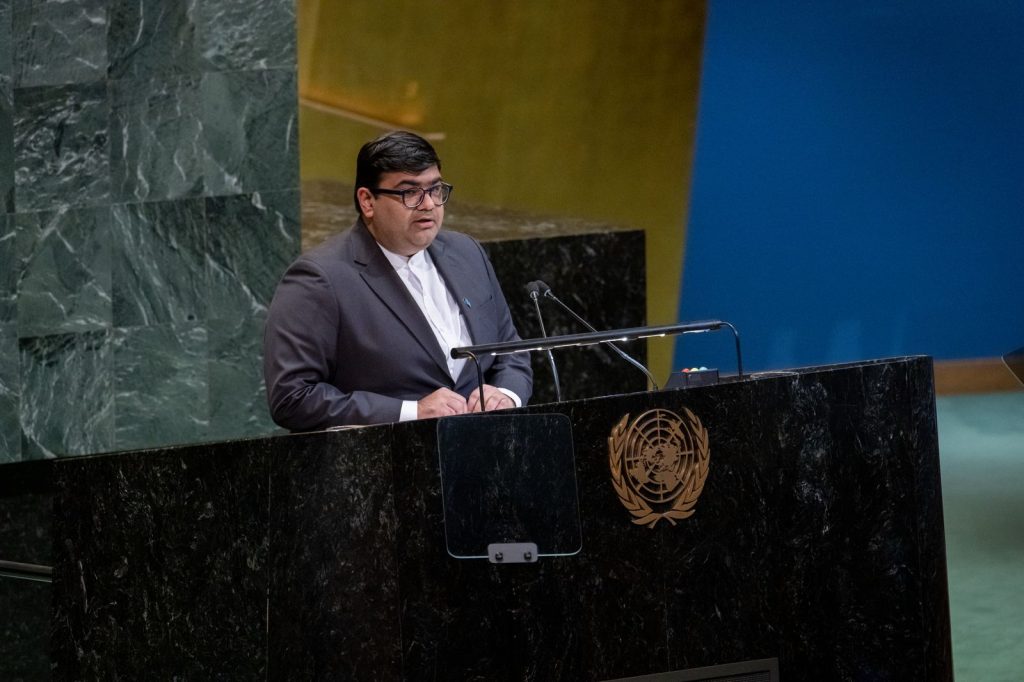
A statement provided to TIME Africa by Ambassador Nabhit Kapur, Permanent Observer for the Pan-African Intergovernmental Agency for Water and Sanitation for Africa (WSA) to the United Nations, is unambiguous: Sudan’s crisis is being worsened by the deliberate obstruction of water, sanitation services, and life-saving humanitarian supplies — including reported blockades of water sources, medical aid, and essentials, particularly affecting civilians in Darfur and other conflict-impacted regions. It warns that targeting water and sanitation infrastructure, or denying access to those services, places “millions of civilians at imminent risk of disease, displacement, and death” and constitutes violations of international humanitarian law. It further notes “credible accounts” indicating such actions are being perpetrated predominantly by the RSF, while condemning violence by all parties, and calls for the immediate lifting of blockades and protection of humanitarian corridors.
“The protection of water is the protection of life,” the statement concludes. “Silence is not an option.”
Silence — and paralysis — has become the defining scandal of this war.
A humanitarian catastrophe, engineered and escalated
Humanitarian agencies have repeatedly warned that the violence is not incidental to the conflict; it is embedded in how the war is being fought. UN Women has warned of systematic patterns of sexual violence, with a sharp surge in demand for life-saving support for survivors and indications that rape and sexual violence are being used as a weapon of war.
In Darfur, the siege and assault dynamics around El Fasher and surrounding displacement sites have become emblematic of what civilians face: starvation tactics, attacks on camps, the destruction of hospitals and markets, and the targeting of those who try to keep people alive. The UN human rights system has documented RSF assaults on Zamzam IDP camp in April 2025 that caused extensive destruction of civilian objects and significant civilian harm.
This is not merely “collateral damage.” It is a method.
And it is happening in a region — Darfur — whose history already contains one of the clearest lessons of the modern African security order: when civilians are left unprotected, mass atrocities metastasize.
Remember Hanadi Dawood — and what her death represents
In moments like this, the moral centre of the story is not found in the statements of generals, but in the courage of civilians.
TIME Africa honours the life of Hanadi Al-Nour Dawood, a young Sudanese doctor and aid activist killed during attacks on civilians near El Fasher, including at the Zamzam displacement site. Reports from civil society organizations documenting her death describe her as part of the frontline of care — one of the people who refused to abandon others even as war closed in.
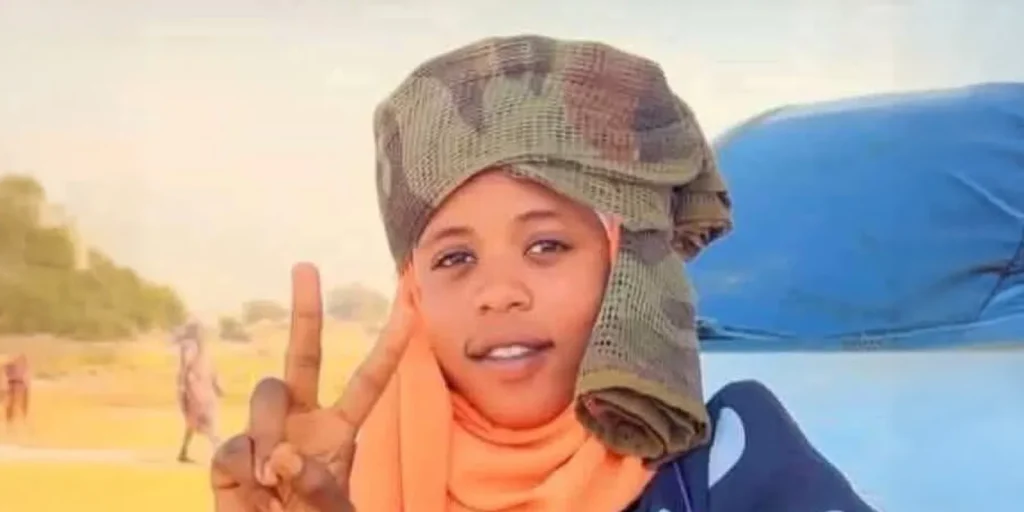
Her death is not only a tragedy. It is an indictment.
Because if a young doctor can die trying to protect displaced families while regional and continental systems remain frozen, then we must say plainly: the gap between Africa’s promises and Africa’s protections has become lethal.
“As a mother…” — Nardos Bekele-Thomas and the moral clarity Africa needs
H.E. Nardos Bekele-Thomas of AUDA-NEPAD speaks with the clarity of someone who understands both policy and pain:
“As a mother, I feel the agony and deep pain of Sudanese mothers whose children are dying from hunger, denied access to water, and subjected to violence… Access to water, food, and medical care is a fundamental human right… The international community must act now to protect civilians and ensure humanitarian access.”
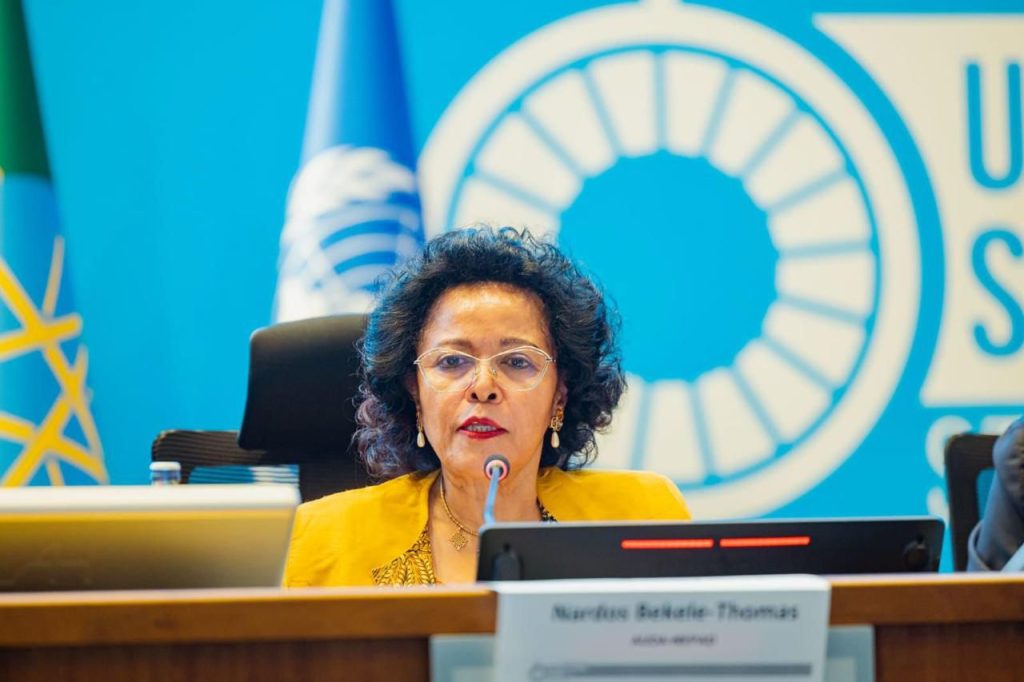
Her words match what humanitarian actors have described on the ground: the crisis is not only about bullets — it is about water, hunger, access, and dignity.
And it is about the failure to protect.
Why has no African military intervened?
This is where the story must become uncomfortable — especially for Africa.
Africa’s institutions were not built only to issue communiqués. They were built, in part, to ensure “never again” would be a slogan without force behind it. The African Standby Force (ASF) exists in concept precisely because Africa understood the risks of waiting for the world to act when mass atrocities erupt.
Yet Sudan burns, and the ASF remains absent.
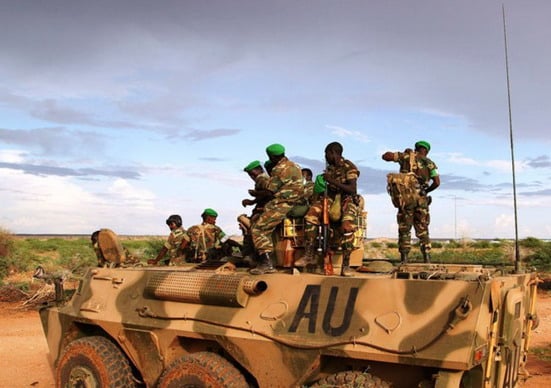
There are several reasons — none of them absolve the outcome:
1) Consent, sovereignty, and political fracture
Continental intervention is politically hard without a host government’s consent. In Sudan, legitimacy is contested, and external forces become immediately politicised. Sudan’s authorities have previously rejected proposals for regional forces and threatened repercussions through regional bodies.
2) The ASF is “operational,” but not deployable at scale
Analyses of the ASF’s operationalisation highlight chronic constraints: political coordination problems, logistics and readiness gaps, and the persistent inability to rapidly deploy credible force where needed.
3) Money, mandates, and dependency
Peace enforcement is expensive. Even when Africa has political will, missions often depend on external financing, airlift, intelligence, and sustainment. That dependency becomes a veto by other means.
4) Regional competition and “managed stalemate”
Sudan’s war is increasingly shaped by external alignments — SAF seeking support from some states, RSF allegedly benefiting from others — producing a stalemate dynamic that makes intervention riskier and diplomacy harder.
5) Fear of escalation without a clear end state
The hardest question in any intervention is: what comes after? But that uncertainty cannot become an excuse for abandoning civilians to mass harm.
The African Union’s Peace and Security Council has repeatedly discussed Sudan and reiterated positions through formal statements and communiqués. The gap between statement and shield is where Sudan’s civilians are being lost.
The civilians in the middle — and the RSF’s share of atrocities
This must be said without euphemism: civilians are trapped between SAF and RSF, and violations have been reported across the conflict. But credible reporting and UN-linked warnings repeatedly highlight the RSF’s predominant role in patterns of mass harm in some theatres — including Darfur — alongside the use of terror tactics against communities, and grave sexual violence.
This is not about propaganda. It is about accountability.
And accountability requires precision: perpetrators must be identified, documented, sanctioned, prosecuted — not blurred into “both sides” until no one is responsible.
Weaponising identity: Islamism, Arabisation, and the danger to indigenous communities
Sudan is a Muslim-majority country with deep religious traditions — and Sudan’s civilians include Muslims of many communities, alongside other faiths. The point here is not to stigmatise Islam, or any community of believers.
The danger is the weaponisation of religion and identity as a tool of domination: when armed actors deploy Islamist or supremacist narratives to justify dispossession, ethnic targeting, and the remaking of communities through fear.
In Darfur, the anxiety many communities articulate is not only about who controls the state, but about who is being erased: indigenous populations facing displacement, targeted violence, and coerced demographic change — a modern “Arabisation strategy” experienced not as theory, but as terror.
When identity becomes a weapon, atrocities become easier to commit — because the victim is no longer seen as fully human.
Should the RSF be designated a terrorist group?
TIME Africa believes this question should be debated openly — and urgently.
A terrorist designation is not merely symbolic. It can:
- expand legal tools to disrupt financing and arms flows,
- trigger sanctions and travel bans,
- constrain political engagement and “normalisation,”
- but also complicate negotiations and humanitarian access if poorly structured.
So the question becomes: what threshold of documented mass harm must be met before the international community — including African states — treats the RSF as what many civilians experience it as: a terror force?
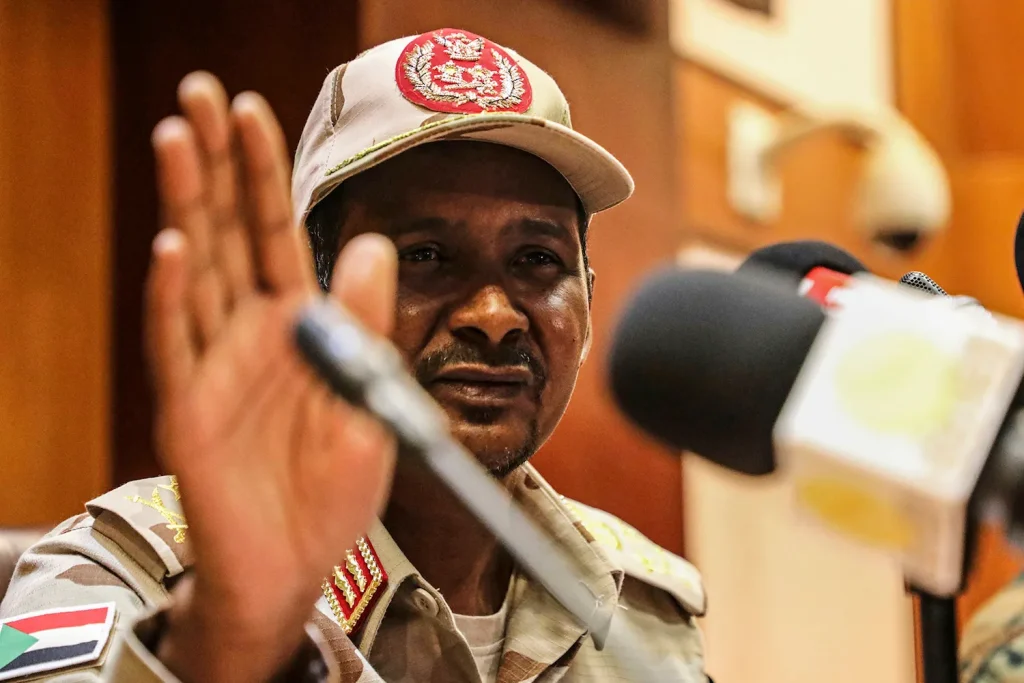
There is also a political reality: designations often reflect geopolitical calculation as much as legal principle.
If the answer is that states hesitate because the RSF sits inside a web of commercial, security, and cross-border interests, then we are forced back to the crux: whose interests have been prioritised over African civilian life?
Follow the money — and why it remains difficult
One of the most persistent challenges in Sudan is that pinpointing who precisely is funding the RSF has proven difficult, with evidence and allegations pointing in several directions, and past relationships being used to interpret today’s war.
Investigations and conflict analyses have described illicit transnational supply chains, shifting alliances, and regional economic routes (including gold) that sustain armed actors. Reporting has also discussed alleged external links to the RSF while noting the complexity and contestation around definitive attribution.
That is why resources like Sudan War Monitor matter: they attempt to document incidents, patterns of violence, and the granular realities the world too often ignores.
But documentation without disruption is not enough.
What does Africa’s paralysis say to the world?
This is the most painful part.
If African civilians can be displaced and killed in the millions, if rape can be wielded as a weapon, if water can be blocked as a strategy, and if the continent’s signature security mechanisms cannot protect those civilians — then what message is sent?
- That African life is negotiable.
- That African institutions can be outwaited.
- That “never again” is conditional.
- That sovereignty can be invoked to protect armed actors, not people.
And once that message is accepted, it will not remain contained in Sudan. It will echo across borders, across conflicts, across future crises.
What must happen now
A serious response must be both moral and operational — and must start with civilian protection as the central objective, not an afterthought.
1) Enforce humanitarian corridors — especially water, sanitation, food, and medical access
WSA’s statement is clear: blockades on water and humanitarian access must be lifted, corridors must be protected, and accountability must follow those who weaponise survival.
2) Scale protection and monitoring in atrocity hotspots
El Fasher, displacement sites, and other high-risk zones require intensified monitoring, early warning, and mechanisms that deter attacks through visibility and consequences.
3) Punish atrocity financing and arms flows
If supply chains sustain mass harm, then disrupting those networks is not optional — it is a form of protection.
4) Africa must confront the ASF gap — publicly
Not with defensiveness, but with reform: readiness, funding, command clarity, and political decision-making that can move faster than atrocity.
5) Centre Sudanese civilians, including mutual aid networks
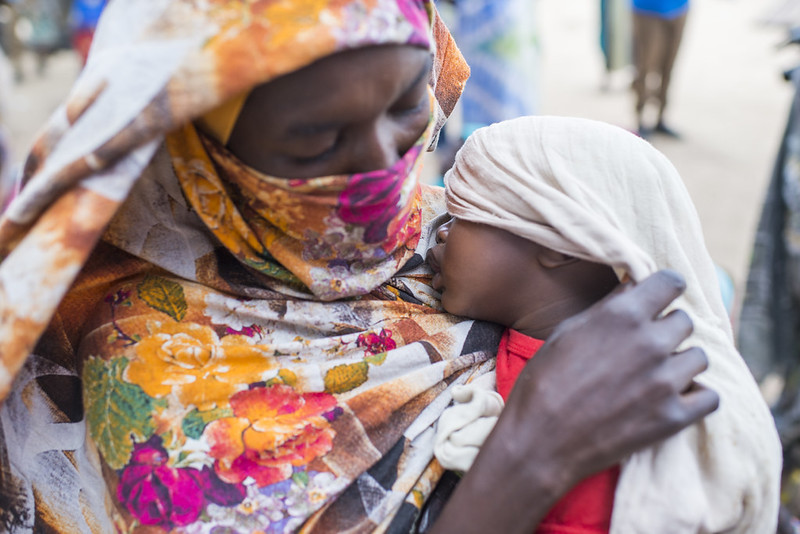
Across Sudan, civilians have formed emergency response structures to keep communities alive when the state collapses. Supporting these networks is not charity — it is strategy.
The final question
H.E. Nardos Bekele-Thomas appeals for dignity and human rights. WSA warns that silence is not an option.
So TIME Africa asks the question Africa must answer:
If African nations cannot protect African civilians in Sudan — what does that say to the rest of the world about Africa’s agency, Africa’s security order, and the value placed on African life?
Sudan’s civilians do not need more sympathy.
They need protection. They need corridors. They need consequences. They need the continent — and the world — to act like their lives matter as much as anyone else’s.
And if we cannot do that, then every lofty architecture we have built for “peace and security” becomes what Sudan already feels like: words, written over graves.