
Private investment, digitalization, and integrated transport links are strengthening the Port of Luanda’s role as Angola’s principal maritime gateway and regional logistics platform.
At the center of Angola’s most populous and economically dynamic region, the Port of Luanda occupies a pivotal place in the country’s trade and logistics landscape. As Angola’s main maritime port and largest logistics and foreign trade platform, it handles around 80% of the country’s imports and exports, connecting goods to road and rail links extending into the interior.
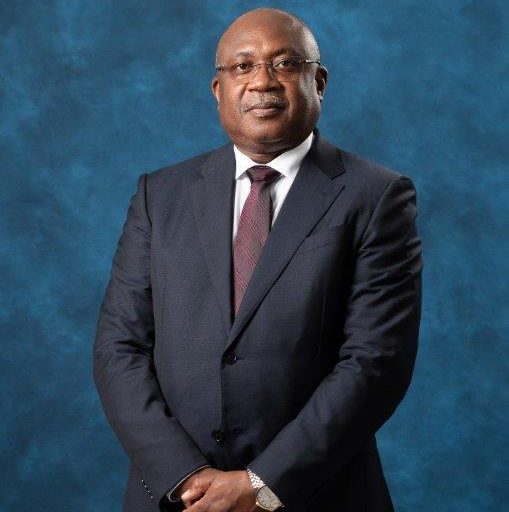
For Alberto António Bengue, CEO of Porto de Luanda – E.P., this role extends beyond the movement of cargo. “The Port of Luanda is much more than a point of entry and exit for goods. It is a strategic infrastructure and an engine for the Angolan economy,” he says. That strategic relevance is driving an agenda focused on modernization, operational efficiency, digitalization, and stronger international connectivity. Under the supervision of the Ministry of Transport, Porto de Luanda – E.P. serves as the port authority, managing a concession area of approximately 1.5 million square meters while overseeing the private operators responsible for the commercial development of its terminals.
The port operates under a landlord port concession model. Porto de Luanda – E.P. owns and manages the port area, while concessionaires assume responsibility for investment and commercial development within the terminals according to their respective concession agreements. The authority, in turn, monitors activities, investments, operations, and compliance with safety standards to ensure the quality of the public service provided.
The structure creates an important avenue for mobilizing private-sector capital and expertise. International operators can contribute not only financing, but also technological solutions and global operational experience as Luanda works to raise its performance to more competitive levels. “Partnering with international players allows us to bring in investment, technology, and know-how, boosting our agility and competitiveness. Our goal is to deliver a service that is increasingly fast and predictable,” explains Bengue. Vessel traffic at the port rose by 15% to 5,440 ships in 2025, while cargo handling and turnover both increased by 7%, driven by growing oil industry support activities and general cargo traffic. The Port of Luanda also secured unqualified approval of its financial statements for the year.
In June 2026, the port inaugurated three new facilities as part of its 81st anniversary celebrations: an Electrical Substation, an Innovation and Technological Development Building, and a Coastal Shipping Terminal. The investments are expected to enhance operational efficiency, energy supply, and infrastructure resilience, while modernizing port management. The new substation will also enable electricity to be supplied to berthed vessels, reducing reliance on onboard generators, while the Coastal Shipping Terminal will improve maritime connectivity and the movement of goods along Angola’s coast.
A strategic Atlantic position
The Port of Luanda combines economic scale with a favorable geographic position. Situated on Angola’s west coast in the Bay of Luanda, it benefits from natural protection provided by the Island of Cabo, shielding the port from stronger currents and waves and creating favorable conditions for vessel maneuvering and berthing. Local winds and currents are generally weak, and tides are typically low. The port stretches for 2,728 meters and comprises seven terminals alongside a logistics platform supporting oil and gas activities. It operates around the clock, with a maximum draft of 13.2 meters at high tide. A range of supporting maritime services complements these facilities. Potable water can be supplied to vessels across all terminals, while ships at anchor or alongside can receive provisions and spare parts through specialized shipping companies, subject to the port’s regulations.
Pilotage, provided by EPIBAL – Barra de Luanda Piloting Company, is mandatory for national and international vessels above 500 gross tonnes. Fuel is available through Sonangol, while repair facilities include two areas serving fishing and smaller coastal vessels and a floating dock capable of emergency repairs. “Luanda’s location in the South Atlantic represents a major strategic advantage. However, location alone is not enough; we must turn it into connectivity,” observes Bengue.
The Port of Luanda is working to deepen maritime connections while improving agility onshore, with the goal of bringing Angola closer to markets across Central and Southern Africa and strengthening the country’s role within regional supply chains. “Our ambition is to position Luanda as a leading logistics hub,” says Bengue.
Building a smarter port
For a port through which such a significant proportion of Angola’s foreign trade passes, the efficiency of procedures surrounding vessels and cargo has implications extending throughout the economy. Digitalization offers an opportunity to simplify processes, reduce waiting times, and provide companies with greater visibility over operations. Bengue views this combination of technology and procedural reform as essential to Angola’s broader investment environment. “Digitalization reduces bureaucracy, wait times, and operational costs. It also increases transparency and predictability—both of which are crucial for attracting investment,” notes Bengue.
The overall direction is therefore toward closer integration of port systems and processes, an effort that also raises customer satisfaction and develops new sources of competitive advantage. Alongside the modernization of physical infrastructure, the port is seeking to improve business-support processes, enhance operational services, and minimize waste. The emphasis on predictability is significant for businesses operating across international supply chains, where delays at one point can reverberate across transport networks. The goal is to leverage data to streamline processes and improve traceability. “We are set to embark on a robust Industry 4.0 transformation from January 2027, with the implementation of the Single Logistics Window (JUL) and the adoption of technologies such as 5G, artificial intelligence, and automation across port operations. We want to be pioneers and lead this revolution,” says Bengue.
“My vision is for a port that is more modern, agile, digital, sustainable, and better connected to both the region and the world.”
By combining digital systems, streamlined procedures, and investment by terminal operators, the Port of Luanda aims to create an environment that advances the blue economy, with cargo moving with greater speed and reliability between sea and land.

One port within a national network
Luanda’s evolution is also taking place amid significant changes to Angola’s broader logistics landscape. New infrastructure and transport corridors are expanding the country’s options for moving cargo and creating opportunities to rethink the relationship between its ports, roads, and railways. “The Port of Luanda should not be viewed in isolation; it is part of a national logistics network. Barra do Dande, transport corridors, railways, and coastal shipping must complement one another,” emphasizes Bengue.
This integrated approach also gives renewed importance to cabotage. Moving more goods by sea between domestic ports could provide an alternative to road transport, particularly as Angola works to improve logistics excellence and diversify economic activity beyond its traditional sectors. “Developing cabotage can relieve pressure on roads, lower transport costs, and contribute to a more diversified and reliable economy,” Bengue notes.
For Luanda, the ability to connect with other infrastructure can reinforce its strategic role. Its central location within the country’s principal economic and population center, combined with road and rail connections to the interior, positions the port as a critical node within a more diversified transport system. The model reflects a broader understanding of logistics as an ecosystem: ports generate greater economic value when maritime infrastructure, inland transport, technology, and commercial services work together.
As Angola expands this network, Luanda’s challenge will be to continue improving its own performance while strengthening the links that connect it to the rest of the country and neighboring regional markets.
Investing in the next generation
Behind Bengue’s vision is a career closely connected to transport, finance, and port management. He holds a degree in transport economics from the Technical University of Road Construction and Transport in Kharkov, Ukraine, a master’s degree in maritime business specializing in port management from the World Maritime University in Sweden, and a diploma in logistics management from Lloyd’s Maritime Academy in the UK. He is currently pursuing a doctorate in public policy at the University of Aveiro.
His professional trajectory has included roles across both the Ministry of Transport and Porto de Luanda – E.P., including positions in investment, inspection and invoicing, finance, and commercial management. The experience informs a leadership approach that he describes as combining rigor, attention to people, and long-term thinking. “My professional journey has provided me with valuable experience in management, leadership, and decision-making. Today, as CEO of Porto de Luanda – E.P., I approach this role with a deep sense of responsibility, as we are managing a strategic piece of infrastructure for the national economy,” says Bengue.
That long-term perspective incorporates environmental performance. As the port modernizes, the ambition is to reconcile higher productivity with reduced environmental impact, including through improved energy efficiency and lower emissions. For Bengue, however, infrastructure and technology represent only part of the legacy the institution should leave. Human capital is equally important: training professionals capable of managing increasingly sophisticated logistics and maritime operations is fundamental to ensuring that today’s investment continues to generate value in the decades ahead. “My vision is for a port that is more modern, agile, digital, sustainable, and better connected to both the region and the world. We want to balance economic growth with environmental responsibility,” observes Bengue.
The ultimate measure of the transformation, he adds, will encompass both competitiveness and the people capable of sustaining it. “Our legacy also rests on people: training and preparing the professionals who will lead this sector in the future. If we leave behind a more competitive port and a better-prepared new generation, we will have fulfilled our mission.” With its scale, natural maritime advantages, and position at the center of Angola’s commercial activity, the Port of Luanda already occupies a unique place in the national economy. Its next phase is about converting those advantages into greater performance and connectivity: mobilizing investment through its concession model, simplifying trade through digitalization, integrating with an expanding national transport network, and strengthening links across the South Atlantic. “In doing so, Luanda can evolve from Angola’s principal maritime gateway into a true logistics platform capable of supporting the country’s economic diversification,” concludes Bengue.

Contact
+244949591515
+244949591616
apoiocliente_epl@portoluanda.co.ao
www.portoluanda.co.ao
Produced independently of the TIME Africa newsroom by Penresa.