
By integrating engineering, manufacturing, and specialized services, Griner is strengthening Angola’s industrial capacity through landmark infrastructure delivery nationwide.
What began as a small construction company has grown into one of Angola’s most diversified engineering and infrastructure groups. Over the past 17 years, Griner has expanded beyond its origins, building ports, roads, housing developments, and commercial complexes. Through an integrated ecosystem of companies that produce key components and services in-house, the group now controls much of the construction process while strengthening local industrial capacity.
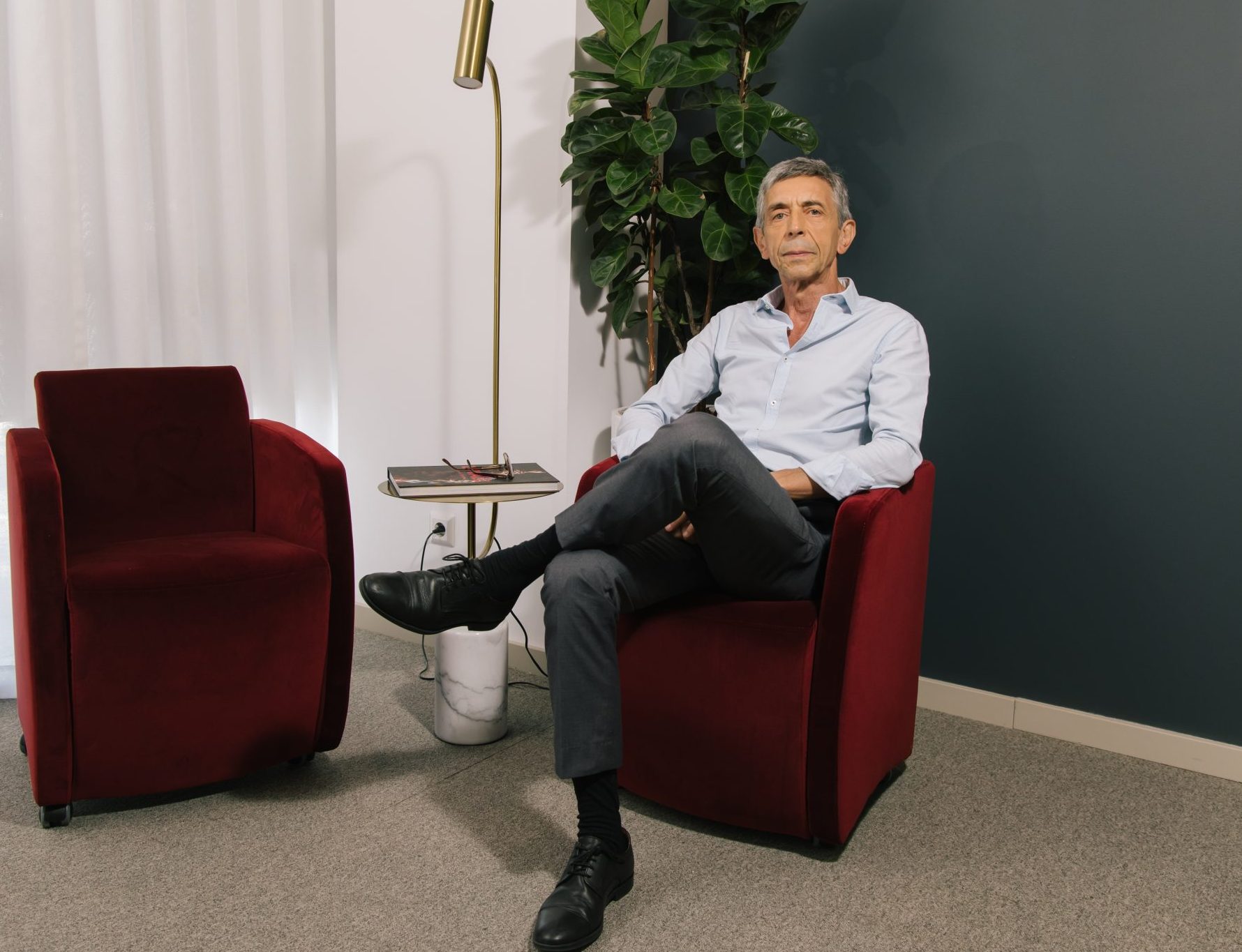
Today, Griner operates across civil construction, transport, energy, and hydraulic infrastructure, combining engineering expertise with manufacturing capabilities, project design, and specialized construction services. As President of the Executive Committee, Paulo Veiga explains, “We started with a small portfolio, and little by little we grew because clients believed in us. Griner was born with the ambition to execute complex projects and be on the same level as foreign companies and today we are part of the country’s largest infrastructure projects.” Among the company’s recent milestones is the expansion of the Port of Namibe, a project that significantly increased cargo-handling capacity in southern Angola and was delivered with a Japanese contractor. Veiga recalls that “the firm was extremely rigorous,” adding that delivering the project “opened the door for future collaborations with companies from that culture.”
Griner is also delivering the Basilica of Mama Muxima, one of Angola’s major religious and tourism developments. The project includes the basilica, expected to be completed in 2027, and a 60,000-square-meter public square designed to support religious gatherings and attract pilgrims from across the region.
The company has also participated in residential developments such as the Saurimo centrality project, road infrastructure and complex public works, and commercial developments, including the Torres Kianda complex in Luanda. It is now positioning itself to participate in Angola’s future surface metro system.
The group’s evolution has been shaped by the realities of Angola’s construction sector. Rather than remaining solely a contractor, Griner has transformed itself into an integrated industrial group. As Veiga explains, “In Angola, it is difficult to be only a construction company.
If you depend too much on foreign suppliers, costs increase, and operations become more complicated.”
Through its parent group, G-Activos, Griner has established and acquired businesses covering aluminum and metal fabrication, wood manufacturing, engineering design, specialized foundations, and maritime construction. These companies supply Griner’s projects and operate independently across the broader market.
“Angola still has a great deal of infrastructure to build. That means we also have to keep improving, investing in technical capacity, and expanding our capabilities across a wider range of sectors.”
The strategy has increased the group’s self-sufficiency and deepened its contribution to Angola’s industrial base. “Instead of buying everything outside, we increasingly produce it inside the group,” Veiga says, noting that this approach “creates enormous added value.”
The model enables Griner to oversee much of the construction value chain, from engineering design and geotechnical foundations to the manufacture of doors, kitchens, facades, and structural components, reducing reliance on imported inputs and services while improving delivery of complex projects.
This integrated structure is also shaping the group’s approach to public-private partnerships, which Veiga sees as essential to Angola’s infrastructure ambitions. As he argues, “There is no country where the State can do everything alone. There has to be a partnership between the public and private sectors. This requires investors and confidence, but it’s the right path.”
The group is seeking to participate in PPP projects and is developing a PPP for a bridge over the Kwanza River. In 2022, Griner won the PPP tender to manage the Luanda Sanitary Landfill and is awaiting authorization from the Luanda Provincial Government to begin operations. Both projects are expected to improve connectivity and urban infrastructure. Supporting this growth has required new financing mechanisms. Griner has successfully issued corporate bonds on Angola’s capital market, attracting repeat investors across consecutive issuances. Veiga notes that “almost all the investors who participated in our first bond issuance came back for the second,” which, he says, “shows trust in what we’re doing.”
Alongside investment in equipment and industrial capacity, Griner places equal emphasis on people. The company employs more than 3,000 workers, the vast majority Angolan, and has partnerships with universities while maintaining continuous training programs. As Veiga puts it, “Training never stops. Whenever regulations change, technologies evolve, or new tools appear, we make sure people remain up to date.”
As Angola continues investing in infrastructure and diversifying its economy, Griner is expanding beyond its home market. The company is active in Mozambique, Cabo Verde, and Ghana while evaluating opportunities elsewhere on the continent. Looking ahead, Veiga says the company remains focused on expanding its capabilities and impact. “Every year we make significant investments so we can take on more projects across more sectors,” he explains. “But we are not simply building infrastructure. Our motto is Building a Better Continent, and by advancing local industrial capacity we are helping create a better future.”

Contact
Via S10, Edifício Olympus Business
Município de Talatona
Luanda – Angola
www.griner.co.com
Produced independently of the TIME Africa newsroom by Penresa.