
Financing, project delivery, operations and local training combine to keep infrastructure working beyond construction while supporting industrial capacity across emerging markets.
With the Cabinda Oil Refinery now in commercial fuel operations, Imbono has a working example of the infrastructure model it wants to apply more widely. The project adds domestic refining capacity in Angola while bringing financing, technical coordination, delivery, operations and maintenance into one framework.
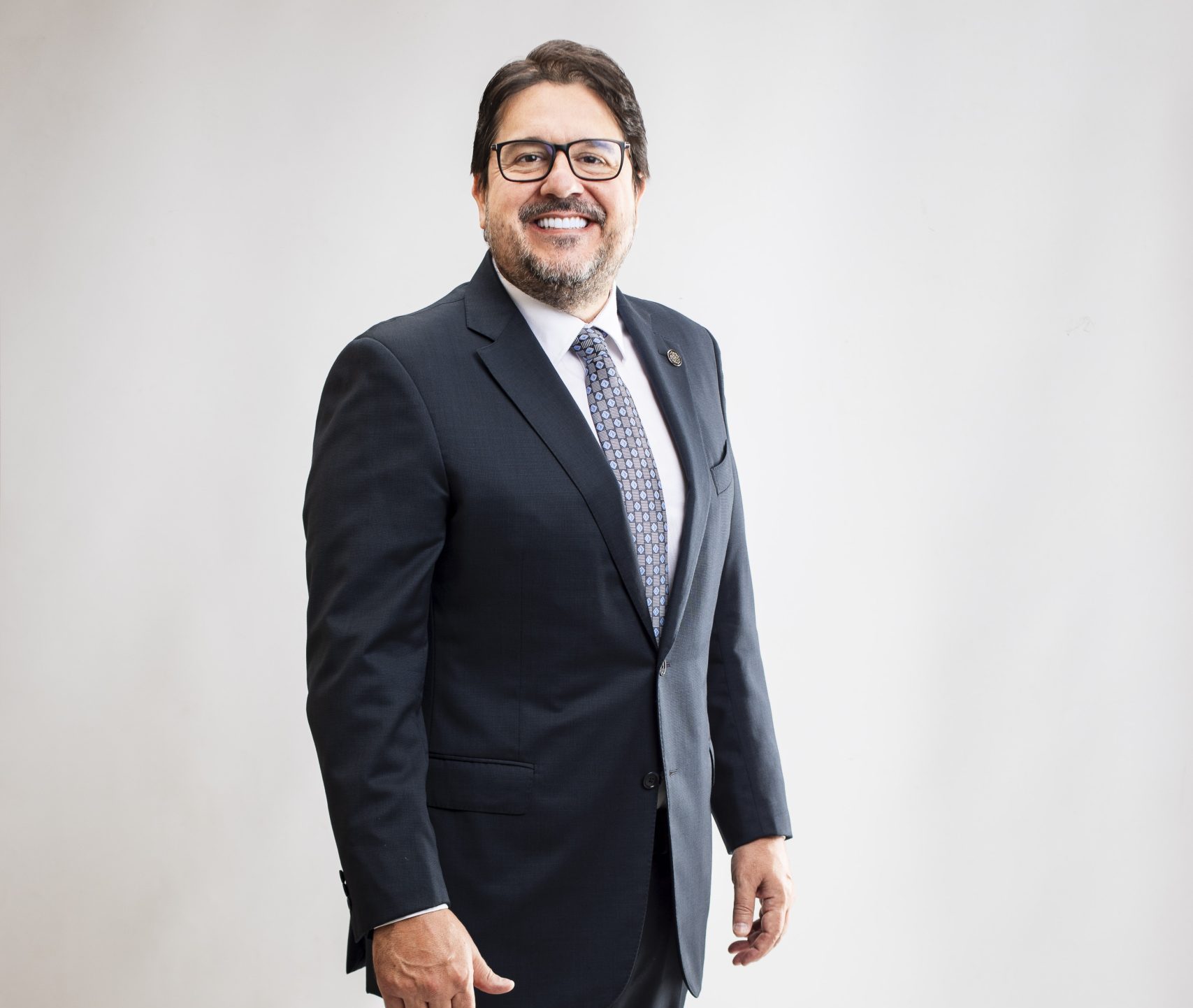
For Marcelo Hofke, CEO of Imbono, its significance extends beyond a single asset. “Cabinda is breaking a paradigm that a refinery could not be built in Africa,” he says. “This is really a flagship project for the country.” Hofke sees the refinery as the beginning of a broader push into energy infrastructure. If complex refining capacity can be delivered and operated locally, it can help make the case for further industrial investment. For Imbono, Cabinda therefore illustrates a wider principle: infrastructure creates lasting value only when the systems, skills and resources required to operate it are considered from the start.
That principle has shaped Imbono’s evolution from a business centered on financing and trade finance into an industrial operating platform spanning oil refining, water and sanitation through Acqua, infrastructure coordination and energy. Hofke brings a civil engineering background spanning sanitation, hydroelectric power and infrastructure, including eight years of previous work in Angola. Rather than treating capital, construction and operations as separate stages, Imbono combines financial and technical coordination with development, implementation and long-term management. “We don’t only want to perform here and leave the country,” Hofke says. The company works with contractors, engineers, supervision partners and financiers, but its role continues after construction. This gives Imbono a broader view of project risk, extending beyond whether an asset can be financed and built to whether it can continue functioning once handed over.
Hofke argues that Africa’s infrastructure challenge includes not only the need for new assets, but also existing facilities that require rehabilitation, management and maintenance. “There is a lot of existing infrastructure that needs proper management, proper maintenance and proper operation,” he says. Operations and maintenance are therefore central to the model. Hofke points to a water treatment plant as a practical example: construction alone achieves little if chemicals are unavailable, workers are untrained or spare parts cannot be sourced. The same principle applies across energy, ports and other infrastructure. “It’s not only to build. We need to train how to operate,” he says. By bringing those requirements into the project lifecycle earlier, Imbono aims to reduce the gap between infrastructure being completed and actually delivering the service for which it was designed.
That focus also changes the role of technical expertise. Imbono has assembled professionals with 20 to 25 years of industry experience, including work in emerging markets, to manage projects from development through implementation and operation. Their role is not simply to execute projects, but to transfer knowledge to local teams that will remain responsible for assets over time. Training younger workers is intended to make operations increasingly self-sustaining as the company expands. Hofke sees that transfer as essential to continuity: “We need to have the spare parts in place. We need to have all the consumables in place.” Without trained operators, maintenance systems and dependable supply chains, even a completed asset can fall short of its economic or public purpose.
“Everything is about people. It doesn’t matter if you have an experienced team if that team doesn’t have the spirit to serve and pass its knowledge on.”
The same lifecycle approach underpins Imbono’s role in the Pan-African Infrastructure Fund developed with Angola’s sovereign wealth fund. Hofke says the fund is intended to support industrial, energy, water and infrastructure projects that can convert more of Africa’s raw-material potential into goods for local use. The structure links capital with an operating platform capable of taking projects beyond financing and construction into service.
“We are here also to put the existing infrastructure to work and to deliver what it was proposed to deliver,” Hofke says. For investors, the approach places operational readiness alongside project finance, with maintenance, staffing and long-term performance considered as part of the investment case rather than problems to be addressed after commissioning. It also reflects a wider industrial objective: capturing more value from African resources by supporting the infrastructure required to process and use them within regional markets.
Angola remains Imbono’s operating base, while Hofke says its activities extend to the Democratic Republic of the Congo, Zambia and South Africa, as well as Venezuela. He identifies chemicals, petrochemicals, agro-industry and logistics as sectors with room for further investment, while acknowledging the currency, financing and return risks associated with emerging markets. “There are so many gaps to fill still,” he says. Hofke nevertheless expects significant investment deployment across Africa over the next 10 to 15 years. Imbono’s next test is whether the operating discipline demonstrated in Cabinda can be repeated across sectors and markets without losing the emphasis on local capability that supports long-term performance. “We believe that, in the next 10 or 15 years, there will be a huge deployment of investment here in Africa,” Hofke says. For Imbono, the opportunity lies not simply in adding assets, but in making sure they continue to deliver what they were built to provide as its regional footprint expands.

Contact
www.imbono.com
@imbono_group
Imbono
Produced independently of the TIME Africa newsroom by Penresa.