
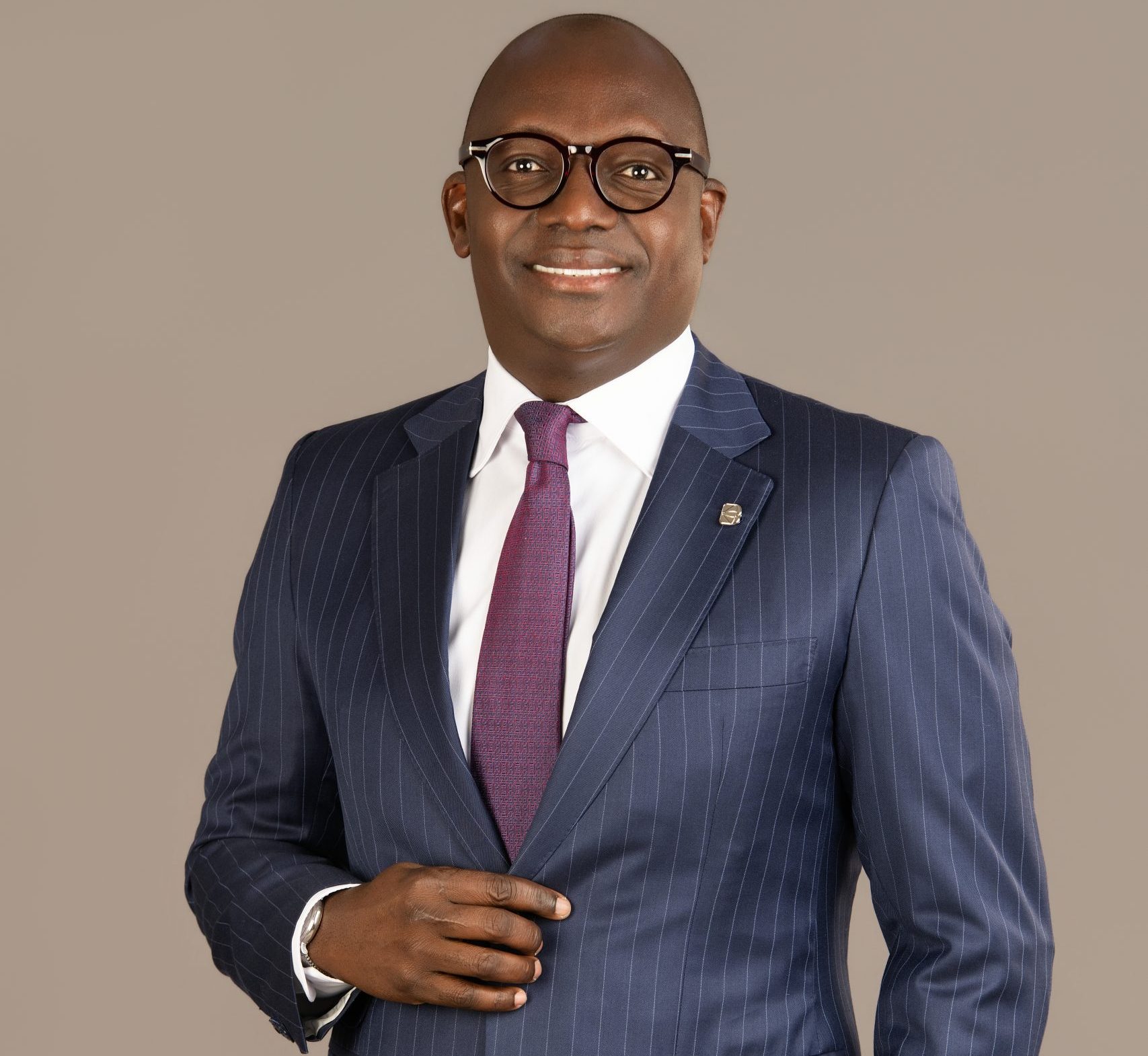
Pairing a recapitalized balance sheet with tighter governance, disciplined lending, digital modernization, and support for productive sectors as Angola seeks to diversify its economy and connect businesses to regional and Lusophone markets.
BNI’s solvency ratio rose from 6.67% to above 20% following its recapitalization, strengthening the bank’s financial base while placing greater emphasis on governance and risk discipline. One of the new management team’s first measures was to reorganize the corporate governance structure in line with international practice. This coincided with the entry of Fundo Fénix, managed by Kassai Capital. Chief Executive Officer José Carlos Manuel Burity describes the recapitalization not simply as a financial injection, but as an increase in management’s responsibility to shareholders, customers, employees, regulators, and the market. For Burity, the principle is straightforward. “The strength of a bank is the foundation of trust.”
That stronger base is intended to support measured growth rather than expansion for its own sake. Burity frames BNI’s direction around strength, proximity, governance, and transformation, with capital management and institutional discipline at the center. “Capital gives us the capacity to grow; governance gives us the discipline to grow well,” he says. The approach reflects a wider effort to make the bank more resilient while keeping its role closely tied to the needs of businesses operating in Angola.
BNI’s lending strategy is focused on the productive economy. Agriculture and agro-industry, manufacturing, logistics and distribution, energy, infrastructure, mining, services, and technology are among the sectors it wants to support, particularly where businesses can create jobs, generate export revenue, or substitute imports.
The bank also wants to support working capital, equipment, expansion, trade, and investment rather than treat credit as a single-purpose product. That focus is paired with a conservative view of lending. “Financing the economy does not mean lending indiscriminately,” Burity says. “A responsible bank must allocate capital with discipline.” The bank’s role, in his view, begins with understanding the project, the entrepreneur, the market, and the risks behind each transaction.
Small and medium-sized enterprises are a central part of that strategy. BNI sees access to credit as only one constraint on their growth, alongside formalization, accounting, management capacity, bankable project preparation, and market access. It is therefore looking beyond individual borrowers to the commercial networks around them. “Financing should follow the value chain,” Burity explains. In agriculture, that can mean considering producers alongside the companies that process, transport, store, and market their output. Manufacturing and agriculture together accounted for 92% of disbursements under the Program to Support Production, Export Diversification and Import Substitution (PRODESI) in the first quarter of 2026, reinforcing the importance of those sectors to Angola’s diversification agenda.
“We want to build an institution in which shareholders have confidence, customers feel secure, employees are proud to work, and regulators recognize a culture of responsibility.”
Digital modernization is another part of BNI’s operating reset. The bank is developing self-banking channels, payments, internal processes, and broader customer-service systems to make routine banking simpler and faster. Burity is careful not to frame technology as a substitute for relationships. “I do not see technology and proximity as opposing concepts,” he says. Instead, he argues that better systems should reduce unnecessary processes and give employees more time to understand customers and help them make financial decisions. As Burity puts it, “the real strategy is our people.” BNI wants to deepen long-term relationships through payments, international trade, treasury management, guarantees, and investment financing, particularly as companies become more sophisticated and their banking needs expand. “Our role does not end when we provide financing,”
Burity says. The objective is to remain close enough to clients to understand how their businesses are developing and where additional financial services can support the next stage of growth.
The bank also sees a role in connecting Angola more closely to regional and Lusophone markets. Burity points to the country’s links with Southern African Development Community economies and Portuguese-speaking markets as a basis for trade and investment that extends beyond domestic demand. For international companies, he argues, the opportunity is not only in what can be sold into Angola. “What can I produce in Angola, transform in Angola and export from Angola to other markets?” he asks. Agriculture, manufacturing, energy, infrastructure, logistics, mineral processing, financial services, and the digital economy all form part of that wider opportunity.
BNI’s next phase will depend on how effectively it converts a stronger capital position into disciplined financing and useful banking relationships. Its recapitalization has improved the foundation; governance, risk management, digital systems, and sector knowledge will determine what follows. Rather than pursuing scale alone, the bank is positioning itself around the productive businesses and value chains that can deepen Angola’s non-oil economy and connect more of its companies to regional markets.
Contact
www.bni.ao
bnicontactcenter@bni.ao
+244 923 168 500
+244 923 168 501
Produced independently of the TIME Africa newsroom by Penresa.