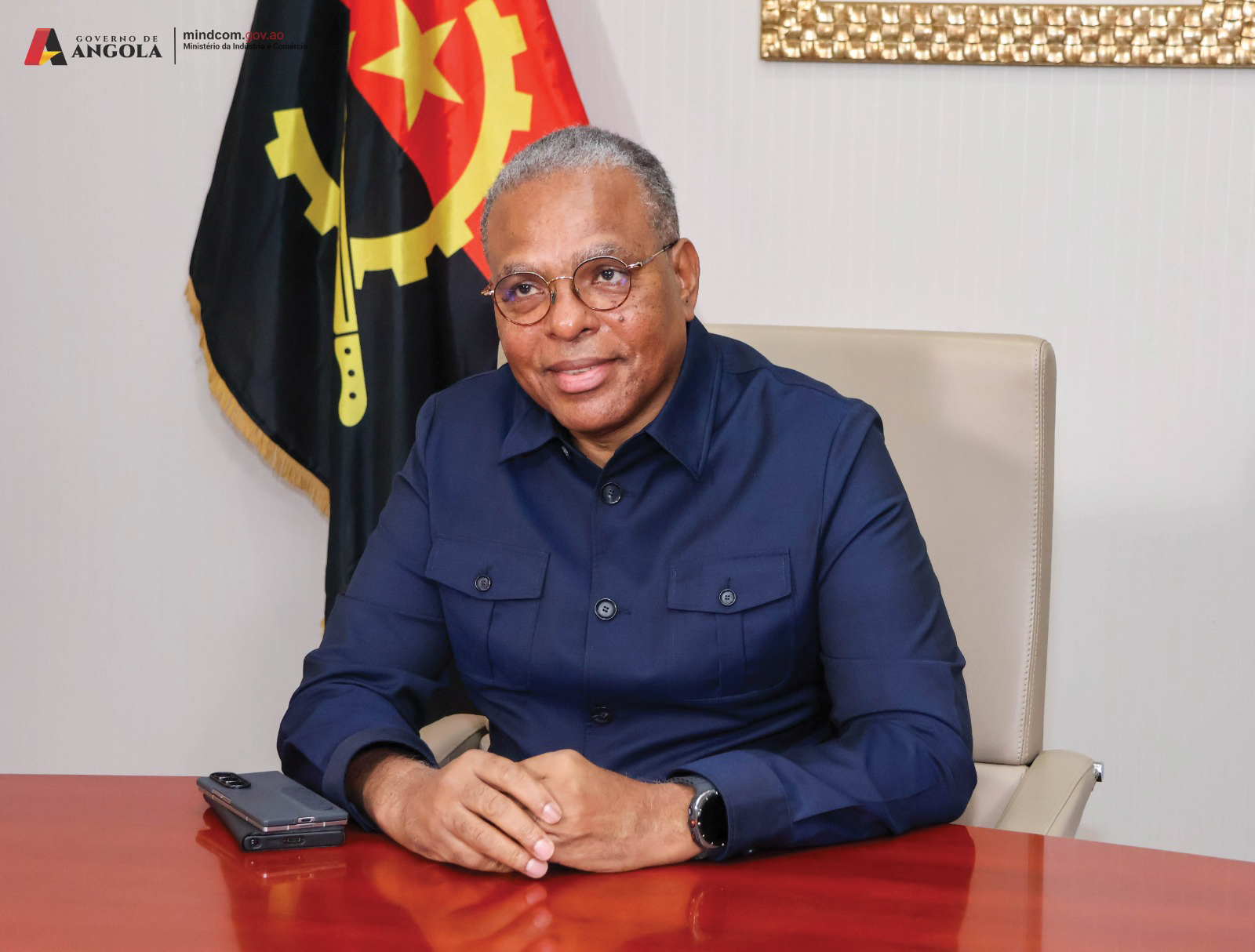
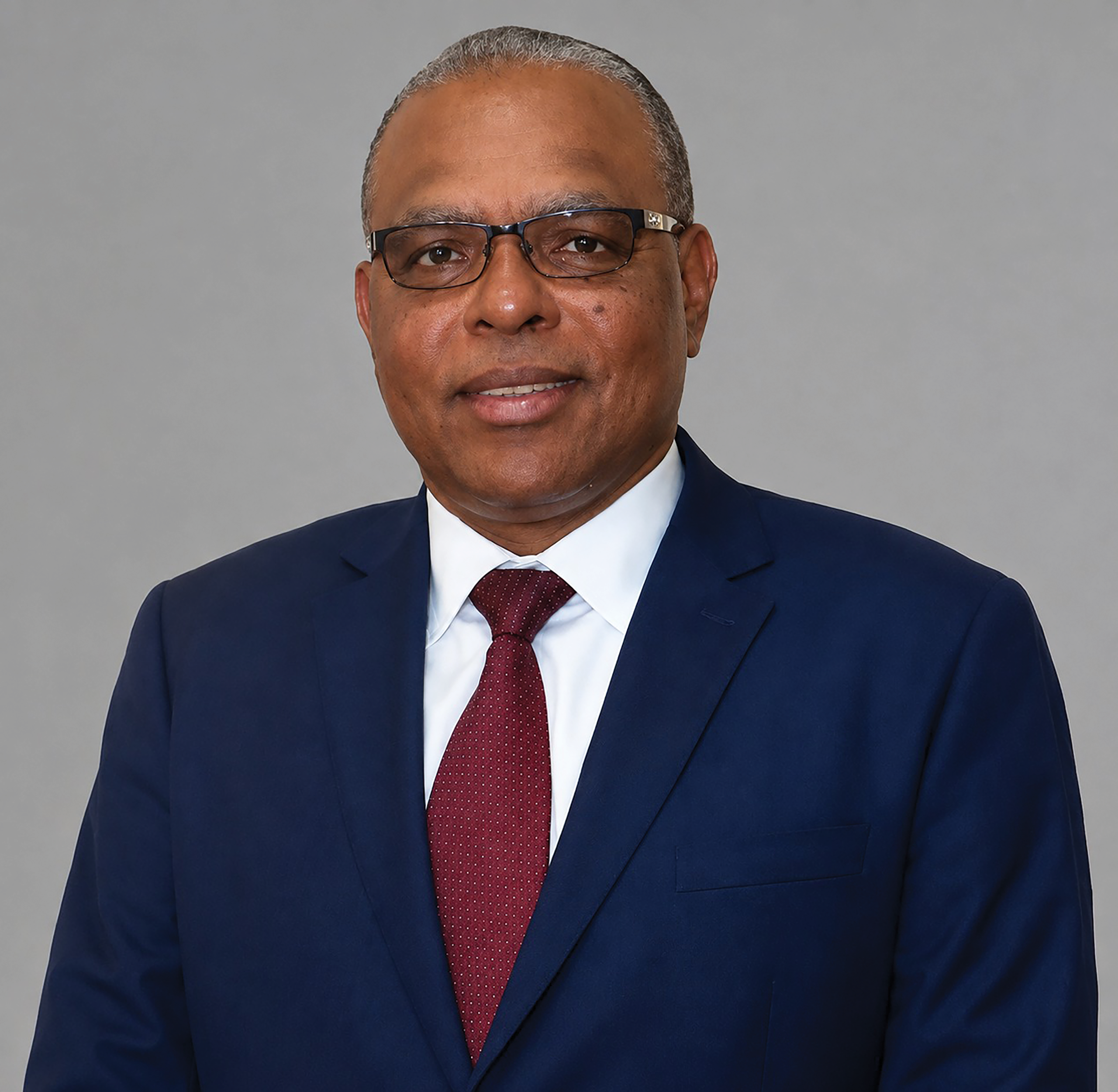
Hon. Rui Miguêns de Oliveira discusses how food processing, industrial infrastructure, and regional trade integration are expanding domestic production and opportunities for private investment.
How is the Ministry aligning industrial and commercial policies to strengthen domestic production and diversify the economy?
Economic diversification is one of the principal objectives of the National Development Plan 2023–2027. For the Ministry of Industry and Commerce, our central contribution is to advance food self-sufficiency and security. We are directing industrial policy toward processing agricultural and other primary-sector goods. The objective is to supply more domestic food while encouraging farmers to increase production. Agricultural output and the development of food-processing industries must reinforce each other.
Food processing already accounts for 44% of Angola’s industrial production by volume. We are working to substitute imported food products gradually with goods produced and transformed locally. Commercial policy supports this process through tariffs and other measures where Angolan producers are establishing capacity. We also prioritize national industries in the acquisition of goods and services. These measures must be applied in a balanced and sustainable way, allowing domestic companies to develop while preparing them to compete effectively.
The industries being established increasingly use advanced technology and automated production processes. That gives them the technical foundations for competitiveness, but productivity is equally important. Our responsibility is to create conditions in which businesses can establish themselves, improve output and eventually compete with imported goods on equal terms. Stronger domestic production is the starting point for industries that can also serve external markets.
How are industrial development hubs and special economic zones helping attract investment across Angola?
Industrial investment depends on infrastructure that companies can rely on. Since achieving peace, Angola has invested substantially in electricity, water, telecommunications, roads, railways, airports, and ports. These improvements create the conditions for factories to operate and for finished products to reach markets. Education and health are also essential, because industrial development requires people with the skills and capacity to operate production facilities, manage services, and support commercial activity. We initially concentrated industrial hubs in areas where supporting infrastructure was already available. Viana and Catumbela are the two hubs in full operation, accommodating businesses involved in food processing, equipment, and chemicals. The Luanda-Bengo Special Economic Zone provides government-financed infrastructure, tax incentives, and space for manufacturing, logistics, and services. There are still areas available for additional projects. Free-zone developments also accommodate heavier industries, including cement, aluminum, and other construction materials. These sites reduce the initial infrastructure burden for incoming investors.
Rural industrial parks serve a different but complementary purpose. They are smaller centers linked directly to agricultural and livestock production, with basic infrastructure such as electricity and water. By locating processing activities closer to producers, we can support the transformation of goods in more parts of the country. The government has invested in establishing these parks, and our objective is to see them operate efficiently and attract businesses suited to local production. Together, the hubs, special economic zone, free zones, and rural parks provide different options for industrial investment.
How is Angola improving trade facilitation and preparing companies to compete in regional and international markets?
I coordinate the National Committee for Trade Facilitation, which brings together the government institutions involved in imports and exports. These include tax, ministerial, and border authorities. We consult operators to identify obstacles and recommend measures that facilitate international trade. We are also working on a single window for external trade, supported by the World Bank, to simplify the procedures businesses must follow when moving goods across borders.
“The main engine of our economic development must be private investment. Angola can be a competitive home for international investors seeking opportunities across the African continent.”
Regional integration offers a substantial opportunity for Angolan companies. We are advancing our integration into the Southern African Development Community Free Trade Area and participating in the African Continental Free Trade Area. Angola’s 40 million people form part of a SADC market of around 350 million consumers. This expands the potential reach of our industries, particularly as trade barriers are reduced. At the same time, our producers will face increased competition from other countries in the region. They must therefore be able to compete in Southern Africa as well as at home.
Product standards are central to that preparation. We are working with industries such as food processing and construction materials to meet international quality requirements, because access to a market is only useful if products satisfy its standards. President João Lourenço has led economic diplomacy, while ministries promote national industries through international forums, trade fairs, and bilateral discussions. Events such as FILDA showcase domestic production. We also work with the African Development Bank and Afreximbank, which support industrial investment and international trade.
Which industrial sectors present the strongest opportunities for domestic and international investors?
Angola has advanced in diversifying its economy, and the non-oil sector makes an important contribution to gross domestic product. Nevertheless, many industrial value chains are not yet complete. A significant number of factories still depend on imported raw materials, creating opportunities for companies that can supply those inputs locally. Developing these connections would support businesses already operating in the country and allow a greater share of production to take place within Angola.
Agroindustry remains important, but there is also considerable scope for other manufacturing activities. We want to expand the light industry, including equipment for agriculture and civil construction. Some assembly of transport and logistics equipment has already begun, but that capacity needs to develop further. We also see opportunities in petrochemicals and renewable energy. These are areas where private investment can broaden the industrial base and complement existing production. The country has industrial hubs and designated zones with capacity to receive new projects. We also have substantial electricity-generating capacity, available land, and water resources. These are practical considerations for investors assessing where to establish facilities. The opportunity is not only to supply the Angolan market, but also to develop industries capable of serving customers elsewhere in the region.
What reforms are supporting private-sector participation and improving Angola’s business environment?
The government continually reviews the obstacles that make it difficult for businesses to establish themselves and expand. This applies to small, medium, and large companies. We are simplifying industrial licensing, reducing authorization times, and addressing administrative requirements that can delay investment. We do not regard improvement of the business environment as a completed task. It requires regular dialogue, attention to the difficulties businesses encounter and a willingness to adjust procedures where they create unnecessary barriers.
“The opportunity is not only to supply the Angolan market, but also to develop industries capable of serving customers elsewhere in the region.”
We have also revised the framework governing industrial development hubs and rural industrial parks. Private entities can now promote and develop these facilities in line with the government’s industrial priorities. Where the government has already provided infrastructure, we intend to transfer management to private operators. We believe this can improve the efficiency of the facilities and create new opportunities for investors to participate directly in industrial development, not only in the factories located within them.
The role of the public sector is to establish clear priorities, provide the necessary foundations and create conditions for investment. It cannot be the sole driver of industrial expansion. Our development policy places private initiative at the center of economic activity, and the measures we are taking are intended to make that participation easier and more effective.
What message would you give international investors about Angola’s long-term industrial ambitions?
We have made important progress, but industrial diversification is not yet consolidated. There are still production chains to establish and industries to develop beyond food processing. Our ambition is to expand manufacturing, increase the domestic supply of raw materials and equipment, and strengthen the ability of Angolan companies to compete in regional markets. That will require sustained investment in production capacity and in the services that support it.
Our population is young, and this represents a considerable opportunity. At the same time, we must accelerate education and professional training so that more people can participate in industrial, commercial, and service activities. The country has made substantial investments in infrastructure, but its value will depend on the enterprises that use it and the people prepared to work in them.
We want investment to put our existing industrial infrastructure to productive use. The government is committed to removing barriers and improving conditions for businesses to operate. We want international investors to recognize the opportunities that remain and to participate alongside Angolan companies in the country’s economic and social development. Angola is open to those who want to invest in that future.
Produced independently of the TIME Africa newsroom by Penresa.