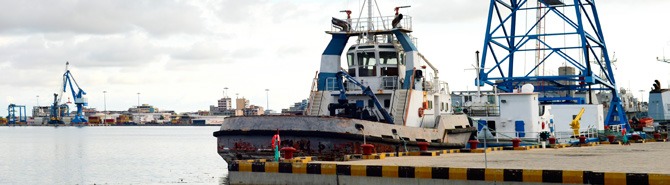

Strategic infrastructure, regulatory reform, and private investment are expanding Angola’s connections to regional markets and supporting economic diversification.
How is the Ministry aligning transport strategy across rail, aviation, maritime, and urban mobility to support Angola’s economic diversification?
Transport infrastructure is fundamental to Angola’s economic diversification. Our objective is to support agriculture, industry, and other productive sectors by improving access to domestic and international markets. Since 2017, we have undertaken structural reforms to make the sector more efficient, competitive, and capable of supporting regional trade. In 2018, we developed a 25-year transport and road infrastructure master plan to guide these investments and establish a long-term direction for the sector.
Institutional reform has been an important part of this process. Between 2019 and 2020, we established regulatory and supervisory bodies across civil aviation, maritime transport, land transport, and logistics, aligning our framework more closely with international standards. These changes have enabled us to introduce a concession program for ports, railways, airports, and logistics platforms, bringing private-sector expertise into the development and operation of strategic infrastructure.
Our master plan has two main pillars. The first is to strengthen national connectivity and integrate Angola’s transport network with neighboring countries, particularly the DRC, Zambia, Namibia, and Botswana. This will allow our infrastructure to contribute to regional trade and economic growth. The second pillar addresses urban mobility. Rapid urbanization requires higher-capacity public transport systems, including Luanda’s planned light railway and three bus rapid transit lines. Improving daily mobility is essential for productivity and quality of life, just as efficient freight infrastructure is necessary for competitiveness. Both priorities are essential to Angola’s development and its integration with neighboring economies.
What role do rail infrastructure and the Lobito Corridor play in strengthening Angola’s position as a regional logistics gateway?
The Lobito Corridor is one of our most important strategic projects because it provides an Atlantic gateway for the economies of Central and Southern Africa. Through the corridor, our aim is to reduce transit times for goods from the center of the region to the Atlantic coast from around 60 days to seven days. Regional freight trains are already operating between the DRC and Angola, supported by investment in railway infrastructure, professional training, and operational capacity.
The next priority is to transform the Lobito Corridor into an economic development corridor. We are advancing the proposed Zambia-Lobito railway, with the Africa Finance Corporation as lead developer, supported by the governments of Angola and Zambia. Connecting to Zambia will also provide access to other regional transport networks, including TAZARA, Beira, and Durban. These connections will create additional routes for trade while improving access to markets for businesses operating throughout the region.
The World Bank is financing a Lobito Corridor Master Plan to identify opportunities for investment along the route. We also intend to establish the Lobito Corridor Development Corporation to advance strategic projects and encourage complementary private initiatives. Critical minerals are already being transported through the corridor, but our ambition extends to processing and industrial development. We want greater value to be generated within the region rather than relying exclusively on the movement of raw materials. Developing these activities can attract investment into manufacturing and related services while creating qualified employment for our young population. That is where the corridor’s greatest economic potential lies.
What are the Ministry’s priorities for expanding aviation capacity and strengthening regional connectivity?
Aviation is one of the most advanced areas of our transport reform program. We see it as an important enabler of economic diversification, particularly tourism, which presents considerable opportunities for Angola. We have therefore prioritized regulatory modernization, airport infrastructure, air traffic control, airline development, and professional training. These investments are intended to improve international connectivity and establish the conditions for a more competitive aviation industry.
Dr. António Agostinho Neto International Airport represents a major step in this process. Its first phase provides capacity for 15 million passengers and 130,000 tonnes of cargo annually, with the potential to expand to 60 million passengers and 500,000 tonnes. We want to establish a broader aviation ecosystem around the airport, including logistics, maintenance, and commercial services. The proposed airport city of Ícolo e Bengo will also create opportunities for private investors to participate in infrastructure and urban development. We want the airport to generate economic activity well beyond passenger and cargo operations.
We are also transforming our national airline through the Palanca Project, supported by Lufthansa. The airline had 13 aircraft in 2017, and approximately 16 have since been added, with another nine planned by the end of 2027. This expansion will support stronger regional connections. We have opened services to Nairobi and Abidjan and are planning routes to Lusaka, Harare, Accra, Dakar, and Cape Verde, alongside greater international connectivity. We are also engaging with aircraft manufacturers and industry partners to develop maintenance, repair, and overhaul capabilities and a training center in Angola. Cooperation with international aviation authorities is essential to strengthening technical standards and ensuring that the sector develops sustainably.
“We need to go beyond transporting critical minerals and create value within the region.”
How is the Ministry improving port and railway infrastructure to strengthen Angola’s trade competitiveness?
Angola is continuing to invest in port infrastructure while increasing private-sector participation in its operation and development. One of our priorities is the deep-water port of Caio in Cabinda, which will serve northern Angola and neighboring markets, including the DRC and the Republic of the Congo. We are also planning a port at Porto Amboim. Together with Soyo, Luanda, Lobito, and Namibe, these projects will strengthen infrastructure across our six port jurisdictions. We have adopted a landlord-port model that allows specialized operators to manage activities and introduce greater operational efficiency.
Port development must be accompanied by stronger inland transport connections. We are therefore advancing railway projects including Luena-Saurimo, rehabilitation of the Zenza-Cacuso section, and connections linking Malanje, Kuito, and Menongue. We also intend to extend our railway network toward the DRC and Namibia, while developing the South Corridor as another important combination of port and rail infrastructure. These investments will help connect productive regions in the interior to domestic and international markets, reducing the concentration of economic activity along the coast.
Logistics platforms are another important component of this strategy. We are developing facilities near border crossings and agricultural production areas to improve the collection, storage, and distribution of goods. The Caála logistics platform in Huambo demonstrates their potential, already contributing to fruit exports to the Netherlands through the Lobito Corridor. Our objective is to establish an integrated network in which ports, railways, and logistics platforms complement one another. This will allow producers to access markets more efficiently and strengthen Angola’s position as a trading gateway for the wider region.
What reforms are supporting private-sector participation and attracting long-term investment into Angola’s transport network?
Private-sector participation is fundamental to our strategy because infrastructure development requires both financial resources and specialized operational expertise. We have successfully concluded five concessions, generating more than US$400 million in entry fees and approximately US$1.5 billion. These agreements cover major transport assets and have attracted experienced international operators. The concession program continues with projects involving Caio Port and the South Corridor, alongside negotiations for Dr. António Agostinho Neto International Airport.
International operators are already helping improve infrastructure performance. Historically, Angola’s port activity depended heavily on imports, which were closely linked to oil revenue. When oil prices declined, lower import volumes generally affected port operations. Today, we are seeing port activity grow even as imports decline. This reflects the changing role of our ports, which are increasingly supporting international trade and developing connections with inland logistics networks.
The Port of Luanda provides an example of this transformation. Abu Dhabi Ports and Noatum Logistics are investing in a modern terminal supported by financing from the African Development Bank. The project incorporates digital technology and reflects the operational improvements that private participation can bring. These partnerships are important not only because they mobilize capital, but because international companies contribute technical knowledge, management experience, and access to global markets. Our objective is to combine continued public investment with private-sector capabilities, improving the efficiency and commercial sustainability of the transport network while creating opportunities for businesses operating in Angola.
What message would you give international investors about Angola’s long-term opportunities in transport and logistics?
We are ready and we are open for business. We have been working in international forums to attract investors and transport operators to Angola. We understand that companies must assess risks as well as opportunities, and we are prepared to engage with them. The reforms and concession programs we have pursued are intended to make our infrastructure available for investment and international trade.
We have already attracted international operators to our ports and railways, and we are continuing to offer opportunities through concessions and new projects. The Lobito Corridor illustrates what private participation can achieve and how transport can serve businesses across the region. We intend to make better use of our geographical position, connect with neighboring countries, and encourage productive activity along these routes. In the transport sector, our team understands its responsibilities and is ready to support requests from investors interested in working in Angola. We encourage international partners to carefully examine the projects underway, the progress made with concessions, and the opportunities still available. These opportunities include the development of logistics platforms, improved railway links, stronger regional connections, and further sustained private investment in ports and aviation services. Our message is straightforward: we welcome investors ready to take part in Angola’s continuing transport development.
Produced independently of the TIME Africa newsroom by Penresa.