
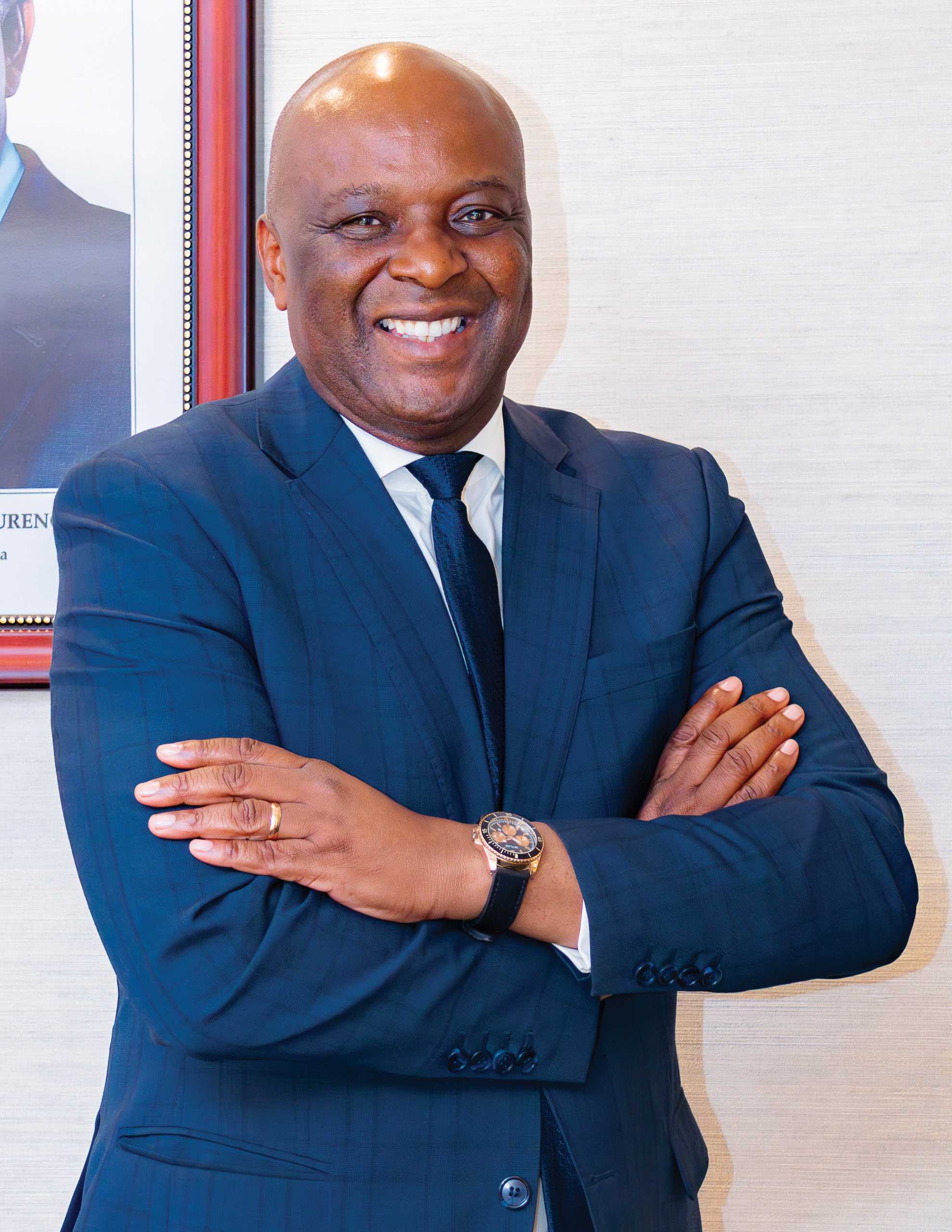
Minister Carlos Alberto Gregório dos Santos explains how roads, private finance, and planned urban growth can strengthen economic diversification and improve Angolans’ daily lives.
How is the ministry aligning infrastructure investment with Angola’s economic diversification agenda?
Public works must serve economic activity, not simply add kilometers of road. A reliable route allows farmers to reach markets, industries to receive supplies, and families to access health care, schools, and employment. Roads and bridges are therefore instruments of economic and social development. We must plan housing and urban growth around the infrastructure that supports them.
Angola’s road network covers approximately 79,300 kilometers, including national, secondary, and tertiary roads.
It links Luanda with the other provincial capitals and connects the country to Namibia, Zambia, and the Democratic Republic of Congo. We have intervened on around 12,000 kilometers of national roads and 15,200 kilometers of secondary and tertiary routes. The priority is twofold: maintain these investments and continue extending access to productive areas.
This requires decisions based on the function of each route. Not every road needs to be asphalted; suitable construction standards depend on traffic, geography, costs, and the goods being transported. What matters is that production centers are connected to consumers and ports. By combining road development with land-use planning and housing, we can reduce transport costs, support businesses, and give more communities a share in economic growth.
Which transport corridors will be most important to Angola’s role in regional trade?
We are concentrating on the routes that connect production areas with cities, border crossings, and maritime gateways. Rehabilitation and maintenance of national roads, including the EN100 and EN230, are essential to this work. A reliable road network allows agricultural and industrial goods to move more quickly and gives investors greater confidence in access to domestic and regional markets.
Our next ambition is a north-south highway of approximately 1,600 kilometers, linking the Namibian border to the Democratic Republic of Congo. We have advanced the studies and identified the route, and we intend to deliver the project through a public-private partnership. We are also studying a west-east road corridor from the Benguela and Lobito area toward Luau, in Moxico Leste, and the Zambian border. These are projects at different stages of preparation, but both are central to our longer-term transport strategy.
The west-east road corridor is important alongside the Lobito railway corridor. Rather than seeing roads, railways, and ports separately, we want them to provide complementary connections for exporters and local producers. Angola occupies a strategic position between Southern and Central Africa. Better links with our neighbors can expand trade, lower logistics costs, and create opportunities for agriculture, mining, manufacturing, and services throughout the country.
How can road concessions and private investment make infrastructure more financially sustainable?
The greatest challenge after construction is maintenance. A road that deteriorates prematurely imposes new costs on the state and on the people and businesses that use it. We have therefore approved a road concession program and are examining how private participation can support both maintenance and the development of new infrastructure.
We aim to establish at least 14 road concessions by 2027, initially prioritizing connections at border crossings before extending the program to the internal network. The revenue generated can contribute to road and bridge conservation. We are also introducing vehicle-weighing systems at key points on the network. Excessive truck loads accelerate damage to roads and bridges, so enforcement is part of protecting the value of public investment. New roads can also be developed through public-private partnerships, provided the arrangements are economically sound.
Traffic studies help determine potential revenues and the period required to recover construction costs. Depending on the project, that might involve a concession lasting 15, 20, 25, or 30 years before the asset returns to the state. We are learning from international experience, including European approaches to concessions, while encouraging Angolan and foreign companies to participate. Our condition is that these agreements deliver safe infrastructure, transparent obligations, financial sustainability, and tangible benefits for users.
How is the ministry addressing housing demand while improving the planning of Angola’s cities?
Housing cannot be treated as a construction target alone. Families need accessible roads, water, electricity, drainage, schools, and health facilities. Without those services, new developments can reproduce the problems we are trying to solve. Our approach is to bring urban planning and housing delivery together from the beginning.
“We want to leave behind a more connected, competitive Angola with better living standards for families.”
Angola has 326 municipalities, and we are advancing municipal master plans to organize land use and guide future investment. These plans identify where public facilities, economic activity, and residential neighborhoods should develop. They also help prevent unplanned construction and give investors greater clarity about the direction of urban growth. We are strengthening the skills of our planners, architects, and engineers to support this work.
The public sector has built approximately 350,000 homes, accommodating nearly two million people. Even so, population growth continues to place pressure on supply. We estimate that Angola needs roughly two million to 2.2 million additional homes to address its housing deficit. The state must retain responsibility for social housing, but the scale of demand requires the private sector and citizens to participate as well. One model is for the state to make land available and provide basic infrastructure while private companies develop homes for sale. We are also promoting guided and assisted self-construction, which allows families to acquire plots and build progressively as services are extended. In each case, we are seeking more climate-resilient neighborhoods through better drainage, green space, and mobility. The objective is not simply more housing, but better-organized communities where families can live with dignity.
What are international partnerships contributing beyond financing individual projects?
Angola cannot finance all of its infrastructure requirements from national resources. Working with development banks, export credit agencies, and international companies helps us mobilize capital for major projects. Equally important, these partnerships allow our institutions to improve project preparation, acquire technical knowledge, and develop the skills needed to manage infrastructure over its full lifespan.
Our relationship with the World Bank is particularly relevant to urban development. Programs such as SONA and Njila support improved urban growth management, climate resilience, and access to affordable housing. Cooperation with development institutions, including the African Development Bank, also contributes to territorial planning and professional training. These efforts help strengthen the public teams responsible for translating plans into completed projects.
UK Export Finance has supported infrastructure investment in Benguela, where work encompasses roads, bridges, drainage, water systems, and related urban improvements. We also draw on international expertise in bridge construction and conservation. The value of these relationships extends to standards, equipment, and the experience gained by Angolan engineers and contractors.
We do not want a project to end with the completion of physical works. It should leave behind stronger institutions, qualified professionals, and better ways of managing investments. That is how external cooperation becomes a lasting contribution to Angola’s development capacity.
What practical improvements should define the legacy of Angola’s infrastructure program?
The most meaningful legacy will be infrastructure that lasts and improves daily life. We are upgrading roads to meet technical standards used in the Southern African Development Community, including wider road profiles and durable pavements. On roads being upgraded, this can mean moving from older widths of seven to nine meters toward 12 meters, and using two layers of asphalt instead of one. Quality matters because these assets must serve future generations.
The approximately 625-kilometer Malanje– Saurimo road shows the difference that a good connection can make. A journey that previously took 10 to 12 hours can now take around three to four. That changes the movement of passengers, goods, and services between communities. We are pursuing similar improvements in bridges and public facilities, while the recently inaugurated Palácio de Convenções de Luanda demonstrates the potential for modern infrastructure to attract business gatherings and international events.
We are also modernizing the Angola Engineering Laboratory. It tests construction materials before works begin and assesses completed infrastructure, helping ensure that public investment meets safety and quality requirements. We are strengthening dialogue with universities, professional organizations, and infrastructure users because their knowledge can improve our decisions. Ultimately, we should be judged by roads that remain usable, cities that grow in an organized way, and housing that gives families access to essential services. Those are the results that can strengthen Angola’s competitiveness and improve living standards over time.
Produced independently of the TIME Africa newsroom by Penresa.