
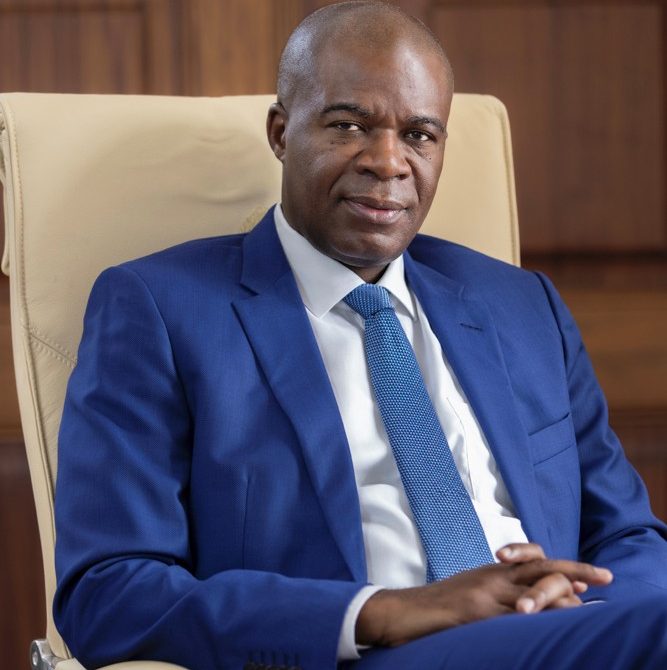
Manuel António Tiago Dias discusses progress on inflation, financial-sector resilience and digital inclusion, while highlighting an improving investment environment and Angola’s long-term economic opportunities.
How does Banco Nacional de Angola coordinate monetary policy with the Government to support economic and financial stability?
The Law of Banco Nacional de Angola establishes our independence in the formulation and implementation of monetary policy. It defines our principal mission as ensuring price stability, with the stability of the national financial system as a secondary mission. We also supervise Angola’s payment systems, produce official statistics and manage the country’s external reserves. Our relationship with the Government is governed by a protocol with the Ministry of Finance for the coordination of monetary, exchange and financial policies. This coordination is fundamental to promoting economic stability and supporting growth. Each institution has a clearly defined role, but we maintain a productive relationship that allows us to work toward common goals.
What role does BNA play in strengthening Angola’s attractiveness as a destination for international investment?
Our contribution can be defined in two directions. The first is price stability. Low and stable inflation is a clear sign of the economic stability international investors require. Angola has historically experienced high inflation, but the independence granted to Banco Nacional de Angola and the monetary policy instruments we have implemented have enabled us to reduce it. In May 2026, inflation stood at 10.88%, and we expect the downward trend that began in 2024 to continue. Our long-term objective is a single-digit inflation rate. We have also been consolidating our international reserves, another important indicator for investors. In 2025, they stood at US$15.9 billion, providing approximately eight months of import coverage. This demonstrates Angola’s capacity to honor its external commitments. We have also seen relative exchange-rate stability and greater ease in transferring profits and dividends. Together, these indicators strengthen Angola’s investment proposition, including in the Lobito Corridor and agriculture.
How are recent banking reforms reinforcing the resilience and credibility of Angola’s financial system?
In recent years, we have implemented measures aimed at strengthening the sustainability and solidity of the financial system. We increased the minimum capital required for banking institutions, improved risk-based supervision mechanisms, and have continued implementing measures aligned with international accounting and financial reporting standards. We have also been extremely demanding regarding the prevention of money laundering and terrorist financing. As a result, our banking system is better prepared to fulfil its responsibilities and strengthen confidence among international financial institutions. These efforts extend beyond the Central Bank. Government authorities are also working toward an economy that is increasingly open to the world and more closely aligned with international standards.
What does Angola’s renewed access to international financing indicate about confidence in the country’s economy?
Angola has always been a good payer, and we do not have a historical record of default by the Angolan authorities in international markets. Our indicators, particularly international reserves, demonstrate the external sustainability of our economy and our ability to meet future commitments. Investors are ready to commit capital when they see these signs of economic stability. Financing obtained from international markets allows us to continue supporting our economy. Because it is external financing, it also contributes to greater stability in the foreign-exchange market and reinforces confidence in Angola’s capacity to meet its obligations.
“Our indicators, particularly international reserves, demonstrate the external sustainability of our economy and our ability to meet future commitments. Investors are ready to commit capital when they see these signs of economic stability.”
How are digital payments and financial inclusion contributing to the modernization of Angola’s financial system?
The National Financial Inclusion Strategy was developed in partnership with international institutions, particularly the World Bank. We believe its implementation will significantly increase financial inclusion, and the latest data are encouraging, with the level reaching around 54.36%. Bringing citizens who remain outside the financial system into it will contribute to better implementation of our monetary and macroprudential policies. Digitalization of payments is particularly important considering Angola’s territorial size and the insufficient coverage of banks and other access points for financial services. Angola already has interoperability between bank accounts and digital payments, and we believe expansion can be accelerated through digital wallets. We are also promoting credit cooperatives, microcredit and microfinance institutions, making services more accessible across the country.
What message would you give international investors looking at Angola’s opportunities?
Angola has significant investment opportunities across a wide range of sectors. As the Central Bank, we are particularly interested in investments that increase the domestic supply of goods while generating export revenues and strengthening the country’s external position. Agriculture is extremely important because Angola has vast arable land and water resources, while fishing and tourism also offer considerable potential. International investors have already recognized these opportunities. Since 2025, we have seen a reversal in foreign direct investment flows, particularly in the non-oil sector. FDI increased by around 171% in 2025 compared with 2024. We want this momentum to continue, helping Angola achieve sustained macroeconomic stability and growth for years to come.
Produced independently of the TIME Africa newsroom by Penresa.