
Every era of business creates a different competitive advantage. The industrial revolution rewarded manufacturing capacity. The digital age rewarded access to information. Social media transformed attention into one of the world’s most valuable commodities. Now, as artificial intelligence reshapes how people discover businesses, evaluate leaders and make decisions, another shift is taking place – one centred not on technology itself, but on trust.
Whether a company is raising capital, attracting customers, recruiting talent or entering new markets, first impressions are increasingly formed before a conversation ever begins. Search engines, news articles, executive profiles, podcasts and AI-generated summaries have become part of the modern due diligence process. Long before a meeting is scheduled or a proposal is reviewed, stakeholders are already building an impression of the people and organisations they are considering.
In this environment, reputation is no longer simply the domain of public relations. It is becoming a strategic business asset.
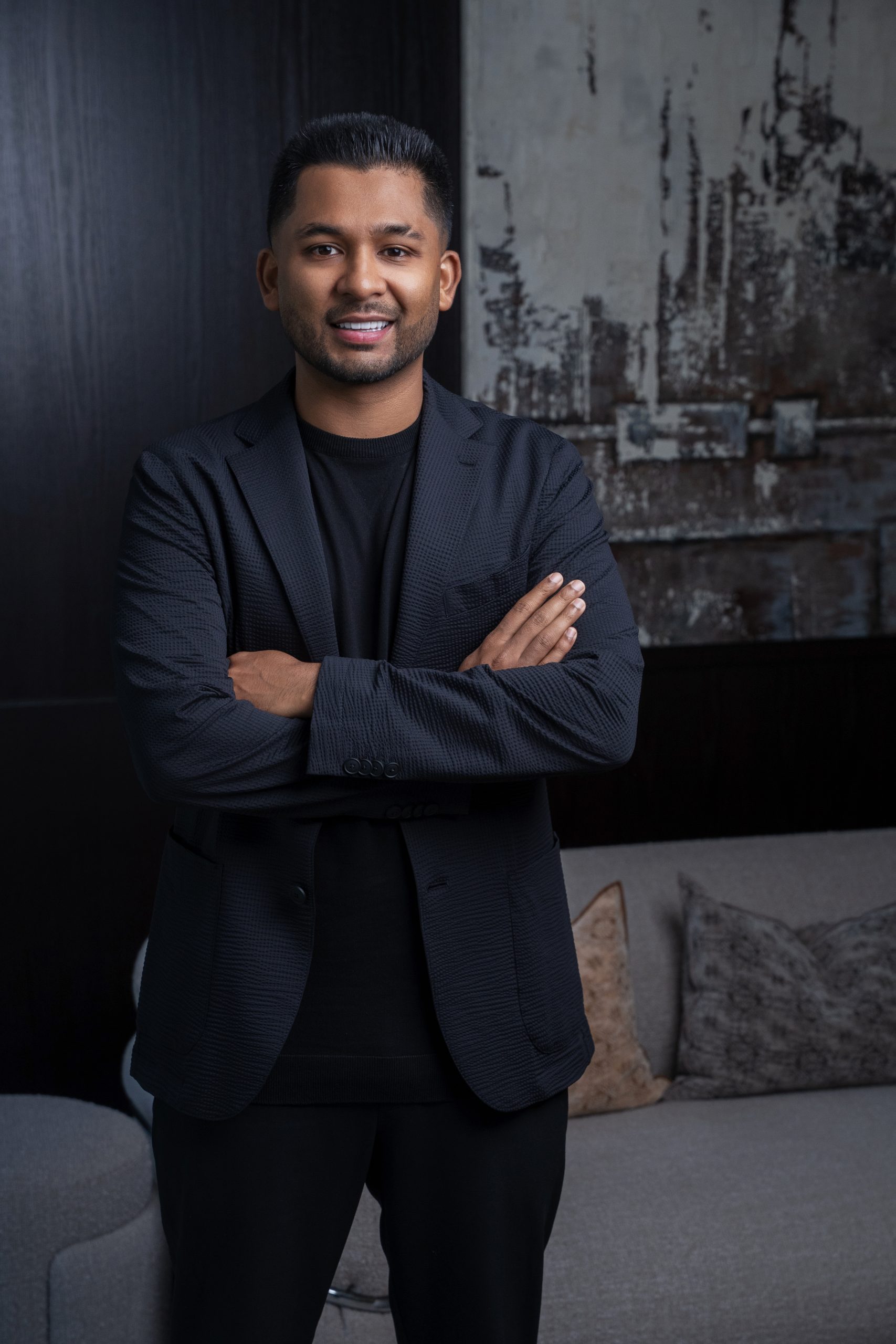
That changing landscape has given rise to a new generation of businesses focused not only on communications, but on credibility itself. Among them is CredibilityX, founded by entrepreneur and media executive Sashin Govender, whose business reflects a broader shift in how reputation is being built, managed and measured in the AI era.
Govender’s interest in reputation did not begin with the launch of his company. Long before founding CredibilityX, he spent more than a decade building his own public profile – authoring bestselling books, interviewing internationally recognised business and personal development leaders, speaking at conferences across multiple continents and establishing businesses spanning media, marketing and investment.
Those experiences led him to a recurring observation. Products and services certainly mattered, but important business decisions were increasingly influenced by what people discovered before making contact. Investors searched online. Prospective clients read interviews. Partners looked for evidence of expertise and credibility. Increasingly, business relationships were being shaped long before the first conversation took place.
“We’re no longer simply operating in an information economy,” Govender says. “We’re moving into a trust economy.”
That philosophy would become the foundation of CredibilityX.
Founded in 2015, the company has evolved into one of the world’s largest media distribution and public relations infrastructure platforms. Today it provides access to more than 1,700 publications across business, finance, technology, luxury, lifestyle, artificial intelligence, blockchain and regional markets, while supporting a global ecosystem of more than 2,500 agency and white-label partners serving clients in over 90 countries. Its growth reflects a wider transformation taking place across the communications industry.
Historically, public relations was often viewed as a mechanism for generating publicity. Today, the conversation has broadened considerably. Executive profiling, thought leadership, search visibility, earned media and digital authority are increasingly viewed as commercial assets that influence investment decisions, customer confidence and long-term brand value. Artificial intelligence is accelerating that evolution.
As AI-powered search tools and digital assistants become more widely adopted, they are changing how information is gathered and presented. Rather than visiting dozens of individual websites, users increasingly rely on AI-generated summaries that draw from publicly available information across multiple sources. The quality, consistency and credibility of an organisation’s digital footprint therefore become increasingly important – not only for human audiences, but also for the technologies interpreting that information.
For founders and executives, this creates both an opportunity and a challenge.
Building a successful business is no longer sufficient on its own. Increasingly, leaders are expected to demonstrate expertise publicly, contribute to industry conversations and establish a record of credibility that extends beyond their own marketing materials. Independent media coverage, professional commentary and visible thought leadership have become part of the broader equation.
“Advertising creates awareness,” Govender says. “Credibility creates conviction.”
Rather than operating as a traditional agency, CredibilityX has positioned itself as an infrastructure business supporting that shift. Instead of competing directly with communications firms around the world, it provides media access and distribution capabilities that allow thousands of agencies and consultants to deliver international campaigns under their own brands. The model reflects a broader trend across the modern economy, where platforms increasingly create value by enabling entire ecosystems rather than operating as standalone businesses.
“The future belongs to ecosystems,” Govender says. “The strongest businesses won’t necessarily do everything themselves. They’ll build networks that allow others to grow alongside them.”
Yet perhaps the most significant change is not technological, but behavioural. Visibility can be purchased. Trust cannot.
In increasingly competitive markets, business leaders are beginning to ask a different question. Rather than simply seeking greater exposure, they are considering what a potential investor, client, employee or strategic partner discovers after spending ten minutes researching them online. That digital first impression can influence decisions long before formal discussions begin.
This evolution extends well beyond entrepreneurs. Governments competing for foreign direct investment, universities attracting international students, investment funds raising capital and multinational corporations entering new markets all face the same challenge: establishing credibility in an increasingly crowded and information-rich world. Reputation, in that sense, is becoming part of economic infrastructure.
It remains no substitute for innovation, operational excellence or strong leadership. Businesses still need to build exceptional products, deliver results and earn trust through their actions. But as artificial intelligence becomes an increasingly influential gateway to information, those achievements also need to be visible, verifiable and understood by the audiences – and increasingly the technologies – evaluating them.
The companies that define the next decade may not simply be those with the best products or the largest marketing budgets. They are likely to be those that combine innovation with credibility, and visibility with trust.
In the AI era, reputation is no longer merely the outcome of business success. It is increasingly becoming one of the conditions that make success possible.
TIME Africa staff were not involved in the creation of this content.