

The continent’s AI future will be decided not by how many international platforms it adopts, but by how effectively it builds solutions rooted in African realities – in African languages, for African problems.
Artificial intelligence has become the defining conversation in boardrooms from Johannesburg to Lagos to Nairobi. Organisations across the continent are racing to understand how AI can lift productivity, sharpen customer experience and open new economic frontiers. But beneath the enthusiasm sits a harder question: how does Africa make sure AI delivers meaningful value here, rather than simply importing someone else’s revolution?
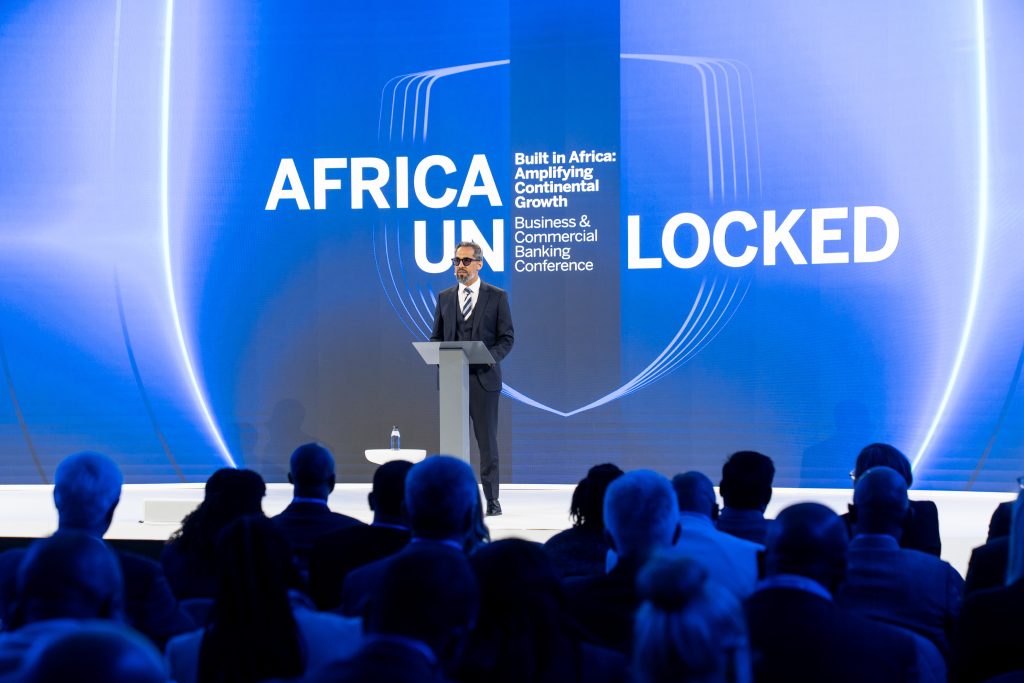
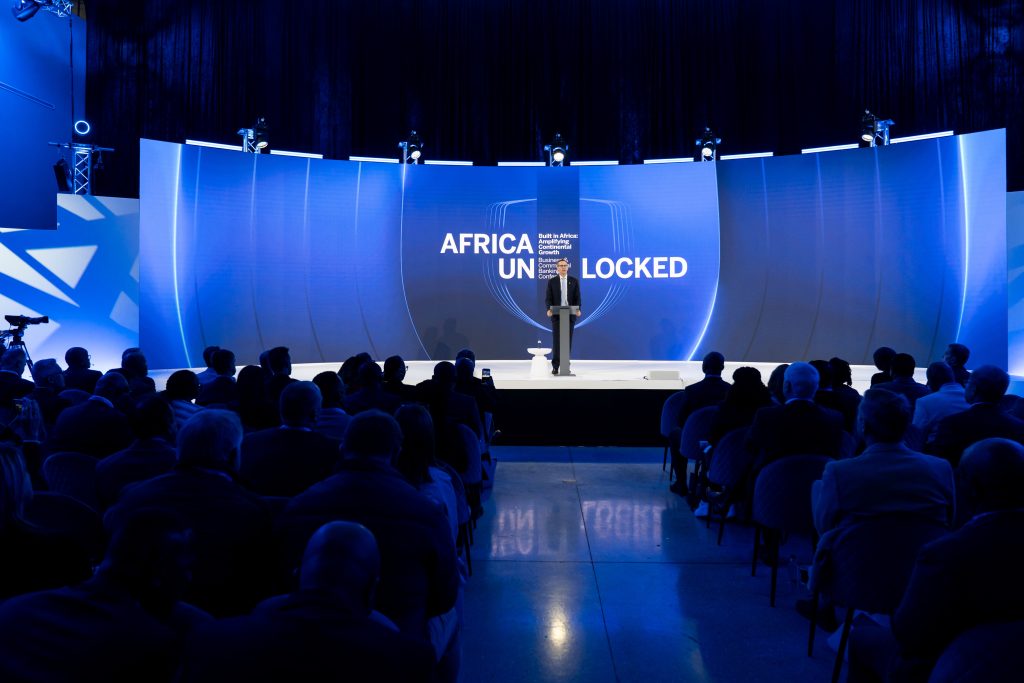
That question anchored the panel discussion “AI in the Engine Room – Deploying Technology Across African Industries” at Standard Bank Africa Unlocked 2026, and the answer that emerged was unambiguous: Africa cannot afford to be merely a consumer of AI built elsewhere. The continent’s opportunity, and arguably its obligation, is to become a creator of AI-powered solutions designed for distinctly African challenges.
Global models, local blind spots
Africa’s diversity is one of its greatest strengths, but it exposes the blind spots of global AI platforms. From language accessibility and financial inclusion to healthcare, agriculture, education and public services, many of the continent’s most pressing challenges demand solutions built with local context at their core – context that models trained primarily on Western data simply do not have.
Language is the clearest example. Millions of Africans transact, seek healthcare and engage with government every day in languages that remain badly underrepresented in mainstream AI models. Panellists pointed to the opportunity to develop AI voice agents fluent in African vernacular languages: customer service assistants, healthcare advisers, banking support and public information services available in isiZulu, Setswana, Yoruba, Swahili, Amharic, Shona or Wolof.
This is not a nice-to-have. Vernacular AI would extend digital services to populations that formal systems have historically excluded, and in doing so build the trust that drives broader digital adoption. The future of African AI lies in solving African problems — in the languages Africans actually speak.
AI is a tool, not a destination
A second theme cut against the prevailing hype: AI should never be the end goal. It is not inherently an African innovation, and no organisation should adopt it simply because it is the technology of the moment.
AI is a tool, a powerful one, that African organisations can wield to create better outcomes, improve efficiency and unlock opportunities that were previously out of reach. Whether the application is predictive weather insights for smallholder farmers, logistics optimisation across fragmented supply chains, sharper healthcare diagnostics or reimagined financial services, the value lies in real-world impact. The focus must stay on the problem being solved, not the technology solving it.
The business case comes first
For organisations investing in AI, success cannot be measured by the number of tools deployed. Every initiative should translate into measurable business value: improved operational efficiency, lower costs, higher productivity, better customer experiences, new revenue streams or faster, better decision-making.
Before any deployment, business leaders should be able to answer one simple question: what business problem are we solving, and how will AI create value for our customers, employees and stakeholders? Without a clear business case, AI risks becoming yet another technology investment that never earns its keep.
Nobody has mastered this – and that’s the point
Perhaps the most reassuring insight from the discussion was an honest one: nobody has completely mastered AI. The technology is evolving at extraordinary speed, with new models, capabilities and use cases emerging almost weekly. Continuous learning is now a core competency for every business leader, entrepreneur and professional.
The implication is that waiting for perfect expertise is a losing strategy. Organisations that embrace experimentation, invest in upskilling their people and foster a culture of curiosity will be far better positioned to compete in an AI-driven economy than those waiting for certainty that will never arrive.
Another leapfrog moment
Africa has leapfrogged before, mobile banking and digital payments rewrote the global playbook on financial inclusion. AI presents the next opportunity to innovate differently. By combining local knowledge, entrepreneurial thinking and emerging technology, African businesses can build solutions that solve local challenges first and find global relevance second.
The engine room of Africa’s next era of growth may well be powered by artificial intelligence. But its direction must be set by African innovation, African talent and African ambition.