Hollywood, Washington and a new Silk Road are converging in Central Asia. But the most remarkable thing about Uzbekistan’s opening to the world may be its determination not to lose itself in the process.
The first thing Uzbekistan taught me was that a nation does not have to be ashamed of where it has been to be proud of where it is going.
I had barely arrived in Tashkent when I found myself inside the extraordinary Center for Islamic Civilization. I had not rested from my journey, yet before me was something so magnificent that fatigue became irrelevant.
Portraits of scholars, painstakingly assembled from colored stone, lined the walls. Through an interactive screen, I encountered an artificial intelligence interpretation of a scholar who had lived centuries before me. He spoke of his discoveries, his contributions to humanity, and the generations who would inherit his knowledge.
I knew it was technology, not the man himself. Yet I became emotional.
Here was a nation using the technologies of tomorrow to ensure that the wisdom of yesterday would remain accessible to the children of today.
The institution celebrated intellectual giants such as al-Khwarizmi, Ibn Sina, Imam al-Bukhari and al-Biruni. But it also acknowledged pre-Islamic civilizations and the different cultures that had shaped the region.
That willingness to remember a complicated inheritance struck me as a form of national self-respect.
Uzbekistan was not trying to become someone else.
It was introducing me to itself.
The World Arrives in Samarkand
In Samarkand, the World Summit on Investing in Children’s Wellbeing and the Second International Congress on Childhood Cancer brought together representatives from more than 100 countries.
Under the leadership of Uzbekistan’s First Lady, Ziroat Mirziyoyeva, the gathering welcomed First Ladies and distinguished international figures, including representatives of the United Nations, the World Health Organization, UNICEF and St. Jude Children’s Research Hospital.
But beyond the diplomatic significance was a profoundly human proposition: the suffering of a child should never be confined to the borders of the country in which that child was born.
During my stay, we visited Registan Square.
Standing before the magnificent Ulugh Beg, Sher-Dor and Tilya-Kori madrasas, surrounded by extraordinary mosaics and towering portals, I was overwhelmed by a civilization that had invested so deliberately in the architecture of knowledge.
Centuries ago, Samarkand welcomed merchants, scholars and philosophers along the Silk Road. Now the world was gathering here again, not principally to exchange silk or precious stones, but to confront a responsibility belonging to all humanity.
The Future of Its Children.
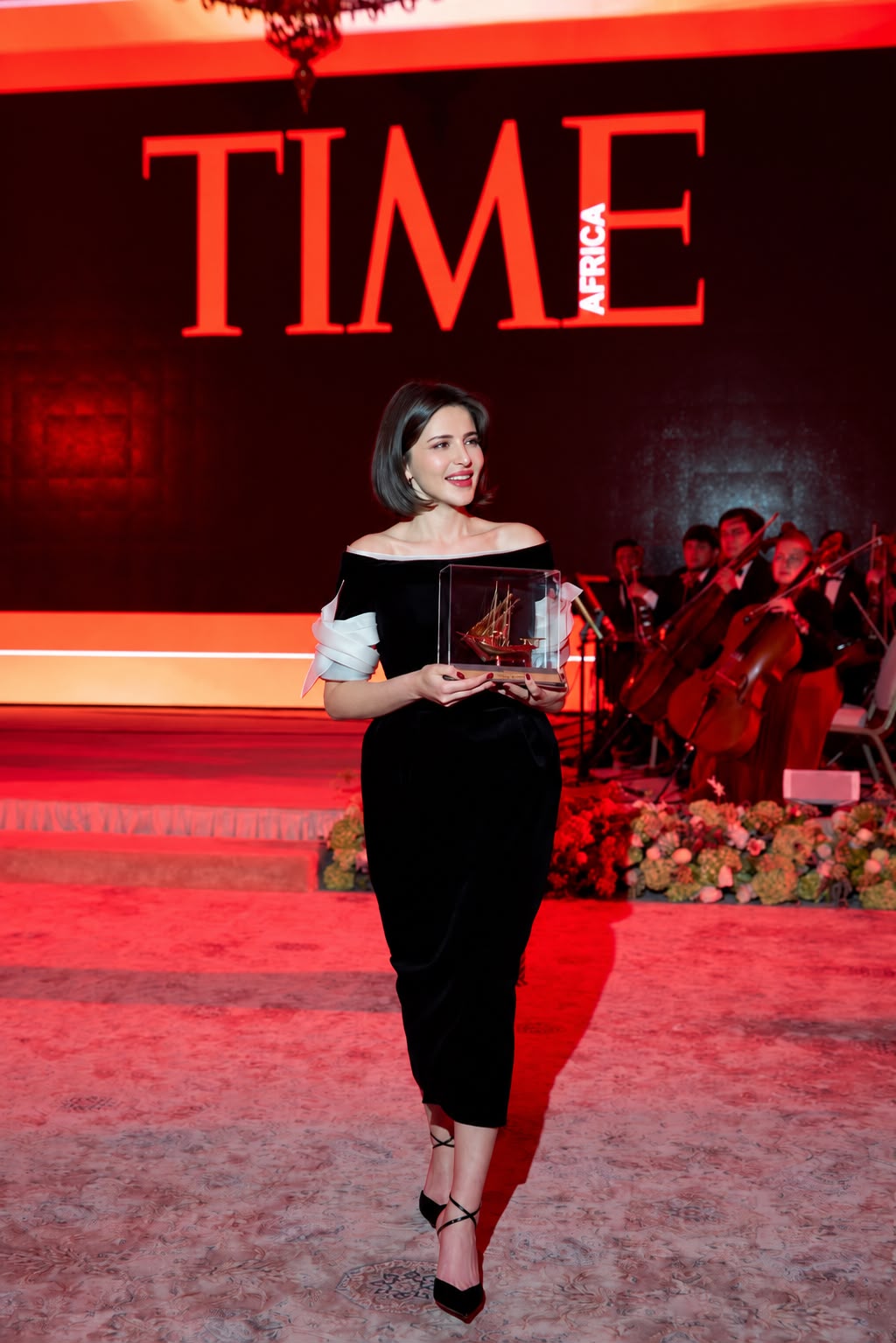
At the evening gala, I had the privilege of performing my poem Break the Old Patterns and presenting the TIME Africa Vanguard Award to Shakhnoza Mirziyoyeva, whose leadership at Uzbekistan’s National Agency for Social Protection reflects the country’s growing emphasis on social welfare.
Before inviting her to the stage, I spoke about another kind of nation-building.
The kind that happens when a frightened child discovers protection, when a vulnerable family encounters dignity, and when hope becomes something institutions can reliably provide.
My work in peacebuilding has taught me that compassion must eventually become structural.
It is not enough to care about a child. We must build the systems that make our care dependable.
That is what I wanted the TIME Africa Vanguard Award to recognise in Shakhnoza Mirziyoyeva: not the visibility of an office, but the responsibilities it carries. Through her work with the National Agency for Social Protection, she has helped place the wellbeing of children and the dignity of vulnerable families within Uzbekistan’s larger conversation about progress. The ambition is both simple and demanding. A child’s access to protection, care and opportunity should not be determined by the circumstances of their birth, and a family’s hardest day should not be the day it discovers that help has no address. That, to me, is what leadership looks like when compassion is required to answer to real lives.
Her recognition also helped me understand the wider purpose of our journey. We had come to witness a country looking outward on more than one front: asking the world to invest in the future of its children in Samarkand, while welcoming international cinema to Tashkent through the historic Golden Globes Silk Road Tribute Gala. One gathering concerned those who must be protected; the other, the cultures and voices that deserve to be heard. The two belong in the same story. A nation cannot build its next golden age through visibility alone. It must also make that future possible for the children who will inherit it.
Uzbekistan has made meaningful commitments in this direction. It was among the first two countries to receive childhood cancer medicines through the WHO–St. Jude global platform. The summit also produced the Samarkand Declaration on Investing in Children’s Wellbeing.
UNICEF reported that monetary child poverty declined from 21.5% in 2021 to 13.7% in 2023, although substantial multidimensional deprivation remains.
That distinction matters.
A serious nation is not one that declares itself perfect, but one willing to confront the distance between its ambitions and the lives its citizens actually experience.
A Silk Road Still Telling Stories
From Samarkand, my journey continued to Tashkent, where another dimension of Uzbekistan’s international ambitions was unfolding.
Cinema.
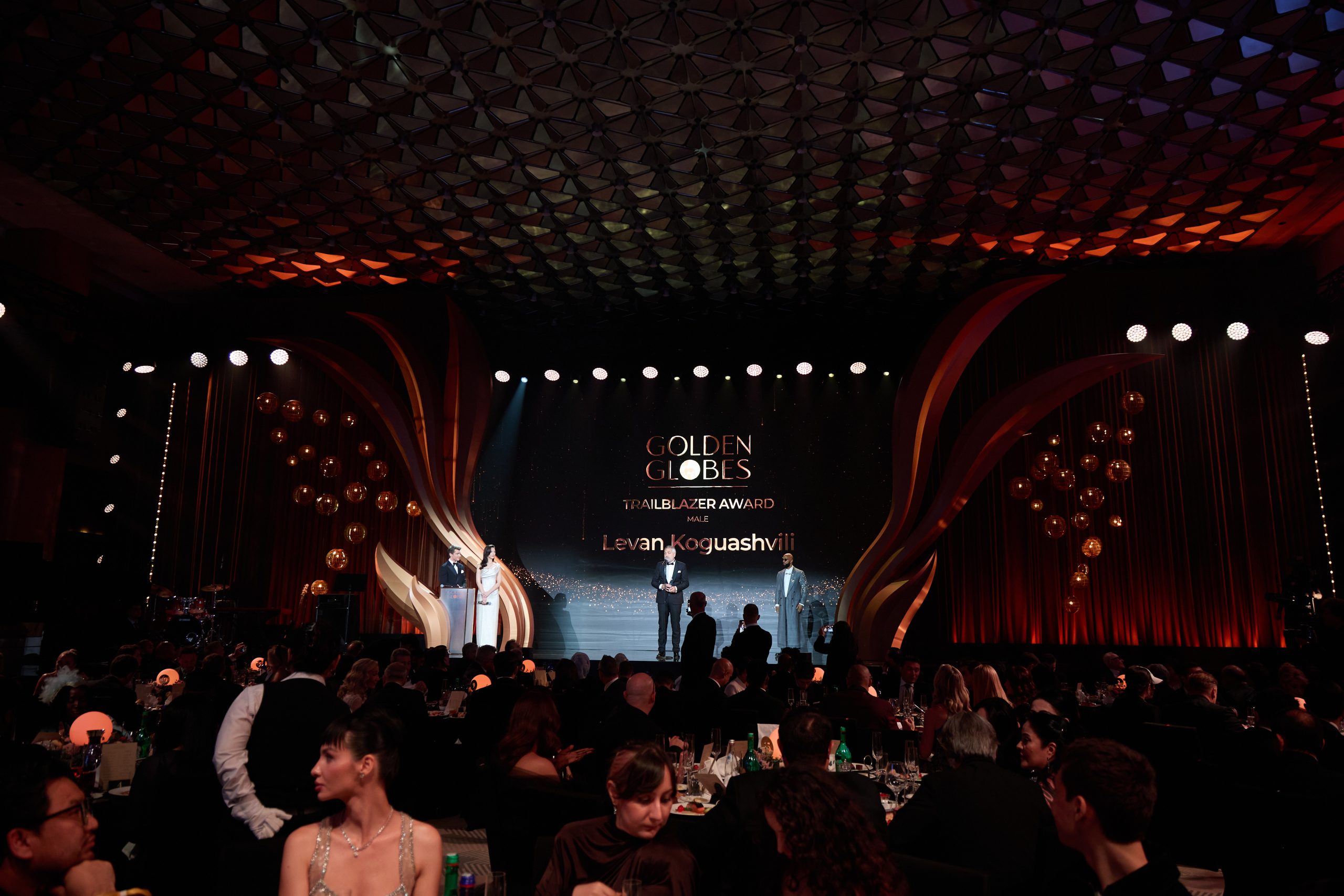
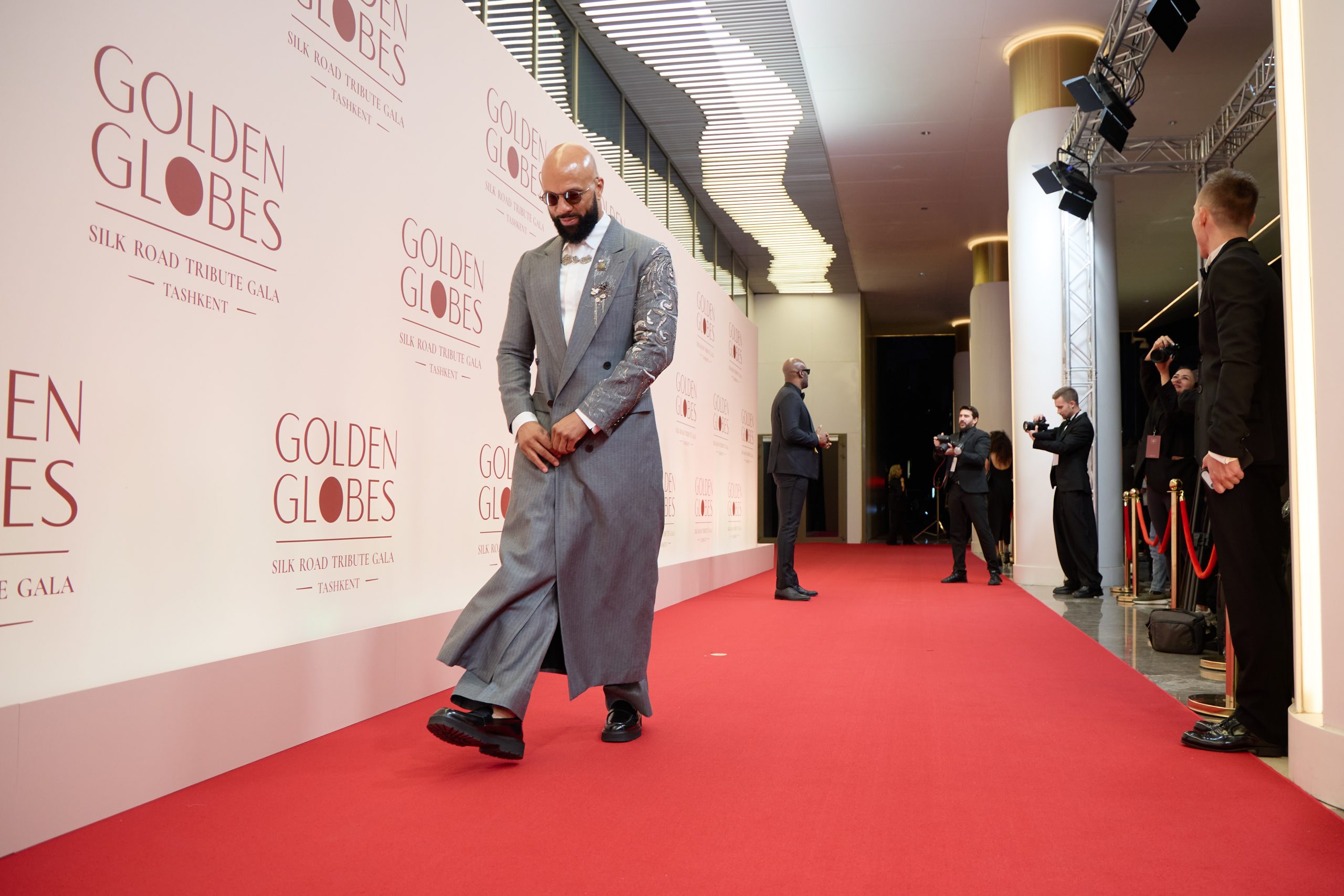
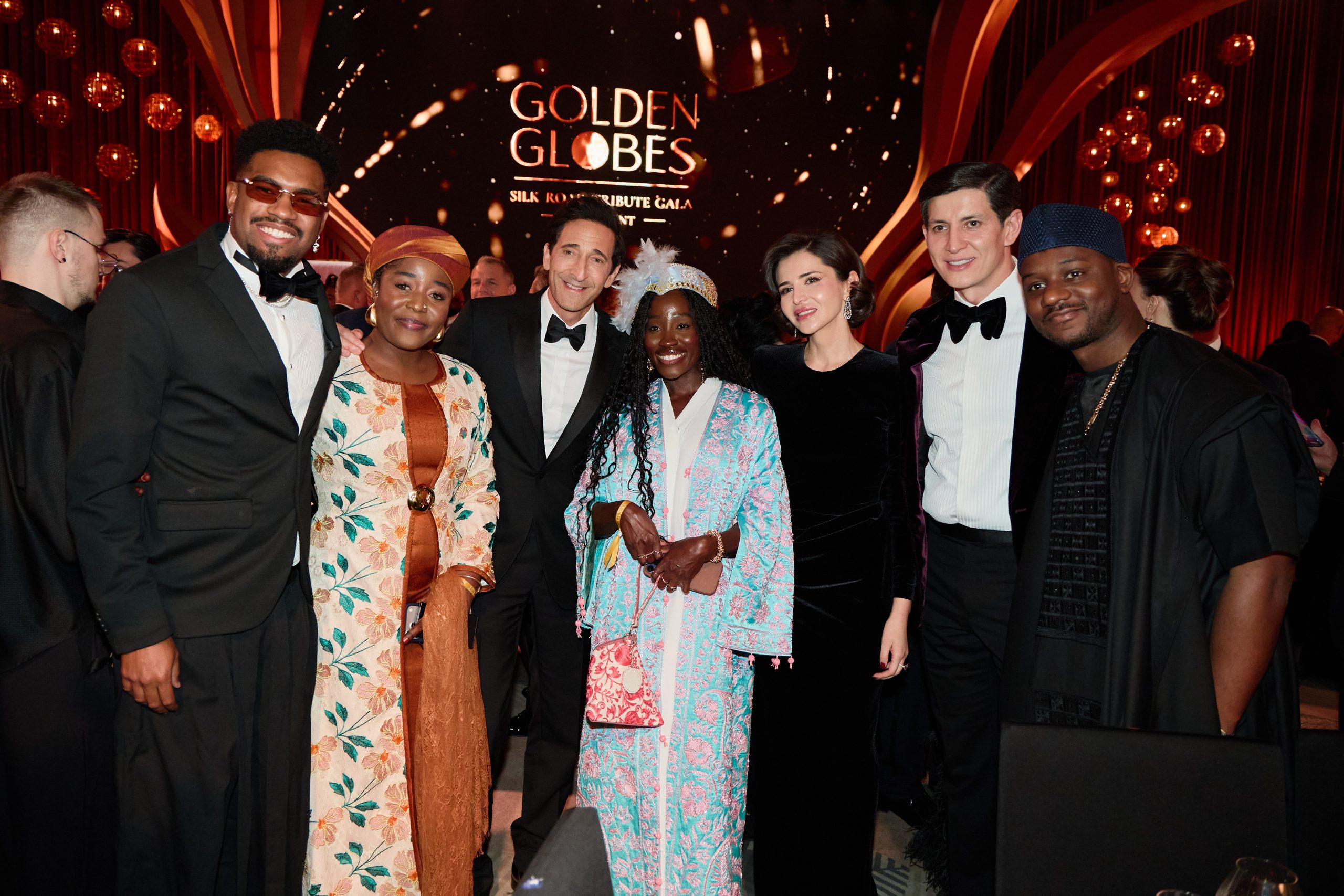
The city hosted the Chaplin Awards, attended by Kiara Chaplin, granddaughter of Charlie Chaplin, followed by the inaugural Golden Globes Silk Road Tribute Gala.
Watching the performances, I was struck by the richness of the music, costumes, choreography and theatrical storytelling.
There was an unmistakable cultural confidence.
Artists from Uzbekistan, Kazakhstan, Georgia, Azerbaijan and Armenia were recognized, demonstrating that Uzbekistan was not simply inviting international attention to its own creative industries. It was helping create a platform for the wider region.

For centuries, the Silk Road connected civilizations through commerce, scholarship and art. Today, cinema offers another way for cultures to travel without surrendering their identities.
The world may have arrived expecting to discover a new cultural destination.
What it encountered was a region with a long history of storytelling, ready for a larger audience.
A nation entering the world’s calculations.
The attention Uzbekistan is receiving extends beyond culture.
Since President Shavkat Mirziyoyev came to power in 2016, the country has pursued economic reforms and a more outward-looking foreign policy.
Its geography places it at the heart of Central Asia, bordering every other Central Asian republic and Afghanistan. As trade corridors, regional security and economic diversification reshape international priorities, Uzbekistan’s strategic relevance is growing.
Washington Has Taken Notice.
In October, U.S. Secretary of State Marco Rubio visited Samarkand for engagements under the C5+1 framework. Uzbekistan announced 54 prospective commercial, investment and technology agreements with American partners, potentially worth $12 billion if implemented.
According to the World Bank, Uzbekistan’s economy grew by 7.7% in 2025. Yet challenges remain, including the need to create sufficient quality employment for its young population.
Its political transformation is also unfinished. Independent human rights organizations continue to document restrictions on expression, political participation and civil society.
These realities cannot be dismissed.
A nation’s dignity does not require the denial of its contradictions.
Uzbekistan’s earlier isolation was real, and some of its consequences were rooted in restrictive state policies. But neither should that history become the only lens through which the world understands the country.
There is a difference between accountability and reducing an entire civilization to its deficiencies.
The question, then, is whether a country can become more internationally connected without becoming less culturally itself.
What the streets taught me.
Some of my most memorable experiences happened far from diplomatic receptions and magnificent monuments.
I went to a local market with Annie, a fellow Black woman and Olympian.
Almost immediately, people began approaching us.
Some wanted photographs. Others offered gifts. There were smiles, laughter and an extraordinary curiosity about our presence.
At one point, an elderly woman began whistling and clapping as we walked past.
I could not stop laughing.
I found myself taking photographs, exchanging smiles and experiencing an unfamiliar place through the generosity of strangers.
As a Black African woman who has traveled extensively, I know that difference can sometimes invite suspicion. But what I experienced in that market felt like something else entirely.
The curiosity did not feel like rejection but an invitation.
Of course, a few days cannot reveal the full complexity of racial attitudes in any country. My experience cannot speak for every visitor.
But I can speak to what I encountered.
I was visibly different, yet I did not feel unwelcome. I was a stranger, yet I was not made to feel like an outsider.
I also noticed the cleanliness, public order and sense of ease in the streets. In the 2026 Global Peace Index, Uzbekistan ranked 37th among 163 countries, a broader context for the calm I personally experienced.
Yet what stayed with me was the reminder that nation-building happens in ordinary human choices.
How we treat strangers. How we care for shared spaces. Whether we recognize another person’s humanity before deciding what their differences mean.
We cannot demand dignity from institutions while withholding it from one another.
And sometimes, the most revealing story about a nation is an elderly woman whistling and clapping at two strangers because their presence has brought unexpected joy into her afternoon.
What Uzbekistan taught a Nigerian about peace.
Perhaps these experiences moved me so deeply because I come from Nigeria.
A country of extraordinary brilliance, creativity, generosity and resilience.
A country I love.
But also a country whose international image is frequently dominated by insecurity, corruption and institutional failures.
As a Nigerian woman working internationally in storytelling and peacebuilding, I sometimes feel that I carry more than my own name into a room.
I carry an argument about my country.
That we are more than our challenges. That our people are more than the headlines written about us. That our humanity has never depended on the world’s willingness to recognize it.
But national dignity cannot rest solely on the individual excellence of citizens trying to correct international perceptions.
It must also exist in the conditions under which ordinary people live.
In whether institutions respect them, whether their aspirations are protected, and whether they experience their country as something they belong to rather than something they must continually apologize for.
Peace is not merely the absence of conflict.
It is the presence of dignity.
And the real test of any national transformation is whether its benefits reach people whose names will never appear on an awards program.
That is the standard to which every country, including Uzbekistan, must be held.
The next golden age.
I keep returning to the scholars at the Center for Islamic Civilization.
To the artisans who assembled their portraits, the technology that allowed their legacies to speak again, and the children whose futures were being discussed in Samarkand.
A nation whose ancestors helped advance mathematics, medicine, astronomy and philosophy is seeking to write another chapter in its relationship with the world.
Not every ambition will succeed. Not every promise will be fulfilled immediately. And no country is beyond criticism.
But there is something worth paying attention to in a nation investing in its cultural memory while expanding international partnerships, celebrating regional creativity and strengthening institutions intended to protect its children.
The world has many reasons to be interested in Uzbekistan.
Its geography. Its economic potential. Its growing relationship with Washington. Its cultural inheritance.
But after spending time there, I find myself drawn to a different question.
Not simply why the world is suddenly paying attention to Uzbekistan.
But what might the world learn if it pays attention more carefully?
Perhaps that national pride and honest self-examination are not enemies.
Perhaps that a civilization’s greatest inheritance is not what its ancestors accomplished, but the responsibility those accomplishments place upon the living.
And perhaps that the ultimate measure of transformation is not how convincingly a nation presents itself to the world, but how profoundly its people experience their own dignity.
Uzbekistan does not need the world to invent its greatness.
Its history has already given humanity enough reasons to remember its name.
The task now is to ensure that the possibilities of its next golden age are felt not only in its monuments, international partnerships or grand celebrations, but in the everyday lives of its people.
For that is how nations become truly great.
Not merely by reminding the world what they once gave humanity.
But by ensuring that the humanity within their own borders has every opportunity to flourish.