
Rwanda is reportedly set to bring Formula 1 back to Africa in 2030. But behind the prospect of an African Grand Prix lies a much bigger story about tourism, investment, infrastructure and the growing economic power of global sport.
Formula 1 appears to be heading back to Africa.
Rwanda is reportedly set to host a Formula 1 Grand Prix from 2030, potentially ending what would by then be a 37-year absence of the world’s premier motorsport championship from the African continent.
The proposed race, expected to take place at a new permanent circuit outside Kigali, would be historic in its own right. Formula 1 has not raced in Africa since the South African Grand Prix at Kyalami in 1993.
But viewed from Rwanda, the significance of the prospective Grand Prix extends far beyond motorsport.
It is the latest – and potentially most ambitious – expression of a strategy the country has been pursuing for years: using global sport as a vehicle for tourism, investment, infrastructure development and international visibility.
Building a Global Brand Through Sport
Rwanda’s sporting ambitions did not begin with Formula 1.
Through Visit Rwanda, the country has built an international sports-marketing portfolio spanning football, basketball and other major global properties.
Its partnerships have included Paris Saint-Germain, Atlético de Madrid, Aston Villa, the Basketball Africa League (BAL), the Los Angeles Clippers and the Los Angeles Rams.
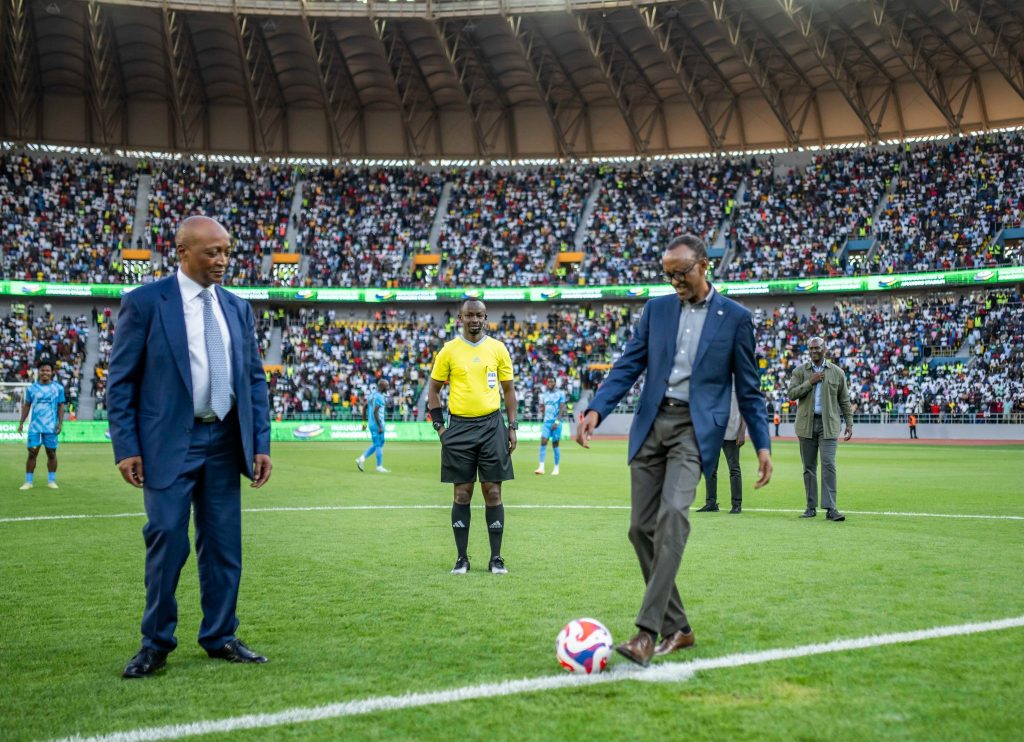
At home, Rwanda has simultaneously invested in the world-class infrastructure required to host major international events. Kigali’s 10,000-seat BK Arena has become a leading destination for basketball, concerts and entertainment, while the extensively redeveloped 45,000-seat Amahoro Stadium, inaugurated in 2024, stands as one of East Africa’s most significant sporting infrastructure investments. The stadium has strengthened Rwanda’s capacity to host major international football fixtures, sporting competitions and large-scale cultural events, reinforcing Kigali’s growing position as a regional hub for sport and entertainment. Alongside its successful hosting of the Basketball Africa League and the historic 2025 UCI Road World Championships, these investments demonstrate a deliberate, long-term strategy to position Rwanda as a global sporting destination.
Formula 1 would represent another order of magnitude.
From Sporting Event to Economic Platform
When Rwanda formally announced its intention to pursue a Formula 1 Grand Prix in 2024, President Paul Kagame framed the country’s sporting ambitions in explicitly economic terms.
Sport, he argued, was not simply about stadiums and events. Hotels, restaurants and recreational facilities create jobs and contribute to a broader economic ecosystem. Rwanda’s recent economic performance helps explain the strategy.
The country’s economy expanded by 9.4% in 2025. Tourism generated $685 million from 1.49 million visitors, while the meetings, incentives, conferences and exhibitions sector generated $94.7 million. Rwanda also registered $2.62 billion of investment across 799 projects during the year.
Formula 1 potentially supercharges that model.
A Grand Prix brings teams, sponsors, international media, corporate executives and tens of thousands of spectators into a host destination. Around the race itself sits an economy encompassing aviation, hotels, restaurants, entertainment, logistics, luxury hospitality and corporate events.
For Rwanda, therefore, the more interesting question may not simply be what it takes to host Formula 1. It is what can be built around it.
A Circuit – and an Economic Ecosystem
Current plans reportedly envisage a purpose-built permanent circuit outside Kigali, close to Bugesera International Airport.
The location is significant.
Rather than treating a Formula 1 circuit as an isolated sporting venue, its proximity to major new aviation infrastructure creates the possibility of developing a broader tourism, entertainment and commercial destination.
A permanent circuit can also operate beyond a single Grand Prix weekend, potentially supporting motorsport development, testing, corporate experiences, concerts and other events throughout the year.
For investors, the opportunity therefore stretches beyond motorsport.
Hospitality capacity will be required. International connectivity becomes increasingly valuable. Premium tourism products can grow around race week. Restaurants, entertainment venues, transport providers and event businesses stand to participate in the additional demand created by an event watched around the world.
If executed successfully, Formula 1 could become another anchor around which Rwanda builds an entire economic ecosystem.
Africa Returns to the Grid
There is also a continental significance that extends beyond Rwanda.
Africa remains absent from the current Formula 1 calendar despite the championship’s increasingly global footprint. South Africa, Nigeria, Morocco and others have all been associated with efforts to bring Formula 1 back to the continent. A Rwanda Grand Prix would change that.
By 2030, Africa’s absence from Formula 1 would have lasted 37 years. Bringing the championship back would give African fans a home race again while placing the continent in front of one of global sport’s largest international audiences.
It would also represent another sign of Africa’s growing ambition to host rather than simply consume the world’s biggest cultural and sporting properties.
The Rwanda Model
Perhaps the most significant element of Rwanda’s Formula 1 story is how unsurprising it has become. A country of Rwanda’s size competing for one of the most coveted properties in global sport might once have appeared improbable.
Instead, Formula 1 increasingly looks like the next stage of a strategy already visible across football, basketball, cycling, tourism and international events.
Rwanda has spent years building its sporting infrastructure, international partnerships and destination brand while positioning Kigali as a meeting point for business, tourism, culture and sport. A Formula 1 Grand Prix would place all of those ambitions on one global stage.
The cars may arrive in 2030. The strategy that brought them to Rwanda has been years in the making.