

For most musicians in Africa and the Middle East, “making it” has meant leaving. You build a name at home, then head for Europe or North America, where the audiences, contacts and money are. The African and Arab music industries have been industrialising rapidly over the past few years, but the region still lacks the established booking circuits, industry connections and funding pipelines found elsewhere in the world.
Talent was never the problem. Infrastructure was.
Brahim El Mazned decided to build it. In 2014, the Moroccan cultural entrepreneur founded Visa For Music in Rabat as a meeting point where African and Arab artists could sit down with booking agents, festival programmers, record labels and cultural institutions.
More than a decade later, it is one of the most prominent professional gatherings for the African and Arab music industries. The 13th edition, which kicks off today and runs until the 21st, is expected to draw more than 1,000 industry professionals. Over 35 projects were selected from more than 900 applications across 90-plus countries.
But music isn’t the only focus. Unlike a conventional festival, Visa For Music treats its performances as showcases inside an industry market. The audience is made up of the people who organise tours, programme festivals, secure bookings and build international partnerships.
On a Larger Scale
El Mazned’s journey has been a grassroots one. He has been artistic director of Agadir’s Timitar Festival, an annual international celebration of Amazigh (Berber) culture and musical heritage, since 2004. That job kept him in daily contact with musicians, festival organisers and cultural institutions, and those relationships later anchored Visa For Music.
It also gave him an insider’s read on the regional music industries. He knew their structural weaknesses because he had worked within them, not because he was looking in through an orientalist lens.
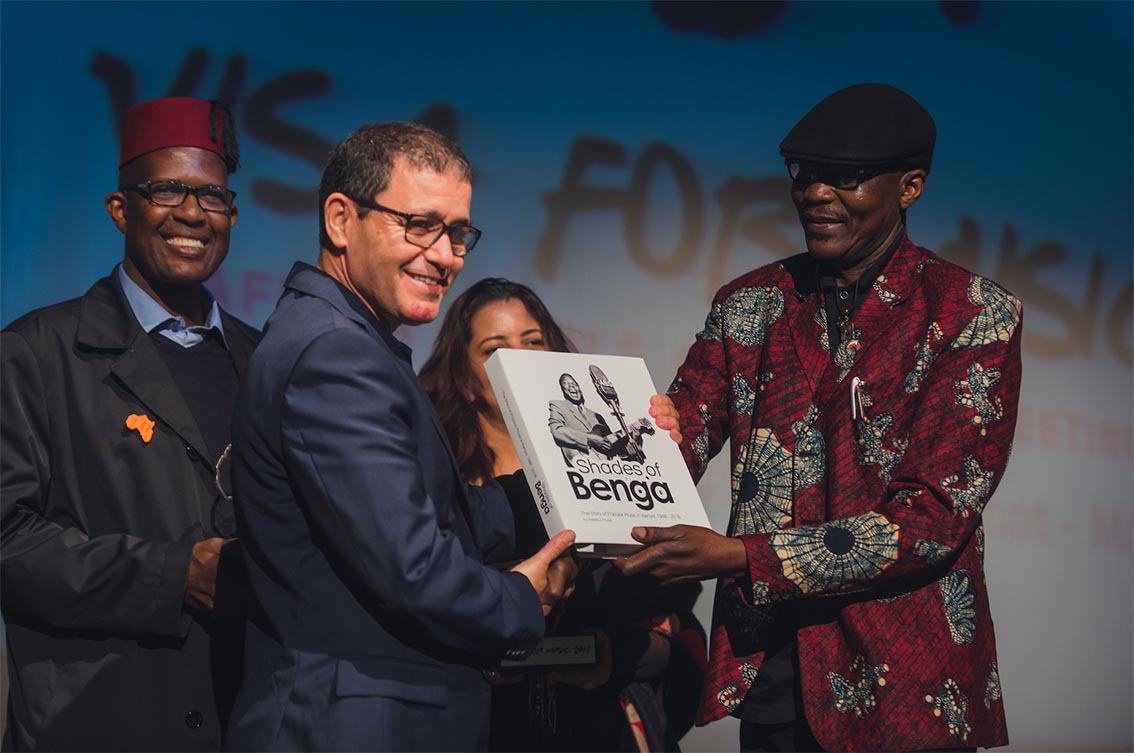
His idea was an independent professional infrastructure, one that would let African and Arab musicians find opportunities beyond their borders without depending solely on Western industry networks. Access to those networks has historically been the privilege of a few, especially artists based in the diaspora. The market was built for lasting professional relationships, a more reliable route than one-off exposure.
The showcases are only part of it. For more than a decade, Visa For Music has also run meetings, exhibitions, conferences, workshops and training sessions. Conferences have tackled the international circulation of African and Arab music, artist mobility, cultural preservation and the challenges facing regional industries.
Workshops and masterclasses teach music production, marketing, career management and how to get into international festivals. The Expostand exhibition gives labels, institutions and producers space to present their work and find partners. In 2024 alone, the programme included six conferences, six masterclasses, four workshops and roughly 500 scheduled professional meetings.
For artists, those encounters are vital and can lead to bookings abroad, tours, representation and collaborations. A performance introduces a musician to an audience. A meeting can start a relationship that outlasts the event. By the organisation’s own figures, Visa For Music has welcomed more than 12,500 professionals, hosted 571 exhibitors and presented 458 showcases since it began.
El Mazned’s wider career follows the same logic. In 2016, he established MoMEx, Morocco’s music export office. He is now deputy director-general and artistic director of Rabat’s new Royal Theatre. Still, Visa For Music remains his most significant contribution to building a professional music industry across Africa and the Middle East.
African-Arab
The ties between African and Arab music are far older and more tangled than the modern industry suggests. Across North Africa, the Sahel and the wider Arab region, centuries of migration and trade moved instruments, rhythms, languages and performance styles across borders. Those connections still feed contemporary sounds.
Morocco is a great example. Its music draws on Amazigh, Arab, sub-Saharan African and Andalusian influences, among others. Yet those shared roots haven’t produced equally developed professional networks. Musicians with a common history can still work in entirely separate booking circuits, commercial structures and distribution networks.
That’s why Visa For Music’s international outlook matters. Here, “international” doesn’t automatically mean Europe or North America. It means Africa itself: 54 countries whose music industries, despite enormous cultural wealth, still face steep barriers to collaborating across borders.
The market has pursued that goal since its early editions. In 2018, it received 742 applications: 42% from African countries outside the Maghreb, 13% from the Middle East and 4% from the Maghreb. That year’s programme brought 368 artists from 34 countries to Rabat, with five conferences and five workshops and training sessions.
The partnerships have deepened since. In 2023, South Africa’s National Arts Council worked with Visa For Music to encourage South African musicians to apply for the tenth edition, and the programme welcomed representatives of groups including the European Jazz Network and the International Music Council.
In 2024, the market hosted the annual congress of Arts Connect Africa, a network of music and cultural industry professionals from across the continent. African delegates met representatives of the European Jazz Network and Cultural Connections Latin America to discuss cooperation between their industries. Afterwards, Arts Connect Africa named professional education, cultural exchange projects and wider continental membership as its priorities for the following year.
The 2026 programme is just as wide-ranging. It includes Senegalese singer Mariaa Siga, South African rapper Yugen Blakrok, Haitian performer Erol Josué, and Moonshine, an electronic collective linking Canada and the Democratic Republic of the Congo, alongside Moroccan artists and projects with ties to the wider Arab region. And not everyone there is looking abroad. Many of the organisations present are building networks within Africa itself.
That’s the bigger story of El Mazned’s project. Visa For Music has become a recurring meeting point for the people building the infrastructure around music. It challenges the idea that international recognition has to be found elsewhere, and it pushes back against a narrative that treats Africa and the Arab world as sources of talent rather than places capable of building and sustaining their own music industries.
Recognition & Resilience
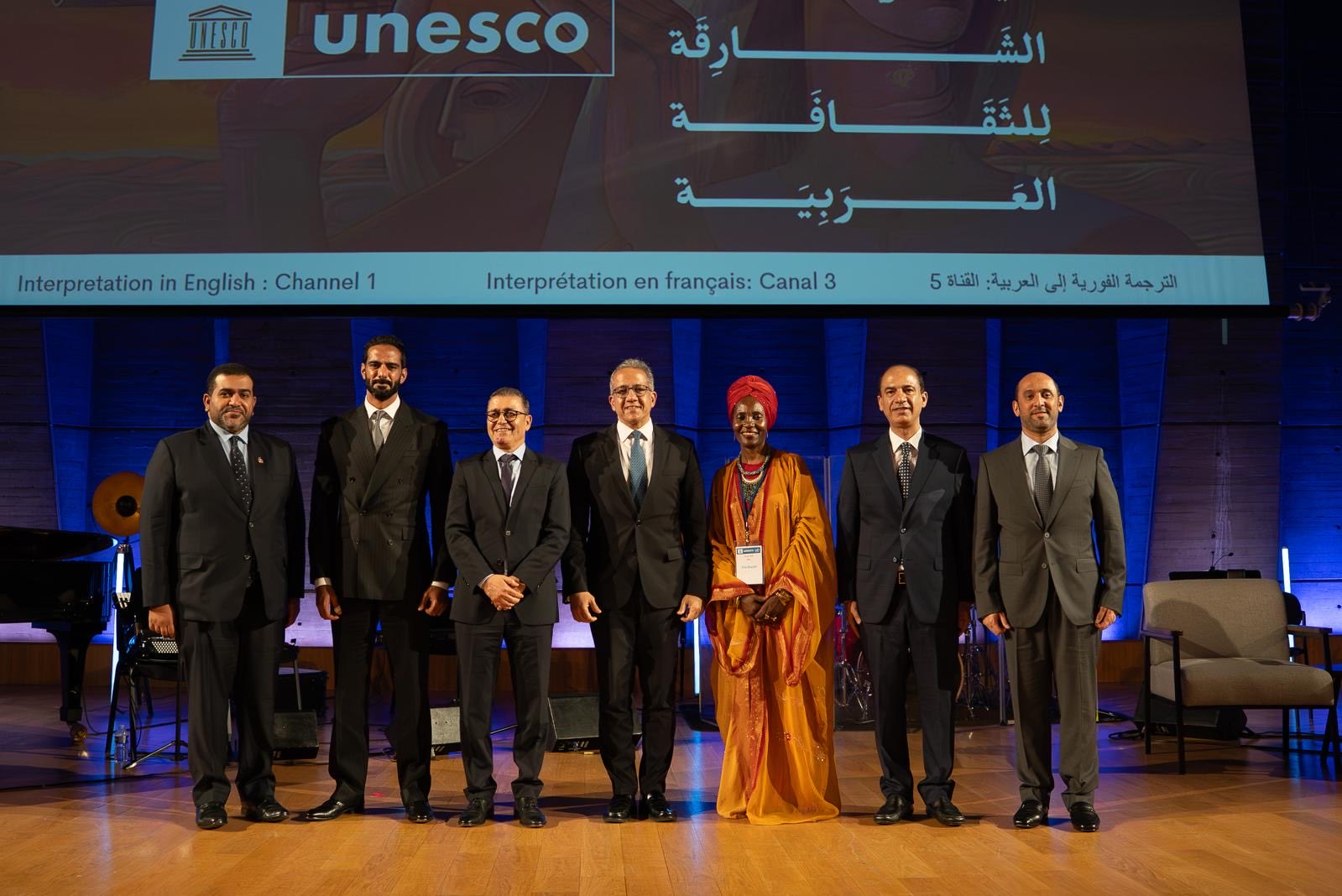
This year’s edition comes at a significant moment for El Mazned, who was recently named a laureate of the 21st UNESCO-Sharjah Prize for Arab Culture. The prize recognises his long effort to promote Moroccan and Arab music internationally and to foster cultural exchange through the connections he has built between artists, festivals and professional networks.
The edition also matters beyond his personal honour. Across the Arab region, years of political instability and armed conflict, and the economic uncertainty they caused, have hit nearly every sector, arts and culture included. Against that backdrop, Visa For Music’s survival means something beyond the music business. When so much around the region has been disrupted, the determination to keep a space like this alive, to bring people together, exchange ideas and find opportunities despite everything, feels all the more meaningful.
There’s something inspiring in that persistence: a refusal to let hard circumstances close off artistic expression, cultural exchange, or the networks and livelihoods that musicians and cultural workers have fought to build.
Keeping those doors open is an achievement in its own right.