

For a country as populous as Egypt, adding one million people to its population nearly every nine months, the Ministry of Housing has naturally grown into a crucial one.
Mostafa Madbouly took the helm at the ministry in 2014, following former minister Ibrahim Mahlab, who was promoted to Prime Minister, a path Madbouly himself would follow when he moved from the ministry to the premiership four years later.
Today, Madbouly has grown into the second longest-serving Prime Minister since the 1952 revolution, and arguably the most consequential. It was during his tenure that the country embarked on its most ambitious infrastructure overhaul, taking on massive debt to modernize its transportation, communication, and business infrastructure.
Since Egypt’s debt-to-GDP ratio reached an alarming 95.9% in 2023, according to the IMF, the national economy, under Madbouly, started catching up. The modernized infrastructure arguably contributed to significant growth in tourism, foreign investment, and local business, particularly in high-value sectors like fintech (MNT-Halan became Egypt’s first fintech unicorn in 2023).
This year, the debt-to-GDP ratio is expected to close at nearly 85%, with the downward trend projected to hold across the following years, reaching a more comfortable 70.8% by FY2030/31.
Most of Madbouly’s economic growth plans are fairly traditional, but one budget line stands out as completely his own: a plan that traces back to his transitional period between the Housing Ministry and the premiership, which has sparked both controversy and excitement across the past decade – known simply as “Real Estate Export.”
Its origin is a locally famous government figure that dates back to 2017, when a census that year counted 12.8 million vacant housing units in the country: 4.6 million complete, 4.3 million under construction, and 2.8 million closed.
These empty units were not spread evenly. According to an analysis of the census by 10 Tooba, a research group on the built environment, vacancy was highest along the coasts: 95.5% of units stood empty in Matrouh, the governorate that holds most of Egypt’s coveted North Coast on the Mediterranean, followed by 48.5% in the highly touristic Red Sea governorate.
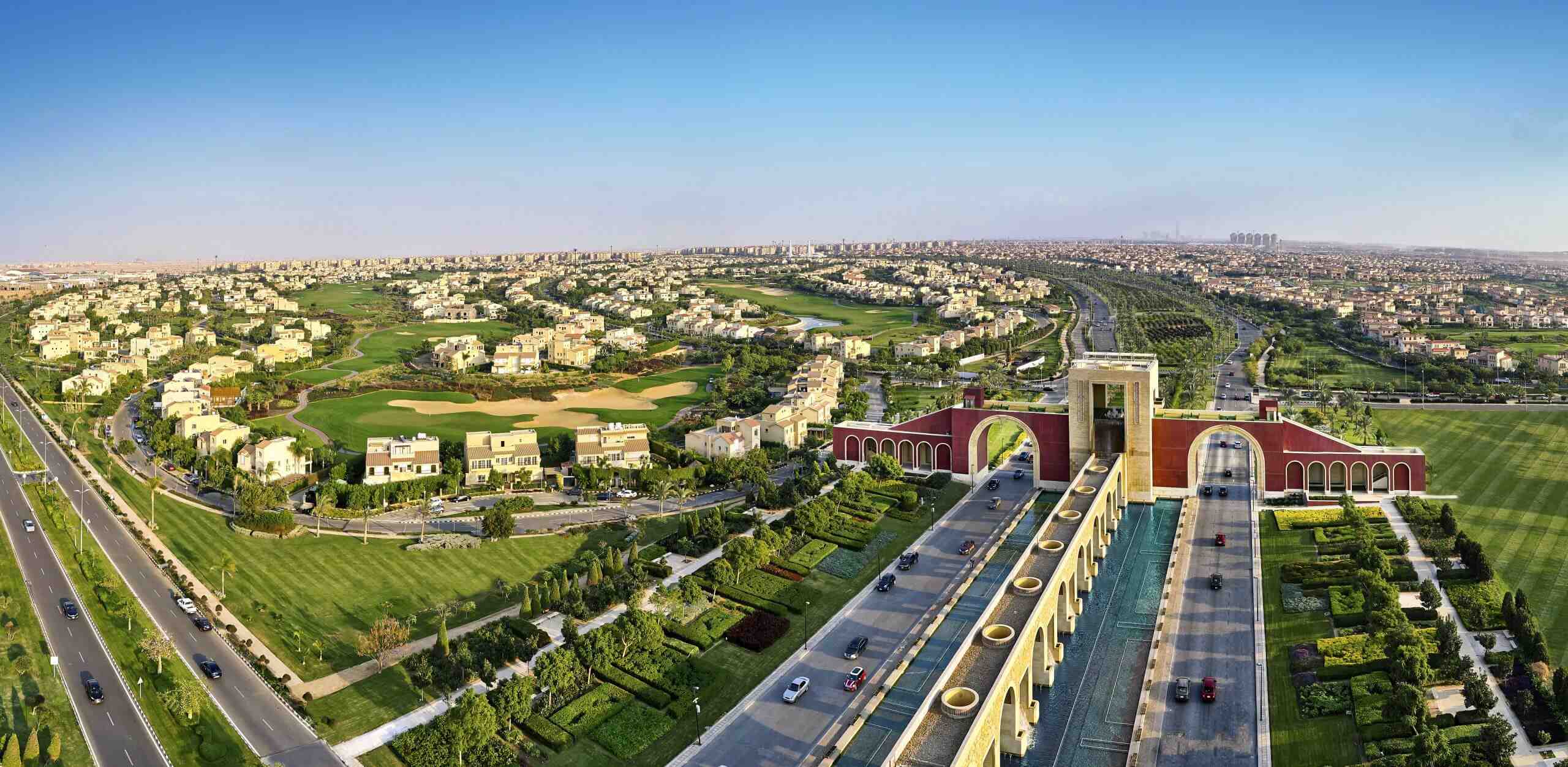
The term “Real Estate Export” first entered the public discourse on the Egyptian economy in July 2018, when Madbouly announced a residency scheme for foreigners who own property in Egypt, with stated aims that included reviving the development sector by promoting it abroad, bringing in hard currency, generating $2-3B in sales a year, and encouraging Egyptian “real estate export.”
The scheme, as first set out in a 2017 Interior Ministry decree, came with steep thresholds: a renewable five-year residency for foreigners owning property worth at least $400,000, and three years for those owning at least $200,000.
Yet it was the residency’s conditions that made it an export scheme rather than a perk. The property had to be registered at the Real Estate Registry, and the buyer had to prove that the full price was paid in foreign currency, sent from outside Egypt and exchanged through an approved Egyptian bank.
Every unit sold under the scheme, in other words, meant a fresh and documented inflow of hard currency into the country’s banking system.
The plan has since become a core mandate of Madbouly’s premiership, and with that in mind, it helps explain the development priorities his government pursued across the past decade: aggressively modernizing its transport and communication infrastructure to make more land habitable and buildable, and increasing the appeal of living or spending significant time in Egypt, whether in new expansions around the capital or in new, luxurious resort towns quickly crowding Egypt’s two coastlines.
For a country struggling to maintain a large enough inflow of foreign currency to stabilize its floated pound, and a vast one at that, with a mild climate across the seasons, lush shorelines, and a highly capable construction workforce and development sector – feeding the real estate surplus with the aim of selling it to non-residents, foreigners and Egyptians abroad alike, started to resemble a newly discovered natural resource, one that could reliably and sustainably contribute to the state’s foreign currency reserves and debt-servicing plans.
Today, nearly eight years after his plan was set in motion, how far has Madbouly gone in turning real estate export from a catchy term into a real economic power? We look at the numbers.
Across nearly a decade of statements, the plan’s targets ranged from about $2B a year at the cautious end to $30B a year at the wild end. The government’s own figures cluster tightly around $2-3B, while the double-digit numbers come from parliamentarians, professional associations and developers.
The headline figure Madbouly attached to the residency scheme as Housing Minister in 2018 was modest: $2-3B in sales a year. The same number came back unchanged six years later in the 2024-2030 economic roadmap, which projected $2-3B in revenue for a dedicated real estate export company.
The closest figure tracking real estate export across the past few years is a line in the Central Bank of Egypt’s (CBE) balance of payments called “investments received for the purchase of real estate by non-residents,” booked under foreign direct investment (FDI).
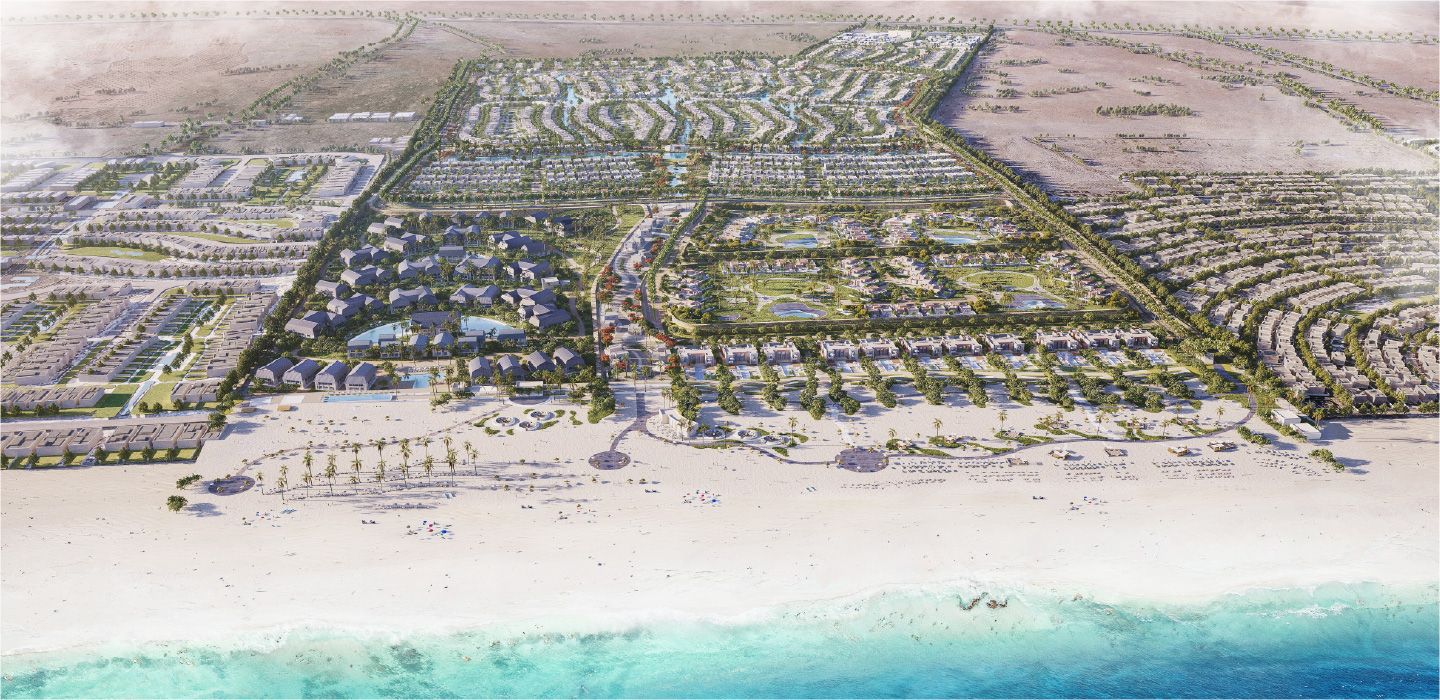
According to the CBE, real estate purchases by non-residents brought in $644M in FY2021/22 (9 months) and $477M in FY2022/23 (9 months), then broke into the billion-dollar range in FY2023/24 with $1.29B, followed by rapid growth to $1.9B in FY2024/25 and, finally, a 47.3% jump to $2.8B in FY2025/26, settling at the higher end of the government’s target range.
To put this number in context, in fiscal year 2025/26, Egypt’s forex income came mainly from remittances ($47.3B), followed by non-oil goods exports ($37.3B), tourism ($18.4B), and the Suez Canal ($4.4B). In other words, Egypt’s forex income from real estate export in FY2025/26 amounted to nearly 64% of what the Suez Canal brought in that year.
Part of the jump that pushed non-resident purchases past the billion-dollar mark traces back to 2023, when, in the middle of a foreign currency crunch that drove the pound’s black-market rate ever further from the official one, the government updated the residency scheme.
Interior Ministry Decree 977 of 2023 halved the thresholds, granting five years of residency for property worth $200,000 and three years for $100,000, and added a new one-year tier for $50,000. The hard-currency condition stayed in place, and amendments to the foreign ownership law that same year required the price to be transferred from abroad to a fully state-owned bank.
The cut made residency through real estate a viable path for a much wider group of foreigners already living in Egypt: Syrians, Sudanese and Yemenis, for whom a $50,000 or $100,000 apartment was within reach in a way a $400,000 property never was.
The sharp rise of real estate export in 2025/26, however, did not come from policy alone.
As the regional war shook the markets, sending gold tumbling from a record of nearly $5,600 an ounce to below $4,000 today and dragging stock markets down with it, Egypt’s stability and security turned its real estate sector into something of a safe haven for regional capital. The weak pound added to the appeal, keeping property prices low for anyone paying in dollars.
No official breakdown of buyers by nationality is published, but the market’s geography is well known among developers and brokers. Gulf buyers tend to concentrate around Cairo and on the North Coast, while European and Russian buyers have long favored the Red Sea, from Hurghada and El Gouna to Sharm El Sheikh.
It’s worth mentioning that the line tracking real estate purchases by non-residents excludes, by design, mega-deals struck between the Egyptian government and counterparties interested in acquiring vast touristic lands for real estate development, including the famous Ras El Hekma deal with the UAE in February 2024, valued at $35B alone.
Had the mega-deals been factored in, the picture would change dramatically.
Adding Ras El Hekma’s $24B in fresh inflows to FY2023/24, and the $3.5B that Qatar’s Alam El Roum deal brought in during FY2025/26, real estate export would have averaged roughly $11B a year across the past three fiscal years, several times the retail figure and well within the range between the conservative and wild estimates.
Mega-deals, however, have a lower scalability ceiling than retail export. Egypt is vast, that much is true, but its investment-worthy land, the kind that can command tens of billions from a sovereign fund, is naturally limited.
Encouraged by the sharp rise in volume over the past two years, the Egyptian government is further investing in the real estate export scheme this year, launching the first phase of the Egyptian Real Estate Export Platform in June, a step geared toward reducing friction and facilitating real estate investment for non-residents through trusted and vetted online gateways.
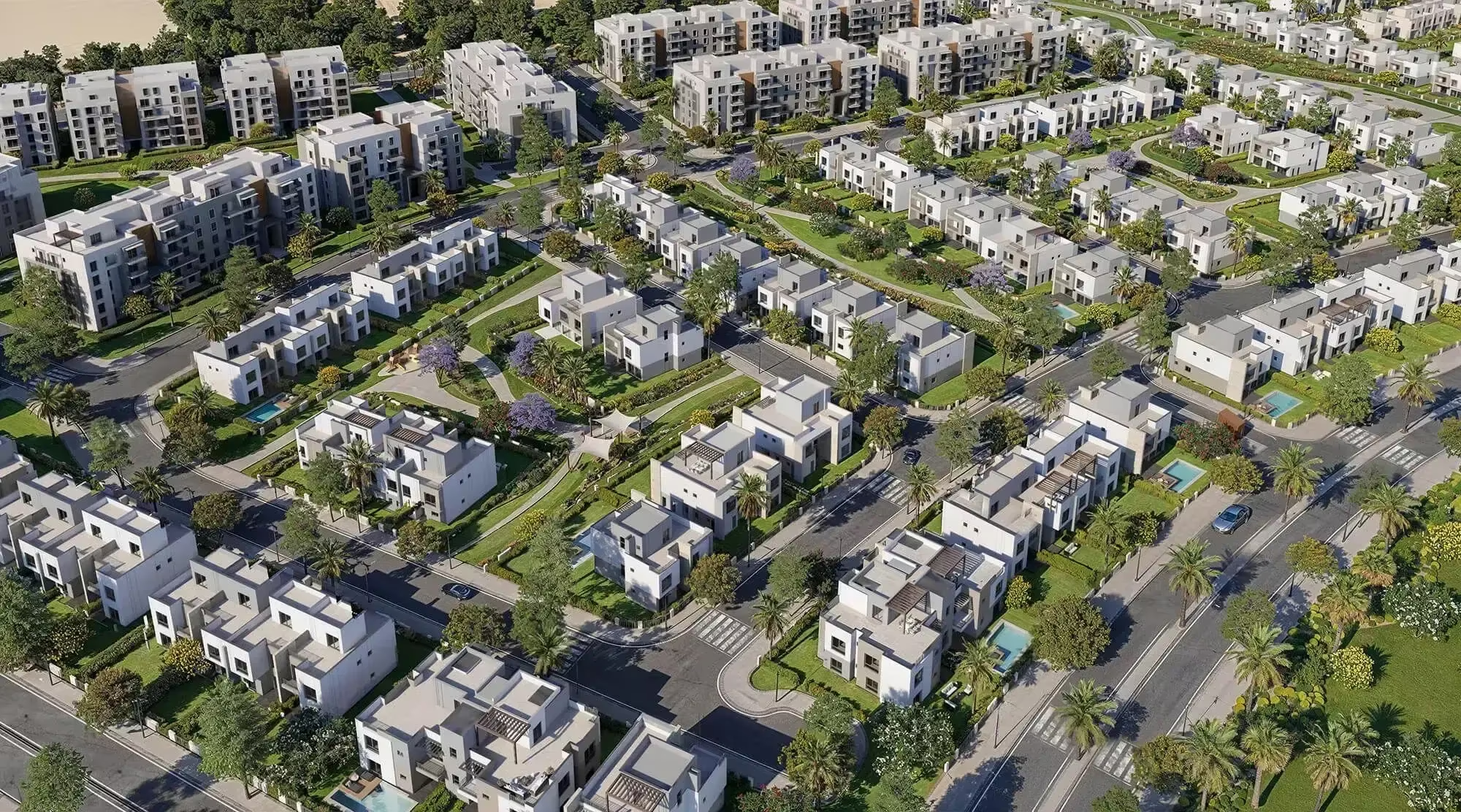
Across the eight years since its launch, Madbouly’s scheme has endured two main waves of criticism.
In June 2026, as the government moved to widen foreign ownership and prepared the platform’s launch, the scheme drew criticism from MPs, economists and commentators, some arguing that investment should go to productive sectors that create jobs, others raising concerns over sovereignty and national security.
Madbouly defended the scheme at his weekly press conference, describing foreign ownership as one of the state’s key tools to bring in hard currency, operating under clear controls and state supervision, and pointing to the many countries Egypt admires that have long done the same.
Another, less concentrated wave of criticism tackled the government’s prioritization of exportable housing over lower- and middle-income units addressing the local market’s need. While this criticism stems from a measurable gap between the country’s affordable housing deficit and its luxury housing surplus, arguing that recent real estate development is indifferent to this gap would make for a much harder case to argue.
For instance, the Central Agency for Public Mobilization and Statistics (CAPMAS) counted about 212,000 residential units completed in FY2024/25, up from 158,900 units the year before. The private sector built about 107,200 units, or 50.6% of the total, and its largest category was middle-income housing, at 43,200 units or 40.3% of private-sector completions. The government, public and public business sectors built 104,800 units (49.4%), of which 68,500, or 65.4%, were economic housing.
In 2018, Madbouly read the same census figures on a staggering real estate surplus that millions of Egyptians had read, but chose to see it as an opportunity rather than a problem.
His plan to mix buildable land, a favorable climate, and an abundance of affordable human labor into a wealth of exportable real estate has, within eight reasonable years, reached the higher end of the range it set for itself.
Even with mega-deals excluded, the retail numbers alone now rival some of Egypt’s traditional sources of foreign currency, reaching nearly two-thirds of Suez Canal revenue and around 15% of tourism revenue this year. They account for about a sixth of net foreign direct investment (FDI), and around 2% of Egypt’s total forex receipts.
Should Madbouly’s plan keep delivering in the years ahead, whether by holding its current pace or growing beyond it, it could become a blueprint for countries with similar assets. And if real estate can be turned into a scalable, quasi-natural resource, the next question is: what else?