

After seeing patients struggle to navigate fragmented healthcare services, Dr Elvis Silayo set out to rethink how care is delivered. Through Medikea, he is building a model that connects clinics, laboratories, pharmacies and virtual consultations.
For some patients, getting medical attention is only the beginning of a difficult journey. A consultation may mean another trip for laboratory tests, another wait for results and another search for the prescribed medicine. By the time treatment is complete, the cost and effort of accessing care can become barriers in themselves.
It was a pattern Dr Elvis Silayo encountered repeatedly while practising medicine in Tanzania. Patients waited too long to be seen, moved between facilities for tests and medicines, or delayed seeking treatment until manageable conditions became more serious.
He had entered medicine expecting to graduate, practise and specialise. But his experience with patients led him to question why receiving care was so difficult in the first place.
“I wanted to go beyond treating the patients who managed to reach us, and build a system that makes care easier to reach for everyone else,” says Silayo, co-founder and chief executive of Medikea, a Tanzanian healthcare company bringing clinics, laboratories, pharmacies and virtual consultations into one connected service.

Silayo believes doctors are trained to diagnose and treat illnesses, but receive less preparation in redesigning the systems through which patients access care. For him, improving healthcare also means reducing delays, making services more affordable and ensuring patients can move through treatment without repeatedly starting over.
That challenge extends beyond Tanzania. Across many African health systems, access involves more than having a clinic nearby. Patients may still struggle to afford consultations, obtain diagnostic tests, find prescribed medicines and receive follow-up care across disconnected providers.
Medikea’s approach is built around connecting these stages. Patients can begin consultations virtually, visit a clinic when physical examinations or tests are needed, access laboratory and pharmacy services within the same network, and continue follow-up online. Clinicians can also access shared patient records.
The idea is to make the patient’s experience more continuous. Silayo says fragmented services can lead to repeated tests, additional costs and gaps in communication between healthcare providers. Bringing services together, he argues, can reduce some of that friction.
However, he is careful about the role technology should play. Digital platforms cannot solve problems created by disconnected services or unclear accountability.
“Organise care first, then use technology to scale it.”
For Silayo, strengthening primary healthcare is central to this approach. Primary care should be the first point of contact for many health concerns, with specialists and hospitals available when more complex treatment is required. When primary care is weak, patients may end up accessing expensive specialist services for conditions that could have been managed closer to home.
He gives the example of an uncomplicated urinary tract infection, which could be treated by a general practitioner rather than a specialist. He also points to patients with stable chronic conditions who may need routine monitoring and prescriptions but do not necessarily require monthly specialist appointments.
Medikea aims to make that distinction easier through a network that can direct patients to the appropriate level of care.
Affordability is another part of the model. Silayo says the company focuses on outpatient services, which have lower establishment and operating costs than hospitals. It also sources medicines and laboratory supplies directly, offers lower-cost virtual follow-ups and is developing bundled prices and subscription programmes for chronic-care patients.
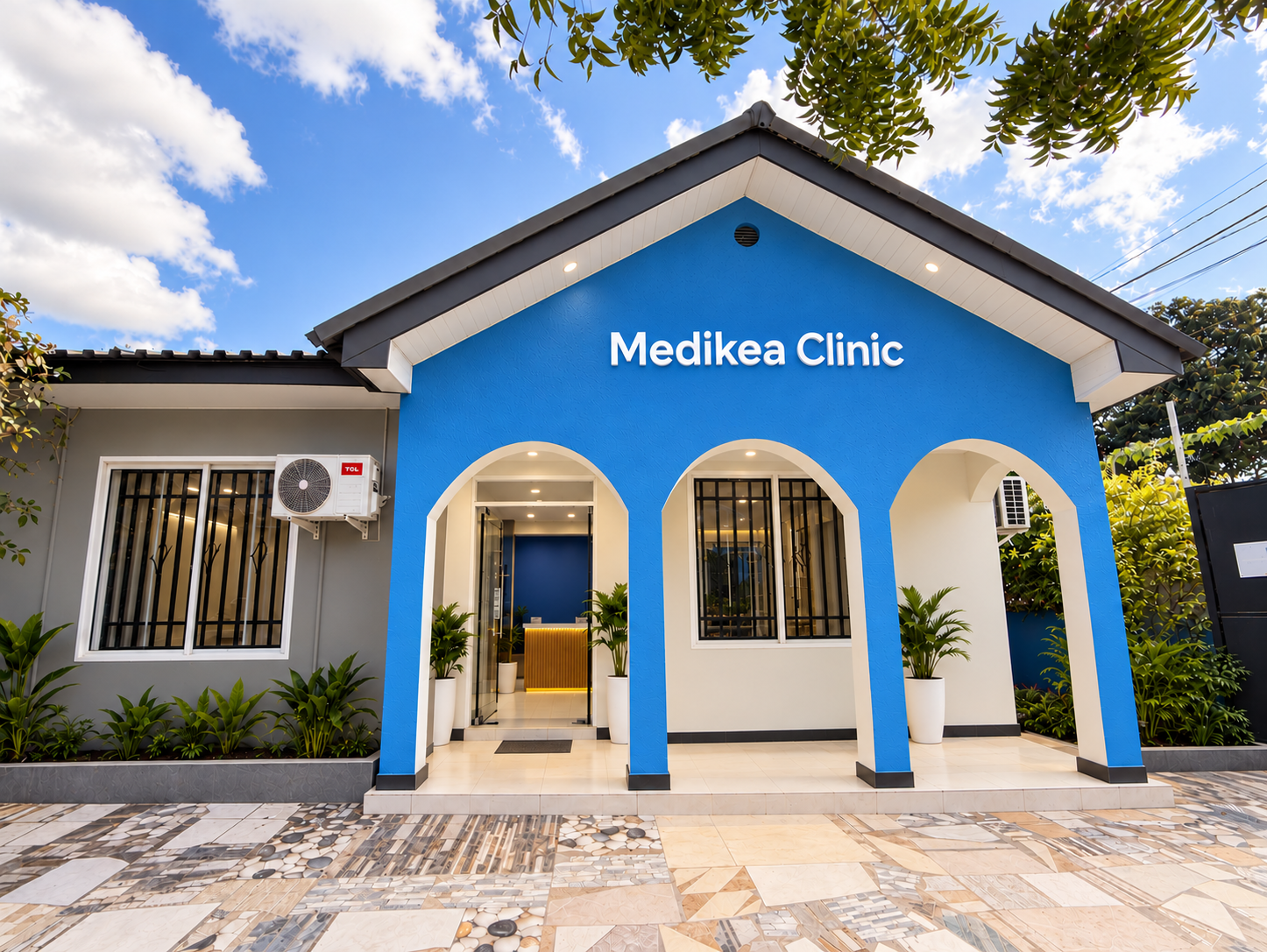
According to Silayo, a general practitioner consultation costs approximately US$4 (TZS 10,000), while a specialist consultation costs about US$12 (TZS 30,000). The final cost depends on additional tests and medicines a patient may need.
Medikea recently raised US$1.2 million in pre-seed funding. Silayo says the company has served more than 50,000 patients since it began operating and aims to reach 100,000 individual patients over the next 12 months through its physical clinics and virtual services.
But he says growth cannot be measured by patient numbers alone. The company also monitors waiting times, the cost of a complete episode of care, whether patients complete follow-up appointments and whether people living with conditions such as hypertension and diabetes keep them under control.
The combination of physical clinics and virtual care is one aspect Silayo believes could be adapted in other African markets. However, he acknowledges that regulations, payment systems and pricing would need to reflect local conditions.
He also sees private healthcare providers as partners to public health systems rather than replacements. Governments remain responsible for policy, regulation and protecting vulnerable communities. Private providers, he argues, can contribute by expanding primary and preventive care, working with public insurers and referring patients to hospitals when advanced treatment is needed.
“The question isn’t whether healthcare should be public or private, It is how government, private providers and insurers work together to build a system that is accessible, accountable and sustainable.”
For African countries working to expand healthcare access while managing costs, the question is how to make the journey from consultation to treatment simpler and more affordable. Medikea offers one attempt at answering it. Whether that model can deliver on its ambitions will depend on the quality, affordability and continuity of care it provides as it grows.