
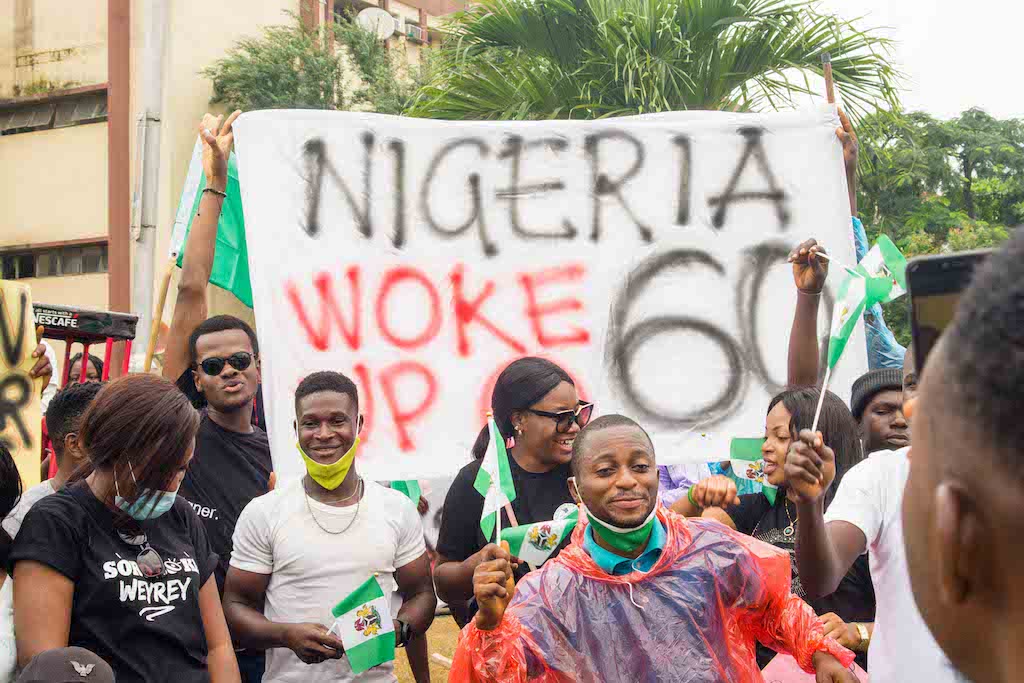
What started as a warning against injustice has been transformed into a political tool – and the consequences are far larger than a single word.
There was a time when the phrase “stay woke” did not carry controversy. It was not a slogan deployed in political campaigns, nor a shorthand for ideological identity. It was, rather, a warning – quiet, direct, and rooted in lived experience. Within Black communities in the United States, to “stay woke” meant to remain aware of the structures of injustice that shaped everyday life. It was an instruction to pay attention: to recognize that inequality did not always announce itself through overt acts of violence, but often operated through institutions, habits, and patterns that could easily be mistaken for normality.
That meaning has not simply evolved over time. It has been fundamentally altered.
Today, the word “woke” functions less as a descriptor and more as a weapon. It is used to dismiss, to caricature, and to delegitimize a wide range of concerns—anti-racism, gender equality, inclusion, and institutional reform among them. As Merriam-Webster notes, the term originated in African American English and was later adopted into broader discourse, where it has increasingly been deployed as a pejorative for socially conscious views.
What has occurred is not merely a shift in usage, but a deliberate inversion of meaning. A word that once signaled awareness has been reframed to imply excess, irrationality, and even threat.
Redefining the argument by redefining the language
The transformation of “woke” reflects a broader political strategy that extends beyond semantics. There are, broadly speaking, two ways to challenge an idea: one can engage with it directly, or one can undermine it indirectly by reshaping how it is perceived. The latter approach has proven particularly effective in contemporary discourse.
By recasting “woke” as something unserious or extreme, it becomes possible to sidestep the substantive issues it originally addressed. Conversations about systemic inequality can be dismissed without being engaged. Structural critiques can be reduced to caricature. In this framework, anti-racism becomes excessive, inclusion becomes performative, and equity becomes a distortion of fairness.
The result is not a resolution of debate, but its avoidance.
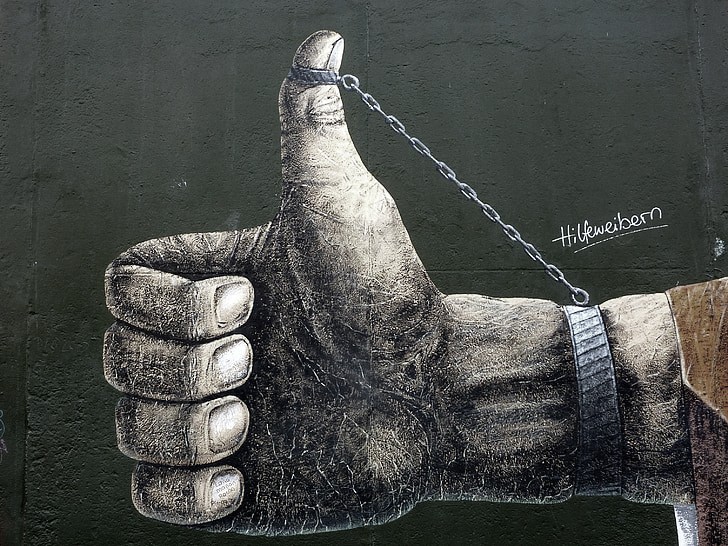
From rhetorical device to governing principle
What distinguishes the current moment is that this reframing has moved beyond media narratives and into the realm of policy.
In the United States, opposition to “wokeness” has become a central organizing principle for parts of the political establishment. President Donald Trump has made the dismantling of DEI – diversity, equity, and inclusion – initiatives a key priority of his administration. Executive actions have targeted such programs across federal agencies, framing them as incompatible with merit-based governance.
At the state level, this approach has been pursued with particular intensity. In Florida, Governor Ron DeSantis advanced legislation designed to restrict how race and systemic inequality are discussed in both educational and professional settings. Portions of that legislation were subsequently blocked by federal courts, with one judge describing elements of the law as “positively dystopian.”
In Texas, Governor Greg Abbott enacted measures to eliminate DEI offices within public universities, reflecting a broader effort to remove institutional frameworks associated with diversity and inclusion.
Taken together, these developments illustrate a clear shift: what began as a rhetorical critique has evolved into a governing philosophy.
The unresolved contradiction of merit
Central to the critique of DEI is the argument that such initiatives undermine meritocracy by prioritizing identity over competence. In theory, this position presents itself as a defense of standards. In practice, however, its application appears uneven.
Recent appointments within the U.S. political system have raised questions about the consistency with which merit is being applied. Reuters has reported that several senior positions have been filled by individuals whose qualifications were the subject of scrutiny, even among political allies.
Among the most widely discussed examples is Pete Hegseth, a television personality nominated to lead the Department of Defense, whose candidacy prompted bipartisan concerns regarding experience and preparedness. His confirmation ultimately required a tie-breaking vote in the Senate.
Similarly, Linda McMahon, appointed to oversee U.S. education policy, comes from a background outside traditional educational leadership, while being tasked in part with advancing efforts to dismantle the department she leads.
These cases highlight a broader tension. If DEI is criticized on the grounds that it compromises merit, but merit is not consistently applied across appointments, then the principle itself begins to lose coherence. What remains is not a neutral standard, but a selective one.
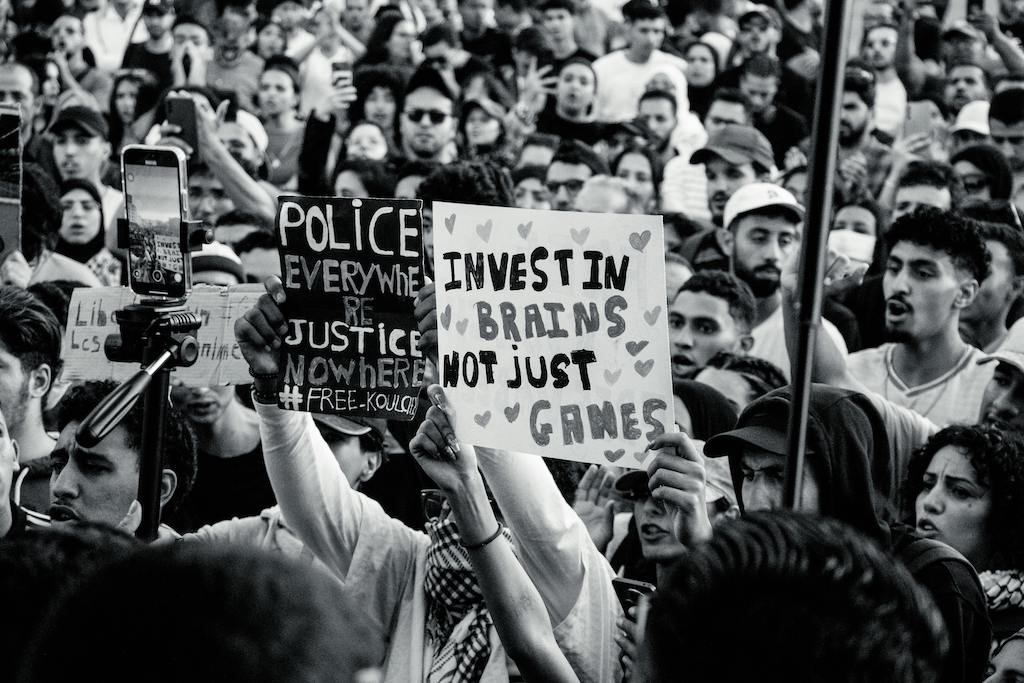
Cultural narratives and historical simplification
The political framing of “woke” is reinforced by broader cultural narratives that seek to redefine national identity. Elon Musk, one of the most influential figures in global business, recently argued that American culture is rooted in “English-Scots-Irish” origins and suggested that multiculturalism weakens national cohesion.
https://x.com/elonmusk/status/2022919799752294493
Such statements, while rhetorically powerful, rely on a selective reading of history. The United States has never been culturally homogeneous. Groups now considered integral to its identity – such as the Irish – were once subject to significant discrimination. Similarly, waves of immigration from Europe, Asia, and Latin America have continuously reshaped the country’s demographic and cultural landscape.
At the same time, the economic foundations of the United States cannot be understood without acknowledging the central role of enslaved Africans. To reduce this complex history to a singular cultural lineage is to overlook the very forces that contributed to the country’s development.
The empirical case for diversity
Beyond questions of identity and history, there is a substantial body of evidence indicating that diversity has been a driver of economic performance.
According to the American Immigration Council, nearly 46 percent of Fortune 500 companies were founded by immigrants or their children. Immigrants also account for a significant proportion of entrepreneurs and workers in science, technology, engineering, and mathematics.
Corporate data points in a similar direction. Research by McKinsey has found that companies in the top quartile for ethnic diversity are significantly more likely to outperform their peers financially.
These findings complicate the narrative that diversity undermines performance. On the contrary, they suggest that diversity has been a source of competitive advantage.

A familiar dynamic in the Global South
From the perspective of Africa and the broader Global South, the current discourse surrounding “woke” and DEI is not entirely unfamiliar. Many post-colonial societies have long contended with systems that present themselves as neutral while perpetuating underlying inequalities.
The language may differ, but the pattern is recognizable: narratives that frame inclusion as instability and equality as excess. What is notable in the present moment is that these dynamics are now emerging within Western societies themselves, rather than being imposed externally.
Given the global reach of American cultural and political discourse, these narratives are unlikely to remain contained. They are already influencing debates in Europe, the Gulf, and beyond.
When awareness becomes controversial
At its core, the transformation of “woke” reflects a deeper shift in how awareness itself is perceived. If the term originally signified attentiveness to injustice, its current use as a pejorative suggests a growing discomfort with that attentiveness.
This raises a fundamental question: what happens when awareness is reframed as the problem?
In such a context, discussions of inequality can be dismissed as exaggeration, historical analysis can be characterized as divisive, and calls for reform can be portrayed as threats to stability. The boundaries of acceptable discourse begin to narrow, not through formal prohibition, but through cultural delegitimization.
More than a word
The redefinition of “woke” is not simply a linguistic curiosity. It is indicative of a broader contest over meaning, narrative, and power.
Words shape how issues are understood, and how they are addressed. When a term associated with awareness is transformed into a term of ridicule, the ideas it represents become easier to dismiss.
The question, then, is not whether the word “woke” can be reclaimed. It is whether the awareness it once signified can be sustained in a discourse that increasingly treats it with suspicion.