
Given the recent surge in AI-driven tools, families, schools, governments are turning to educational technology (EdTech) to reverse foundational literacy gaps. As the continent accelerates into an AI-enabled future, a crucial question remains unresolved: Will technology widen or close the learning gap? This question has loomed large at recent high-profile convenings on the future of education including the recent G20 Summit and the preceding South Africa EdTech week, as well as the African Union’s launch of its multilingual teacher platform at PACTED 2025. These gatherings signal Africa’s intention to lead in next-generation learning technologies. Earlier this year, AUDA-NEPAD released a draft African EdTech 2030 Vision, framing EdTech as central to transforming the continent’s education systems.
Across the Global South, a quiet crisis is unfolding. Millions of children move through the first years of schooling without learning to read with fluency or comprehension. The scale is staggering in some cases, with over 80% of Grade 4 learners unable to read for meaning in South Africa. This crisis is not abstract, it shapes lifelong opportunity, economic mobility, and the health of our nations. But this crisis is not inevitable. It is structural, predictable and solvable.
Education systems in the Global South have seen waves of overpromising and underdelivering technology, from tablets for every learner to massive open online courses, with results that rarely reach scale or equity. Too often, solutions introduced into schools are misaligned with the realities of overcrowded classrooms, overburdened teachers, multilingual environments and households that juggle limited devices, limited data, limited digital capabilities and limited time. As a result, much of EdTech in Africa has replicated an extraction logic: exciting tools designed elsewhere, dropped into classrooms without contextual design, robust evidence or pathways to sustainability. If this defining moment is to be different, our design principles must change.
Why foundational learning continues to lag
The drivers of low literacy rates across Africa, South Asia and Latin America share striking similarities. Teachers have to manage large, multi-grade classes with little opportunity to give individualised support to students. In such settings, learners often transition between home languages and languages of instruction, slowing reading acquisition. In the more rural and economically marginalised areas, parents often have limited reading materials or confidence in supporting early learning.
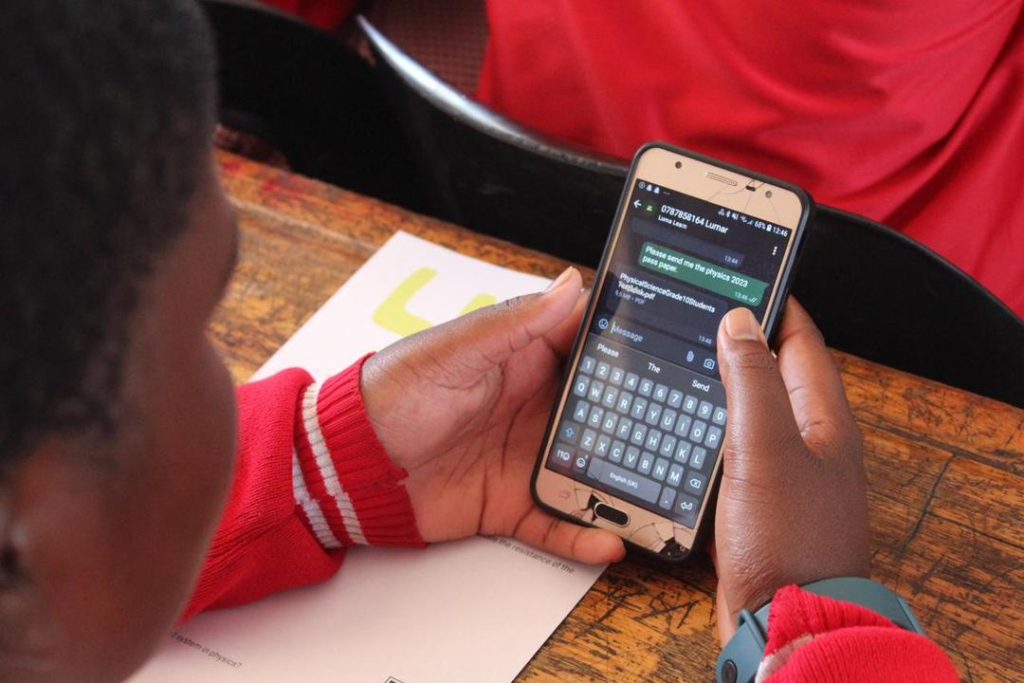
Digital divides add yet another layer. While mobile penetration is high, data remains expensive and devices are frequently shared. WhatsApp usage remains highest in Africa and Latin America with over 90% usage among internet users in Ghana, Nigeria, Brazil, Argentina, South Africa, Colombia and Morocco. While a tablet-first or app-based solution may excite investors, it fails the basic test of accessibility for households where WhatsApp is the digital entry point. A tablet loaded with apps means little if it cannot be repaired locally and a learning app adds little value if a family has to choose between data and fees. Against this backdrop, the question is not whether technology can help, but whether we can design for equity, not aspiration.
The rise of Global South Equity-centred solutions
The AI in Education Dashboard lists close to 300 AI EdTech products in LMICS, with over 57% being student-focused. To make sense of the proliferation of these products, two dimensions (user focus and delivery modality), provide a useful typology for analysing emerging solutions. User-facing platforms, such as Luma Learn, M-Shule and Eneza, engage learners, parents or teachers directly, while institution-facing platforms, such as Snapplify or Kytabu, support schools through content management and digital library systems. Ecosystem platforms, including EdoBEST in Nigeria and ProFuturo in Latin America, integrate multiple stakeholders including governments, NGOs, donors and schools into cohesive reform efforts.
Some of the most effective tools operate with simple but deliberate design choices and share a common philosophy: starting with the constraints, not the technology. They go beyond the assumption that transformative tools must be high-tech. Instead, they prioritise accessibility, cultural relevance, and alignment with classroom realities.
Drawing on comparative research across Africa, Asia and Latin America, a practical model is emerging to help governments, investors and innovators evaluate what “good” looks like in EdTech. The EQUITY Framework sets out six essential principles:
- Entry-level accessibility: Low-data, low-device-requirement, usable on shared phones
- Quality and curriculum alignment: Tools reflecting national standards and evidence-based pedagogy
- User co-design: Co-developed with teachers, parents and learners, not as “end-users” but delivery partners
- Inclusive language and culture: Multilingual content and culturally relevant examples
- Trust and evidence: Ethical data use and robust independent evaluation on learning outcomes
- Yield through partnerships: Multisectoral collaboration across ministries, implementers, EdTech firms and investors
This is not just a theoretical model, but rather, a practical response to years of costly pilots, abandoned platforms, and fractured policy environments.
“By taking an equity-first approach, emerging EdTech solutions from the Global South are redefining what scalable, impactful and profitable models look like” Brian Mugendi, DPhil University of Oxford, Education Specialist at the World Bank
EQUITY Framework in Practice: Luma Learn case study
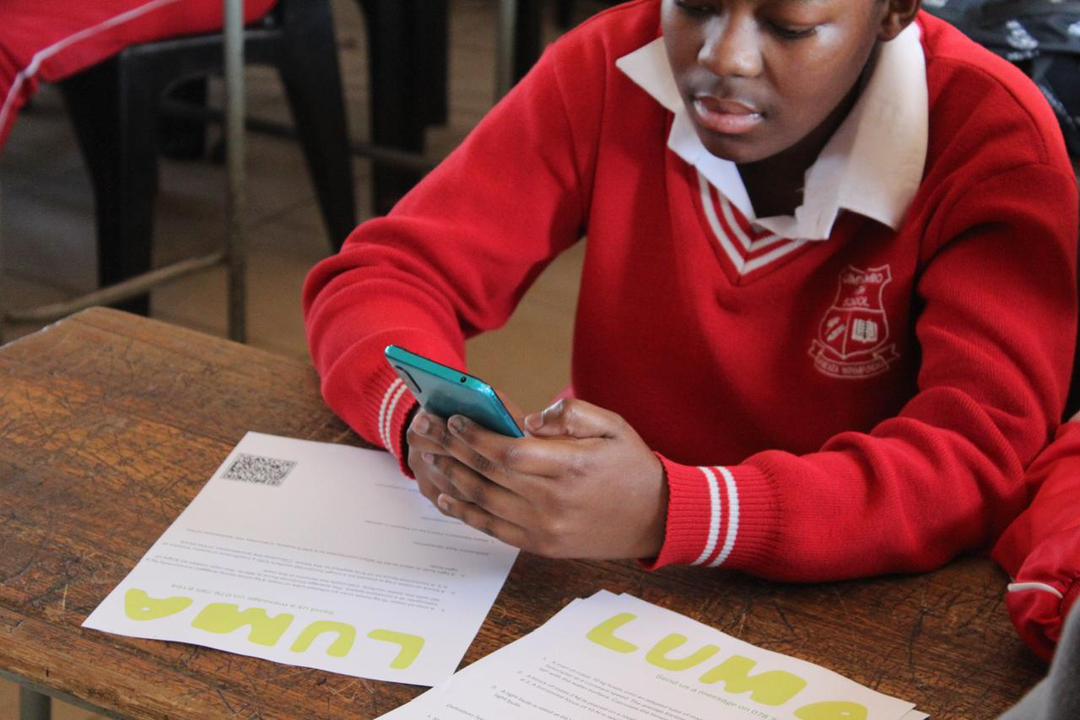
Emerging African innovations like Luma Learn, a WhatsApp-based literacy platform, illustrate the promise of equity-centred design. By delivering adaptive, curriculum-aligned learning through the continent’s most widely used messaging app, Luma significantly reduces onboarding barriers particularly for rural and underserved students. With multilingual content and co-design involving over 100 primary and secondary schools, it reflects a new wave of homegrown EdTech solutions that understands the need to meet children where they are.
“Luma Learn wasn’t just another study resource, it became the personal teaching assistant I desperately needed.” Simphiwe, a Grade 11 student from KwaZulu-Natal, who has sent over 1,200 messages to Luma, comments in a recent interview with the UN.
This model is reproducible across multiple geographies and adaptable as curricula evolve. It fills a critical teacher access gaps in settings with over 100 students per teacher. But like all emerging tools, Luma will need independent evaluations, strong public-sector partnerships and long-term support in order to scale sustainably.
Technology is not an antidote to system reform
As enthusiasm rises around AI for education, it is essential to restate a hard truth: EdTech alone does not replace system reform. Governments must modernise outdated EdTech policies and strengthen teacher training frameworks that embed digital competence as a core skill. Funders must shift from short-term project financing and piloting to patient, blended capital that recognises the realities of building technology in low-income markets. Practitioners must move beyond “innovation theatre” toward system-shifting interventions rooted in user research, multilingual content pipelines, and evidence-based pedagogy.
The excitement and energy flowing from Kigali to Johannesburg to Addis Ababa reflects a continent ready to shape its own education futures. But we must resist the allure of innovation for innovation’s sake. Technology alone does not, and cannot, fix system failures.
If our tools are accessible, multilingual, low-data and co-created with the communities they serve, they will not simply digitise learning; they will democratise it. Only then will the promise of AI in narrowing foundational literacy gaps become more than a mirage.
Writing Credits:
Dr. Anne Makena, CEO Research Alpha
Assoc Prof Jess Auerbach Jahajeeah, Director of MPhil in Inclusive Innovation ,Graduate School of Business, University of Cape Town
Chris Mabhele, PhD candidate, Graduate School of Business, University of Cape Town