

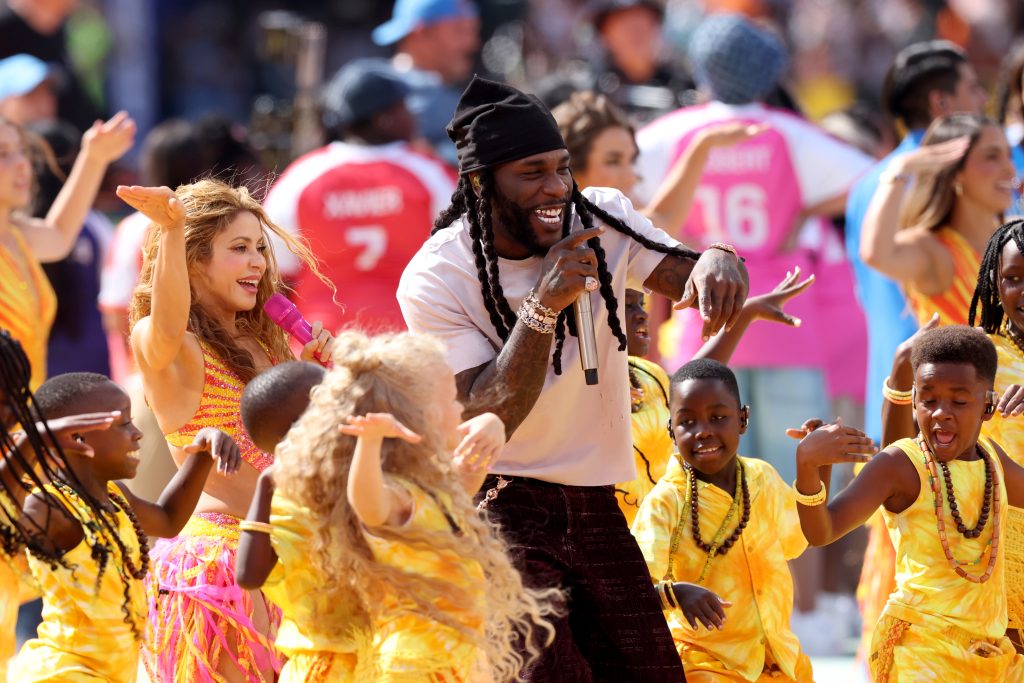
The lights have dimmed on the first-ever FIFA World Cup Final Halftime Show.
Millions watched as music’s biggest stars took to the stage at MetLife Stadium in a landmark moment for world football. For many, the evening will be remembered for the spectacle, the celebration and the sense that football had embraced a new cultural tradition on its biggest stage.
Yet once the music ended and the trophy was lifted, a different question remained: what will be the lasting legacy of the 2026 FIFA World Cup?
If FIFA and Global Citizen realise their ambition, the answer may have little to do with what happened during halftime. Instead, the tournament could ultimately be remembered for the classrooms it helps build, the opportunities it creates and the futures it unlocks through the FIFA Global Citizen Education Fund.
Created through a partnership between FIFA and Global Citizen, the Fund has set out to mobilise US$100 million to expand access to quality education and sport for children living in underserved communities around the world. Days before the World Cup Final, Global Citizen announced that the initiative had already secured US$60 million in commitments and awarded a second cohort of grants, bringing the total number of supported organisations to 58. Together, the projects are expected to benefit more than 400,000 young learners, while half of all funds raised will support FIFA’s Football for Schools programme, which combines football with education and life-skills development.
For Africa, where the world’s youngest population will shape the global economy over the coming decades, the initiative carries particular significance. Education is not simply a development priority; it is an economic imperative. The continent’s future competitiveness will depend on the opportunities available to its young people today.
That urgency is reflected in the scale of the challenge.
An estimated 251 million children remain out of school worldwide, while international education assistance has declined in recent years. For Hugh Evans, Co-Founder and CEO of Global Citizen, the need for innovative approaches has never been greater.
“The importance of access to quality education for children in underserved communities is something the whole world agrees upon,” Evans tells TIME Africa. “It is also one of the most powerful instruments for eradicating extreme poverty. Currently, 251 million children remain excluded from school, a crisis intensified by a sharp decline in international education aid. To counter this downturn, the FIFA World Cup 2026 presented a unique global platform and opportunity. By harnessing the spirit of unity and momentum evident throughout the tournament, we can expand educational access through community-led and grassroots organisations, driving critical progress where it is needed most.”
Rather than relying solely on traditional aid mechanisms, the Education Fund is seeking to harness the visibility and unity of the world’s biggest sporting event to mobilise governments, philanthropies, businesses and citizens around a common purpose.
The numbers alone tell an important story. More than 5,000 organisations applied for support, illustrating both the scale of the global education crisis and the extraordinary work already taking place within communities. Yet statistics reveal only part of the picture. The true impact of the Fund is found in the lives behind those numbers – in the children who remain in school, the communities strengthened through education and the futures protected before they are placed at risk.
Grantees were selected through a rigorous, multi-stage evaluation process that included eligibility screening, compliance verification, independent due diligence and site visits, with the objective of identifying organisations capable of delivering measurable, long-term impact.
For organisations working on the front lines, education is about far more than academic achievement. It is one of society’s most effective forms of prevention.
Few understand that better than James Kofi Annan, President of Ghana-based Challenging Heights. A survivor of child trafficking himself, Annan has spent more than two decades helping vulnerable children escape exploitation and rebuild their lives through education, protection and community support.
“As someone whose own childhood was stolen by trafficking, this recognition carries profound personal meaning,” Annan tells TIME Africa. “The FIFA Global Citizen Education Fund is affirming a truth we have witnessed for more than two decades: education, combined with protection, opportunity and the unifying power of sport, can transform lives.”
“This grant will enable Challenging Heights to reach more vulnerable children before traffickers do, help more survivors rebuild their lives, and strengthen communities so that children can remain safely in school and realise their full potential. We are deeply grateful to FIFA and Global Citizen for believing that every child, regardless of where they are born, deserves the chance to dream, to learn and to thrive.”
Annan’s experience broadens the conversation beyond classrooms alone. Education is not simply a pathway to employment or economic mobility. It is also one of society’s most effective forms of prevention. Every child who remains safely in school is less vulnerable to trafficking, exploitation, child labour and the cycles of poverty that continue to affect millions of families around the world. Investments in education are therefore also investments in protection, dignity and stronger communities.
Africa’s contribution to the initiative has not been confined to the organisations receiving support. The continent has also emerged as a source of leadership.
Last month, Zambia became the first government in the world to contribute to the FIFA Global Citizen Education Fund, committing US$1 million and encouraging other nations to follow its example. Since then, governments including Canada, Portugal, Sierra Leone, Belgium, Qatar and the United Arab Emirates have announced contributions, reflecting the Fund’s growing international momentum.
Speaking during Global Citizen NOW: Rio de Janeiro, Zambian President Hakainde Hichilema framed the contribution as an investment in a more prosperous future.
“If we give young people the tools to succeed, they will do more than transform their own lives. They will help solve the challenges, strengthen our societies and indeed build a more peaceful and prosperous world. Together we can open doors that no child should ever find closed.”
That message reflects an important shift in how the initiative is evolving. What began as a partnership between FIFA and Global Citizen is increasingly becoming a coalition of governments, foundations, businesses and civil society working together around a shared objective.
Equally important is the Fund’s commitment to accountability.
“We will measure success the same way we approach all of our work: by focusing on real outcomes for children,” Evans says. “We want to know how the money was spent, how many children are back in classrooms, how learning has improved, and what lasting difference these investments are making in their lives.”
He adds that education extends beyond academic achievement.
“Football and sport can help children stay in school, build confidence and develop the skills they need to succeed. Those are outcomes that matter, and we’ll measure them too.”
To ensure transparency, Global Citizen has partnered with Foundation Source to oversee reporting, monitor outcomes and regularly evaluate the impact of funded organisations.
As the coalition behind the Fund continues to grow, Evans believes Africa has an important role to play in shaping its future.
“We welcome all contributions to the FIFA Global Citizen Education Fund from governments, foundations, the private sector and individual donors across Africa and the world,” he says. “The Zambian government was the first government in the world to contribute to the Education Fund, and since then other governments have followed. We hope many more will join this effort.”
For decades, the FIFA World Cup has been remembered for unforgettable goals, iconic champions and moments that defined generations of football fans. The FIFA Global Citizen Education Fund proposes another way to measure success – not by what happened during 90 minutes on the pitch, or even 15 minutes at halftime, but by the lives transformed long after the final whistle.
For Africa, home to the world’s youngest population and some of the world’s most dynamic communities, that vision carries particular significance. If sustained, the true legacy of the 2026 FIFA World Cup may ultimately be measured not in medals or memories, but in classrooms filled, futures protected and opportunities created for hundreds of thousands of children around the world.
That would be a legacy worthy of the beautiful game.