

Why Kunle Afolayan is the Continent’s most consequential filmmaker
Over the past decade, Africa has become an experimental ground for Netflix, Prime Video, Showmax, and other platforms racing to reshape how the continent watches film and television. South Africa, Kenya, and Nigeria have emerged as the primary battlegrounds, each with deep cinematic traditions and hungry creative scenes. But as Western partnerships retreat and African audiences grow more discerning, the next decade will be shaped by a different kind of power: the filmmakers who built infrastructure, not just content.
In this new landscape, one name stands out. Nigerian filmmaker Kunle Afolayan has proven that African cinema can thrive—beyond piracy, beyond traditional distribution, on terms that preserve both artistry and ownership. His journey from Irapada to Aníkúlápó represents the evolution of a filmmaker who turned heritage, adaptation, and digital disruption into a lifelong mission.
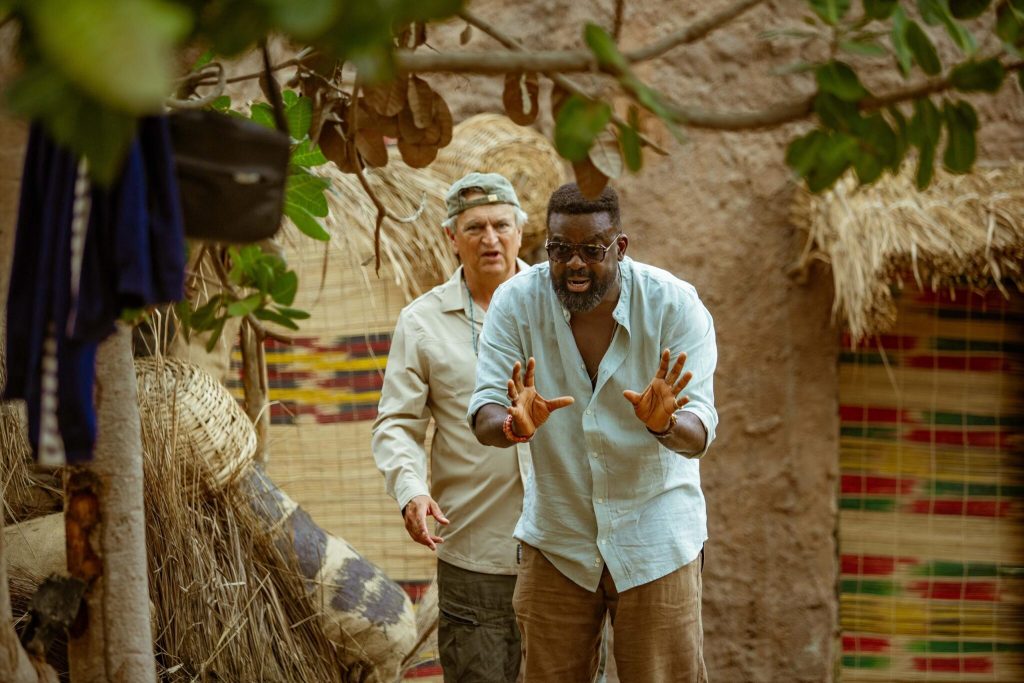
This November, Afolayan headlines NOIR FEST Harvard/Yale, where he will teach on the business of film and authentic African storytelling. It is the right moment to state it plainly: by combining cultural precision, industrial scale, and institution-building, Kunle Afolayan has become the most consequential African filmmaker of his generation.
The Son of Ade Love: A Legacy Reimagined
To understand Kunle Afolayan is to begin with his roots. His father, the late Adeyemi Afolayan—famously known as Ade Love—was one of the pillars of early Yoruba cinema. In the 1970s and 80s, Ade Love’s films like Taxi Driver, Ajani Ogun, Ija Ominira, and Kadara gave Nigerian audiences laughter, reflection, and a deep sense of cultural identity. He was part of the generation that transformed stage performance into celluloid storytelling, building the foundation for what would become Nollywood.
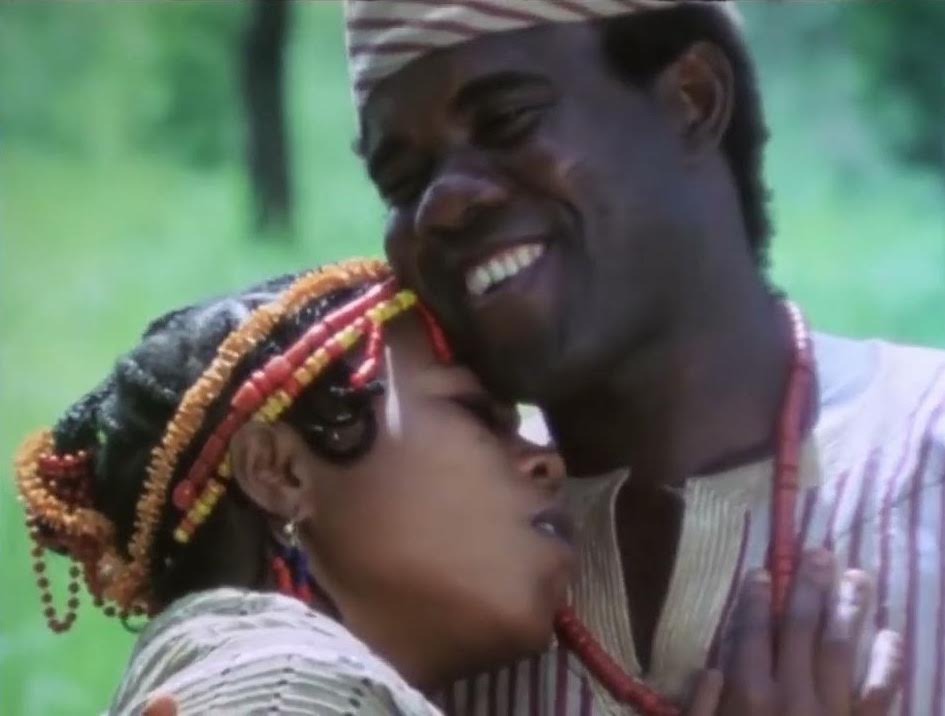
Adeyemi Afolayan, also known as Ade Love, was a pioneer in Nigerian cinema.
Kunle inherited not just his father’s blood, but his artistic restlessness. He walked away from a bank job in the mid-2000s to pursue film full-time, attending New York Film Academy before releasing his first film, Irapada, in 2006.
Then came The Figurine in 2009. That film set the tone for what critics would call “New Nollywood”: bigger canvases, 35mm aesthetics, stronger screenwriting, cinema releases. It was a breakout that scholars still study today, a quality leap that reset industry expectations. Where his father’s cinema was rooted in community, Kunle became obsessed with form—with how stories look, how they sound, how they are remembered. He is the bridge between the analogue dreams of the past and the digital frontiers of today.
More than a decade ago, The New York Times Magazine profiled him under the headline “A Scorsese in Lagos,” signaling both his craft ambitions and his role in pushing Nigerian cinema beyond straight-to-video formulas toward higher-budget, theatrically minded work.
Scale and Specificity
Two signature moves define Afolayan’s career: scale and specificity. The CEO (2016) is a genuinely pan-African corporate thriller—shot across multiple countries in Africa and Europe, spoken in English, French, Arabic, Yoruba, Swahili, and more. In activating creative economies across geographies, Afolayan made an economic and cultural statement about the future of African prosperity and mobility.
But ambition in Nigerian cinema has always come with a cost.
The Pain of Piracy and the Birth of a Streaming Vision
Before Nigeria became the streaming powerhouse it is now, it was a graveyard for filmmakers who dared to dream big. Piracy was the silent killer of creativity.
In 2014, Kunle Afolayan’s October 1—a gorgeously shot historical thriller set against Nigeria’s independence—became the target of mass illegal duplication. Within weeks of release, thousands of pirated copies flooded markets across West Africa. Years of work, millions of naira in investment, and countless hours of artistry had been reduced to nothing by street vendors selling DVDs for the price of a bus fare.
For Afolayan, it was a personal and professional blow. The cinema system was broken. He was already looking for a way out.

Enter Netflix. When Afolayan struck a deal with the platform for October 1 in 2014, he became the first Nigerian and only the second African filmmaker to have a film licensed by Netflix. It was the beginning of a lucrative partnership that would reshape his career—and the Nigerian film industry.
The Netflix Chapter: A Nigerian at the Global Table
Afolayan’s Netflix films were not just cinematic successes. They were cultural statements. Citation tackled sexual abuse and power in Nigerian universities. Swallow offered a haunting portrait of women’s struggles under dictatorship-era Lagos. Then came Aníkúlápó in 2022—a Yoruba epic about love, greed, and resurrection that shattered records to become the number one non-English film on Netflix globally, with 8.7 million viewing hours in its first week.
Through Aníkúlápó, Afolayan did not just tell a story. He restored Yoruba mythology to global consciousness. It was the kind of storytelling that said to the world: we are not just content makers. We are custodians of memory.
The Power of Local Storytelling in a Global Space
Afolayan’s genius lies in his ability to merge the local with the universal. His films are steeped in African landscapes, languages, and cultural intelligence, yet they speak a global cinematic language.
He builds on the legacy of Ousmane Sembène, the father of African cinema. Where Sembène used film as a weapon of decolonization and political awakening, Afolayan works at the level of pleasure and memory. His films don’t argue for African dignity—they assume it. The beauty is the point: the textiles, the music, the cadence of Yoruba speech, the way light falls on sacred ground. To watch his work is to be re-patterned, to feel something in the body relax and recognize itself. This is decolonization as restoration, not resistance.
Kunle Afolayan represents a generation of African filmmakers who stopped waiting for validation. They create films that demand global recognition on their own terms. Where Sembène taught Africans to see themselves on screen, Afolayan is building the infrastructure that allows them to own the screens themselves.
The Infrastructure Imperative: Why Kunle Afolayan is Africa’s Most Important Filmmaker
What separates Afolayan from his peers is something vanishingly rare in global cinema: he has built profitable, enduring infrastructure alongside an acclaimed filmography. This combination of artistry and institution-building represents the model African creatives must follow if the continent is to own, not merely participate in, its creative economy.
His KAP Film & Television Academy in Lagos operates in partnership with Netflix and the USC School of Cinematic Arts. It doesn’t simply offer classes. It graduates cohorts with USC-affiliated certificates, producing camera-ready talent for an industry starving for skilled professionals. Through collaboration with the Mastercard Foundation, the academy has trained hundreds of Nigerian youth, transforming creative aspiration into employable expertise.
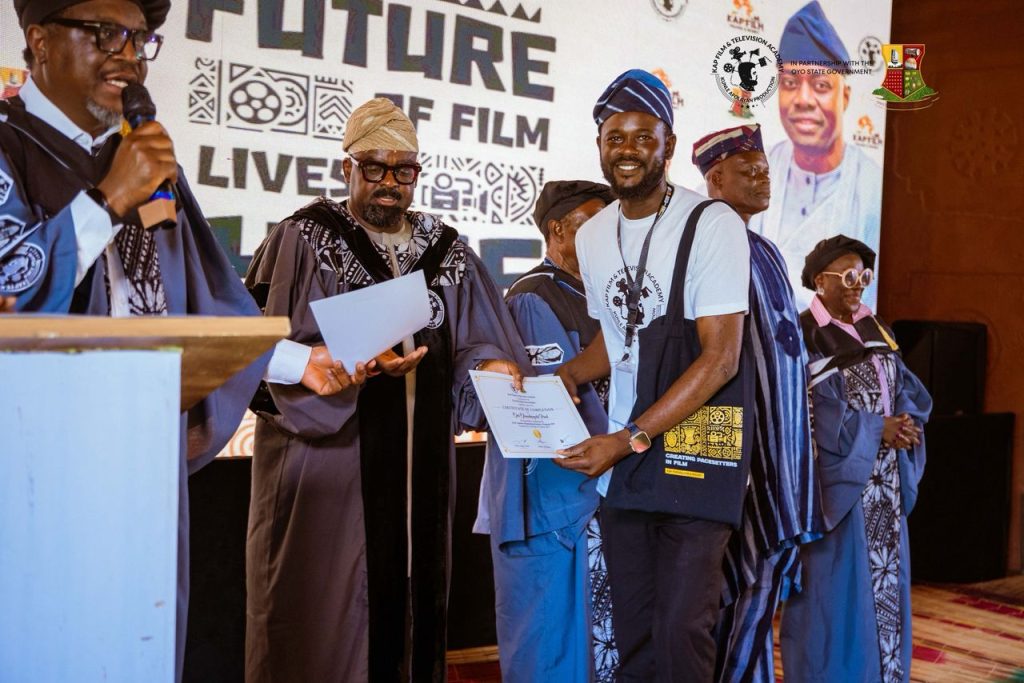
Then there’s the 60-acre KAP Film Village & Resort in Oyo State—a production campus, studio backlot, and hospitality hub that functions as an economic engine. It’s an African answer to what Hollywood has had for a century: a physical space where imagination becomes industry.
Every film Afolayan makes employs hundreds, empowers artisans, revives traditional crafts, and drives tourism to Oyo State—the region that has served for centuries as the heart of Yoruba language, culture, and spiritual practice.
When African filmmakers control production facilities, training pipelines, and revenue streams, they control the perception of Africans in the world and the futures possible for the continent. Afolayan has brought in corporate partners, collaborated with international institutions, and proven that African cinema can be artistically uncompromising and financially sustainable simultaneously. He has shifted the Nigerian cinematic psyche from survival mode to wealth-building.
At NOIR FEST’s Harvard/Yale Media Salon, Afolayan will explore this intersection in conversation with Warrington Hudlin, the chief architect of Black Hollywood’s distribution infrastructure, and Barry Johnson, who advises Africa’s wealthiest families on legacy-building, wealth preservation, and strategic investment across the continent.
Afolayan is Africa’s most important filmmaker because his model demonstrates what must be replicated if the continent is to shape its own future. What’s at stake is not just whether creatives thrive—it’s whether Africa controls the narratives that define it globally, and whether the wealth generated from those stories remains on the continent. This is the foundation of cultural sovereignty.
Afolayan models the truth that can drive this vision forward: African filmmakers don’t need permission to build empires. They need blueprints. His films will be studied for their beauty, their cultural precision, their box office returns. But his legacy will be measured by what he built—the academy, the village, the model that proves African creatives can own their stories and the systems that distribute them. That’s not just filmmaking. That’s nation-building. And it’s why, decades from now, when scholars trace the moment African cinema became truly sovereign, they’ll start with his name.

Adeyemi Dipeolu, Co-Chair of the Africa Europe Foundation Illicit Financial Flows Strategy Group, Adjunct Professor at the Nelson Mandela School, University of Cape Town and former Economic Adviser to the President of Nigeria
Pascal Saint-Amans, Co-Chair of the Africa Europe Foundation Illicit Financial Flows Strategy Group, Former Director of the Centre for Tax Policy and Administration at the OECD and Founding Chairman of Saint-Amans Global Advisory