
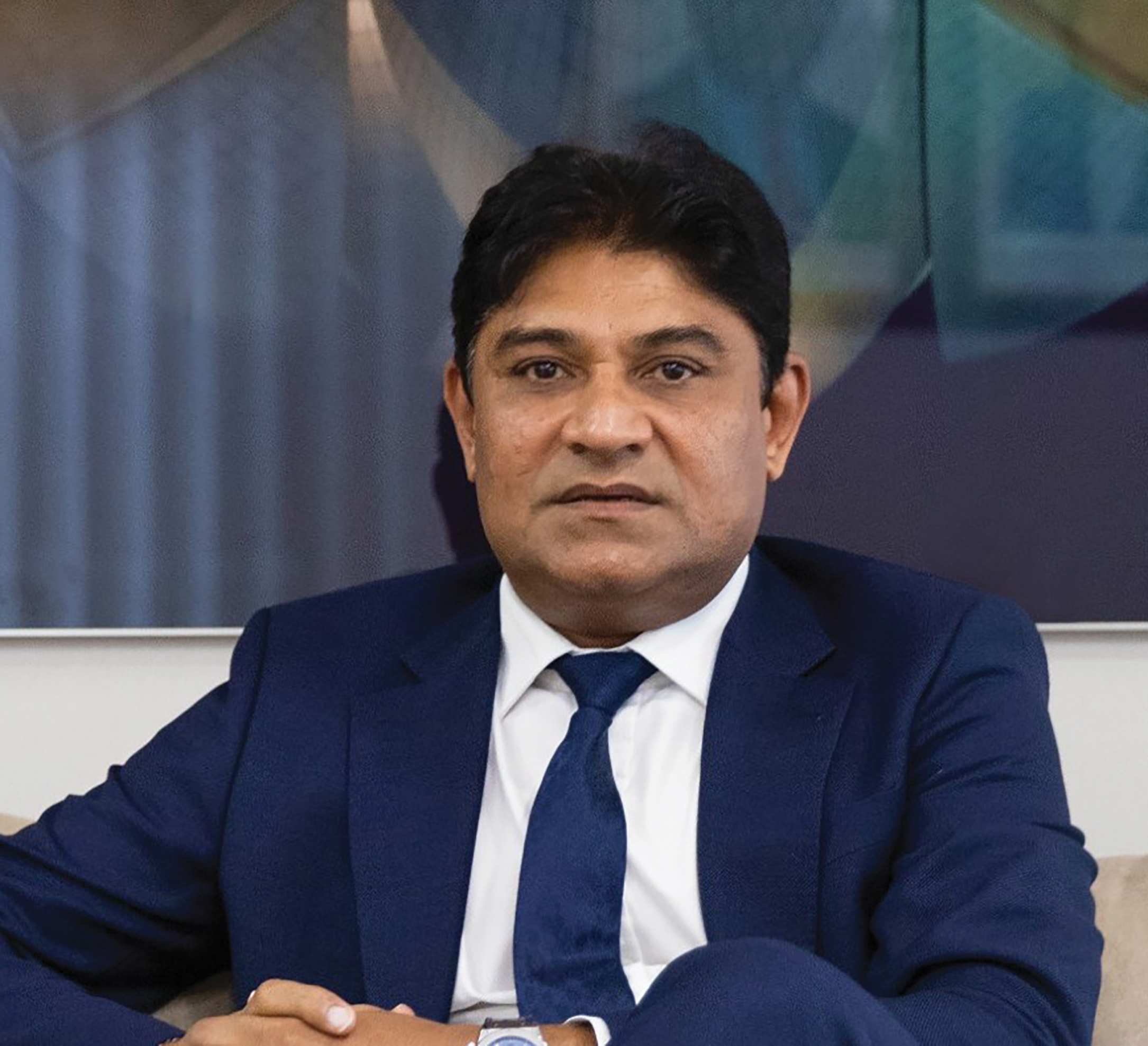
A long-term commitment to local manufacturing, workforce development and industrial expansion is strengthening domestic production and creating opportunities for regional growth.
How has Noble Group evolved from trading into industrial manufacturing in Angola?
When I arrived in Angola in 2002, I saw a market with consumer demand but limited local production capacity.
Trading gave us the opportunity to understand consumers, identify gaps and learn how the market worked. Over time, we realized that simply importing products was not enough. If we wanted to create sustainable value, we needed to invest locally. That led us from trading into distribution, retail and manufacturing.
Government incentives and support, including access to water, electricity, local resources and tax exemptions, helped us build this ecosystem. Our objective has been to produce in Angola, strengthen local supply chains, create employment and contribute to the country’s productive capacity. By 2025, we were operating 12 industrial facilities across sectors including beverages, biscuits, milk, toothpaste, personal hygiene products, cosmetics, detergents, agro-processing, packaging and paper recycling. Our portfolio includes over 60 “Made in Angola” products.
In the context of Angola’s national strategy to diversify away from oil dependence, what role does Noble Group play?
Our journey is one of commitment and resilience. Angola has experienced economic cycles, foreign exchange challenges, infrastructure constraints, and changing business conditions. There were times when reducing investment or exiting the market seemed easier, but we remained confident in Angola’s potential.
Since 2015, despite foreign exchange instability, we have continued investing in local manufacturing and reducing our dependence on imports. Access to foreign exchange, local currency loans, improved technology, and essential resources such as water, energy, and fuel have been important to our operations. Angola’s young workforce, whose willingness to learn and develop skills has supported our growth, has been valuable. By adapting to changing conditions and reinvesting in our businesses, we have strengthened our industrial operations and contributed to Angola’s efforts to diversify its economy.
With more than 10,000 direct employees, how does the group approach human capital development?
We invest in training, learning and workforce upskilling across our manufacturing plants and distribution networks. We have built an integrated system that combines in-house training and recruitment from universities to nurture people working with us.
We want to develop employees who can take on responsibilities as our manufacturing operations expand. By creating jobs and investing in people, we help strengthen Angola’s economy. Beyond the more than 10,000 employees, we indirectly support over 45,000 family members.
“We believe sustainable businesses are built not only in good times, but through resilience and the determination to keep moving forward.”
How does Noble Group use its manufacturing and distribution network to improve product availability and maintain competitive prices?
Our strategy is to create value across the supply chain through backward integration, manufacturing, distribution and forward integration. From our factories to our wholesale network, Nossa Casa, and to consumers through AngoMart, we have developed an integrated model that strengthens operational efficiency and improves product availability. This strategy helps us maintain price stability and ensure that essential goods reach communities across all 21 provinces of Angola.
What opportunities do infrastructure projects such as the Lobito Corridor create for Noble Group’s regional expansion?
We are exploring opportunities to leverage infrastructure developments such as the Lobito Corridor to expand exports of locally manufactured goods into Southern African Development Community (SADC) and Central African markets.
Our focus, however, is on strengthening local production, logistics and distribution capabilities. We believe that building a strong domestic manufacturing base is essential before expanding into regional markets. But with an enabling business environment, we are confident that we can achieve these ambitions and turn Angola into a competitive exporter.
Could you tell us about the work of the Noble Care Foundation?
Through the Noble Care Foundation, our social responsibility arm, we aim to improve living conditions and the well-being of the communities in which we operate. We have supported more than 20,000 family members through initiatives focused on health, education and community development. As we continue to grow, we want our investments to benefit the people and communities around us.
How do you envision Noble Group’s development over the next five years?
Our ambition is to replicate the achievements of the past 25 years on a larger scale by creating more jobs, developing industrial clusters and deepening our investment in Angola. Having gained an understanding of the country’s markets, demand and consumer needs, we aim to extend our backward integration to the farm level, focusing on agro-processing and sugar production. This will help strengthen local value chains and reduce import dependence. Throughout our journey, we have adapted to changing conditions, maintained cost control and reinvested in our businesses. Even during challenging periods, including the Covid-19 pandemic, we remained committed to growing in Angola. We believe sustainable businesses are built not only in good times, but through resilience and the determination to keep moving forward.
Contact
Rua Kalife Bairro Kawelele, Desvio
da Cimangola, 2 º andar, Kikolo –
Cacuaco, Luanda, Angola
www.noble-group.net
Produced independently of the TIME Africa newsroom by Penresa.