
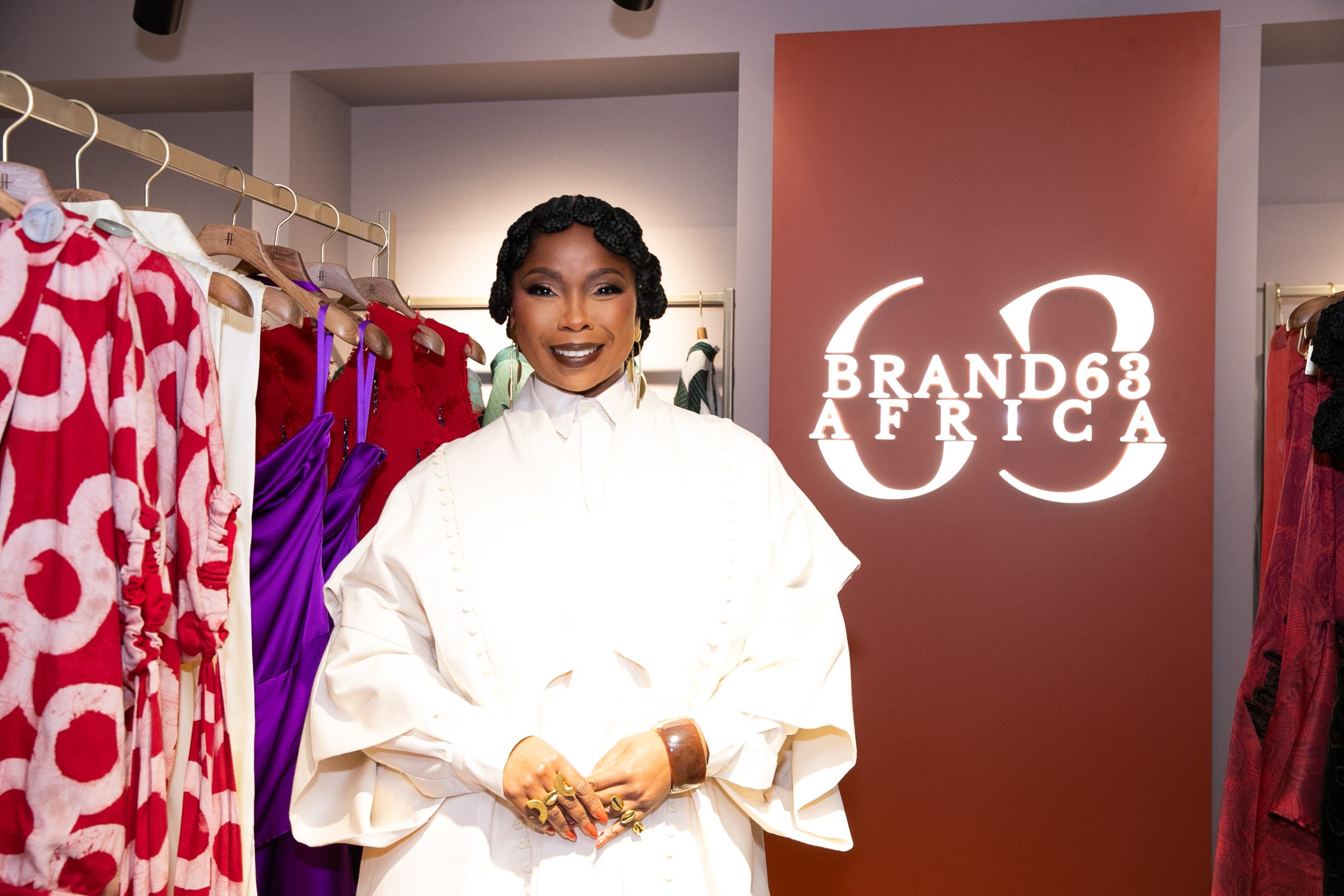
A new Brand63Africa pop-up brings five designers from Africa and its diaspora to one of the world’s most influential luxury retailers, offering a glimpse of what African fashion can look like when international attention is matched by commercial opportunity.
On the fifth floor of Harrods, among the thousands of brands that fill the Knightsbridge institution, five fashion labels are being introduced to a new audience.
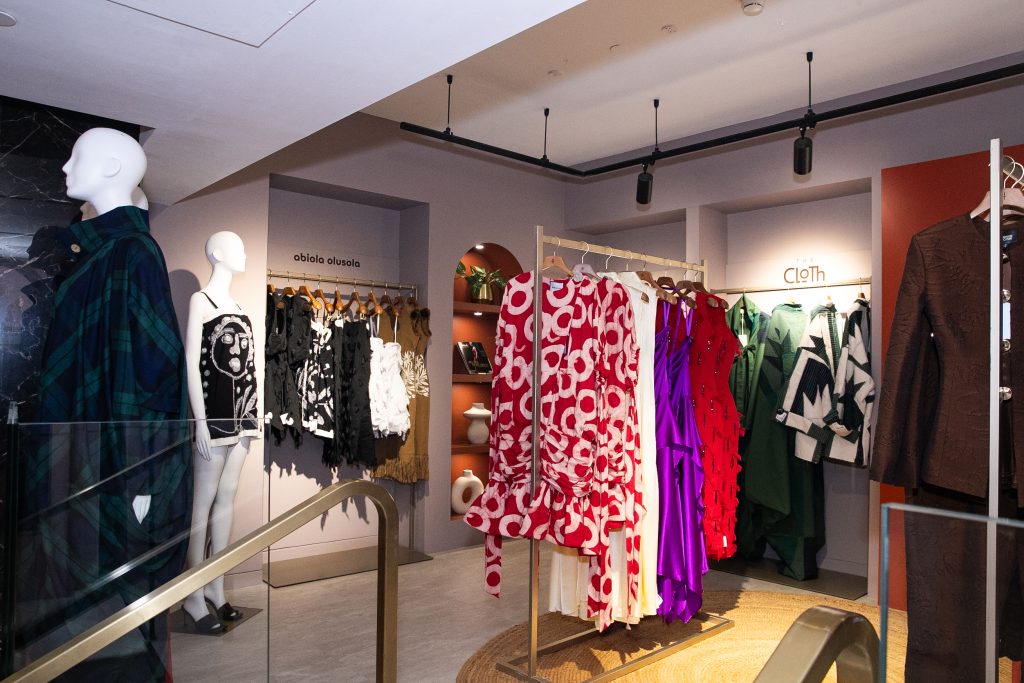
Christie Brown is from Ghana. Studio Namnyak is from Kenya, Abiola Olusola from Nigeria and Sukeina from Senegal. The fifth, The Cloth, comes from Trinidad and Tobago. Together they make up the inaugural designer cohort of Brand63Africa, a platform set up to help designers from Africa and its diaspora find a foothold in the international luxury business.
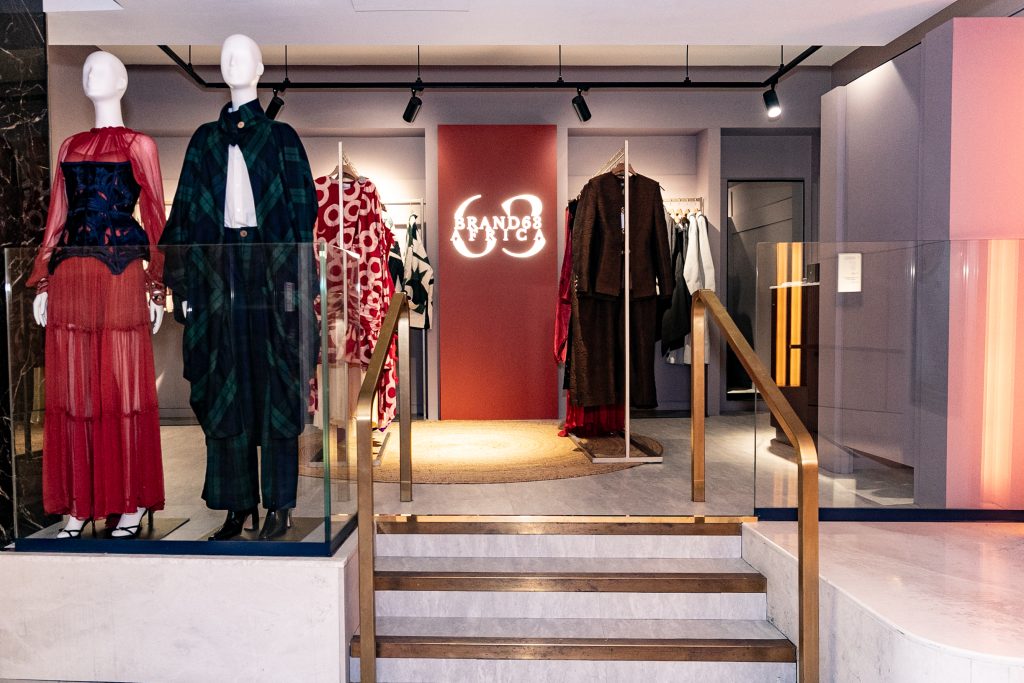
Their collections arrived at Harrods on Sept. 7 and will remain there until Oct. 27, in a dedicated pop-up that marks Brand63Africa’s first move into retail after making its debut at London Fashion Week earlier this year.
There is plenty of symbolism in five designers of African heritage occupying space inside one of Britain’s most famous department stores. But the more interesting part of the story is commercial.
African fashion has become considerably more visible internationally over the past decade. Designers from the continent increasingly appear on major runways and red carpets, in international magazines and through collaborations with established global names. Visibility, though, can only take a business so far.
At Harrods, these clothes are there to be sold.
The designers are not appearing as part of an exhibition, nor are their collections being presented simply as examples of African creativity. They are being put in front of luxury consumers who can see the clothes, try them on and buy them. For designers trying to turn creative recognition into sustainable international businesses, that difference is a meaningful one.
Beyond visibility
Eva Omaghomi CVO, who founded Brand63Africa, has been explicit about what she wants the platform to accomplish.
“Brand63Africa has always been about creating meaningful opportunity, not simply visibility,” Omaghomi said as the pop-up opened. “It gives our designers the opportunity to connect directly with a global luxury consumer and, importantly, for people to experience and shop their collections.”
It gets to a longstanding issue for creative businesses across the continent. Talent is not particularly difficult to find. Building the infrastructure around that talent is harder.
A designer hoping to build an international fashion house needs buyers and distribution, certainly, but also production capacity, finance, quality control, industry relationships and an understanding of unfamiliar markets. A well-received collection can generate attention almost overnight. Building a company capable of making the most of that attention is a different proposition.
Brand63Africa has been built with some of those less visible obstacles in mind.
Omaghomi spent 17 years as an adviser within the Royal Household and is Chair of the SXSW London Advisory Council. Through Brand63Africa, she is bringing designers into contact with retailers and industry figures while trying to create longer-term commercial opportunities beyond individual showcases.
The programme also works with its designers on collection development, positioning, investment readiness, quality control and responsible production. Torlowei, the Nigerian-British luxury house founded by Patience Torlowei and Mojisola Adegbile, serves as its mentor designer, bringing the experience of having built a global brand while maintaining its grounding in African craftsmanship.
In that context, getting into Harrods is less a finishing line than an early demonstration of what the model might achieve.
Five designers, five perspectives
There has long been a tendency outside the continent to discuss “African fashion” as a category in itself. Put five designers from different parts of Africa and its diaspora next to each other, however, and the limitations of that description become fairly obvious.
Christie Brown, founded by Ghanaian designer Aisha Ayensu, has built its name around womenswear that brings traditional craftsmanship together with contemporary tailoring and luxury fabrics. Nigerian designer Abiola Olusola takes a more sculptural approach, using artisanal techniques and intricate detailing. Sukeina, founded by Omar Salam and rooted in Senegal, is known for architectural silhouettes and precise craftsmanship.
Studio Namnyak draws on East African craft and heritage techniques in Kenya, while Trinidad and Tobago’s The Cloth works with traditional West Indian Sea Island cotton and places an emphasis on sustainable production and preserving heritage craft.
They do not look the same, and nor should they.
The value of bringing these designers together is not in trying to arrive at a definition of what African luxury ought to be. If anything, the collection makes the opposite case. African and diasporic fashion is broad enough to accommodate very different histories, materials, techniques and ideas about what contemporary luxury looks like.
Even the name of the organisation is intended to carry some of that history. Brand63Africa takes 1963 from the year the Organisation of African Unity, the predecessor of the African Union, was established. Its remit extends beyond the continent to the African diaspora, recognised by the African Union as Africa’s sixth region.
What ends up on the rails at Harrods, then, isn’t one interpretation of Africa dressed up for an international customer. It is five different design businesses being given room to make their own case.
A place inside global luxury
Harrods has been operating from Knightsbridge since 1849. Today the retailer is home to more than 3,000 brands, alongside restaurants and fashion, beauty, home and wellness services.
For an emerging label, appearing there brings something considerably more useful than prestige alone: access to the sort of international luxury customer that can be difficult and expensive to reach independently.
Clemmie Harris, Harrods’ Head of Buying for Contemporary, Sport and Essentials, said the retailer wants to give its customers access to “the most exciting voices shaping the future of luxury.”
“Our partnership with Brand63Africa reflects a shared commitment to celebrating exceptional creativity, craftsmanship and innovation,” Harris said, “while creating meaningful opportunities for designers to connect with a global audience.”
For much of the modern fashion industry’s history, the geography of luxury has been concentrated in a handful of cities. Paris, Milan, London and New York became the industry’s principal centres, and Europe’s major houses have had an outsized role in deciding what luxury looks like and how it is sold.
The traditions that feed luxury fashion, of course, have never observed those boundaries.
Across Africa are generations of expertise in textiles, weaving, embroidery, leatherwork, tailoring and other forms of craft. Today’s designers are drawing on some of those traditions without being bound by them, creating businesses and collections intended for contemporary consumers at home and abroad.
That is why viewing the Harrods pop-up purely as a story about African designers “making it” in London misses something.
The more meaningful development would be for their presence in stores such as Harrods eventually to become ordinary.
African designers should not need to appear only in an “Africa” season, a cultural showcase or a heritage-focused exhibition to reach an international customer. A Ghanaian or Kenyan label ought to be able to sit alongside a French, Italian, Japanese or American one and make the same argument every fashion business ultimately has to make: that the clothes are good enough for somebody to want them.
Omaghomi puts it in much simpler terms.
“We want customers to come into Harrods, discover a designer they may never have encountered before and fall in love with the clothes because they are beautifully designed, beautifully made and they want to wear them,” she said. Perhaps that is the most useful way to think about what is happening in Knightsbridge.
Nobody needs to buy African fashion out of obligation. A dress does not have to explain a continent, and a designer should not have to carry that expectation every time a collection travels overseas. The clothes can speak for themselves.
From cultural influence to commercial power
Attention, however, still has to be converted into business.
Designers need buyers, dependable production, finance, distribution and logistics. They need relationships that survive beyond a launch party or a fashion week. And if African fashion is going to translate its growing cultural reach into economic weight, more of its designers will need businesses capable of scaling alongside their reputations.
Brand63Africa has assembled an unusually experienced group around that task. Its Creative Committee, chaired by Vanessa Kingori OBE, includes Harrods Managing Director Michael Ward; LVMH Chief Diversity & Inclusion Officer Vanessa Moungar; immediate past CFDA President Casandra Diggs; Industrie Africa founder Nisha Kanabar; designer and stylist Walé Adeyemi MBE; designer and former Ethiopian model Anna Getaneh; and fashion and textiles manufacturer Beth Teshome.
What matters now is what that access produces over time. The Harrods pop-up runs for seven weeks. Fashion houses are built over years.
Still, for Christie Brown, Studio Namnyak, Abiola Olusola, Sukeina and The Cloth, those seven weeks put their work in front of customers inside one of luxury retail’s best-known institutions. And for Brand63Africa, they provide an early opportunity to show that its promise of moving designers beyond visibility can work in practice.
There will always be value in celebrating the arrival of African and diasporic designers in spaces from which they have historically been absent. But success ultimately looks more mundane than that.
It is the day their presence there is no longer news.