

Football and the Reinvention of the Modern Nation
Long before the first whistle blew at the 2026 FIFA World Cup, another contest was already underway. It was not a contest for the trophy. It was a contest over identity.
Across Europe and beyond, societies are debating immigration, citizenship, national identity and belonging with an intensity not seen for generations. Elections have been won on these questions. Governments have risen and fallen because of them. Yet for all the speeches, legislation and political rhetoric, perhaps nowhere are these tensions revealed more clearly than on a football pitch.
Football has always been more than a game. It has reflected societies at their most hopeful, their most divided and their most united. For ninety minutes, abstract debates become deeply human. They have a face.
In 2026, that face was Lamine Yamal.
At just nineteen years old, Yamal became one of the defining figures of Spain’s World Cup triumph. His performances captivated audiences around the world, but his significance extended well beyond the football itself. He came to represent a broader conversation about identity, heritage and the evolving meaning of national belonging.
This was never simply the story of one remarkable footballer.
It was the story of a generation.
Nations Change Before Our Definitions Do
International football has long been presented as the purest expression of nationhood. Eleven players. One flag. One anthem. One people.
Reality has always been more complex.
Modern nations are increasingly shaped by citizenship, shared experience and common purpose, alongside the histories and cultures that have always formed part of national identity. A child born and raised in Madrid to Moroccan and Equatorial Guinean parents, educated in Spanish schools and representing Spain throughout his footballing journey is not becoming Spanish. His life has unfolded within Spain’s national story from the very beginning.
The same is true across much of the world. The sons and daughters of families whose histories stretch across continents are contributing to the countries in which they were born and raised, enriching national life while often maintaining deep connections to their family heritage. Football has simply made that reality visible. Yet the sport also reveals a lingering contradiction.
When these players succeed, they are often celebrated as national heroes. When they struggle, questions about identity and belonging can reappear with surprising speed. The standards applied to them are not always the same as those applied to others wearing the same shirt.
Yamal’s story is important not because it is exceptional, but because it is increasingly familiar.
Football Has Become Society’s Mirror
Spain is not alone.
France has wrestled with questions of identity for decades. England has experienced similar debates. Germany, the Netherlands, Belgium, Portugal and many other nations have all seen football become a stage upon which wider conversations about citizenship, migration and belonging are projected.
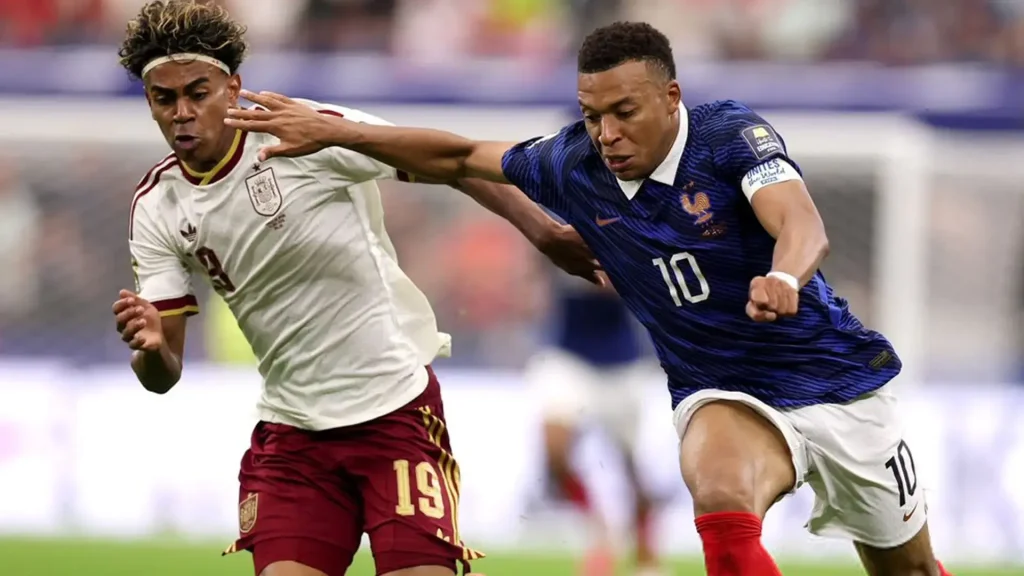
Supporters may believe they are discussing football. Often, they are discussing something much larger.
The stadium has become one of the few places where millions of people publicly negotiate what a nation looks like, who represents it and how national identity continues to evolve. Football did not create these debates. It simply placed them under the brightest lights in the world.
Identity Is Not a Choice Between Worlds
One of the enduring misconceptions surrounding modern identity is the belief that it must be singular.
As though being proudly Spanish somehow diminishes Equatorial Guinean heritage. As though representing England weakens Jamaican or Nigerian ancestry. As though playing for France somehow erases Senegalese, Algerian or Congolese family histories. Human identity has never worked that way.
People carry multiple identities throughout their lives, national, regional, cultural, linguistic and familial. These identities do not necessarily compete with one another. More often, they coexist. Football has not created these layered identities. It has simply introduced them to billions of viewers.
Africa’s Global Generation
Hidden within this story is another one.
For much of modern history, conversations about Africa have too often focused on what the continent lacked, industrial capacity, investment, geopolitical influence or economic opportunity. Football tells a different story.
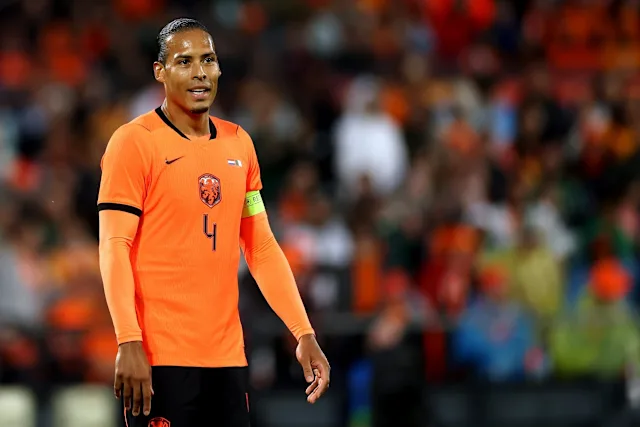
Across the world’s biggest sporting stage, African heritage has become one of the defining threads of the modern game. Some of its greatest players represent African nations. Others represent European countries, North American teams, South American teams or nations elsewhere, while maintaining family histories that reach back across the African continent.
This is not a story of divided loyalties. It is a story of interconnected histories.
From Madrid to London, Paris to Amsterdam, African heritage has become an integral part of the story many nations now tell about themselves. Not through conquest or empire, but through families, communities, education, culture and talent.
Perhaps this is one of Africa’s quietest contributions to the twenty-first century.
Not one measured through military power or political influence, but through people whose lives increasingly connect continents rather than separate them.
The Future Already Has a Face
Lamine Yamal represents more than extraordinary footballing talent.
He represents a generation growing up in societies that are increasingly interconnected, diverse and confident in carrying more than one inheritance. His story challenges the assumption that nations possess a single face or a single narrative. History suggests they never truly did. Modern life makes that reality impossible to ignore.
The question confronting many societies today is no longer whether people like Lamine Yamal belong.
That question was answered years ago, in classrooms, neighbourhoods, workplaces and communities where lives were built and identities formed.
The real question is whether our understanding of nationhood has evolved quickly enough to recognise the societies we have already become.
Football did not create this reality. It revealed it. When Lamine Yamal pulled on the shirt of Spain, he was not redefining his country. He was revealing it. Perhaps that is what the 2026 FIFA World Cup will ultimately be remembered for.
Not just the nation that lifted the trophy, but the moment the world caught a clearer glimpse of the nations it is becoming.