

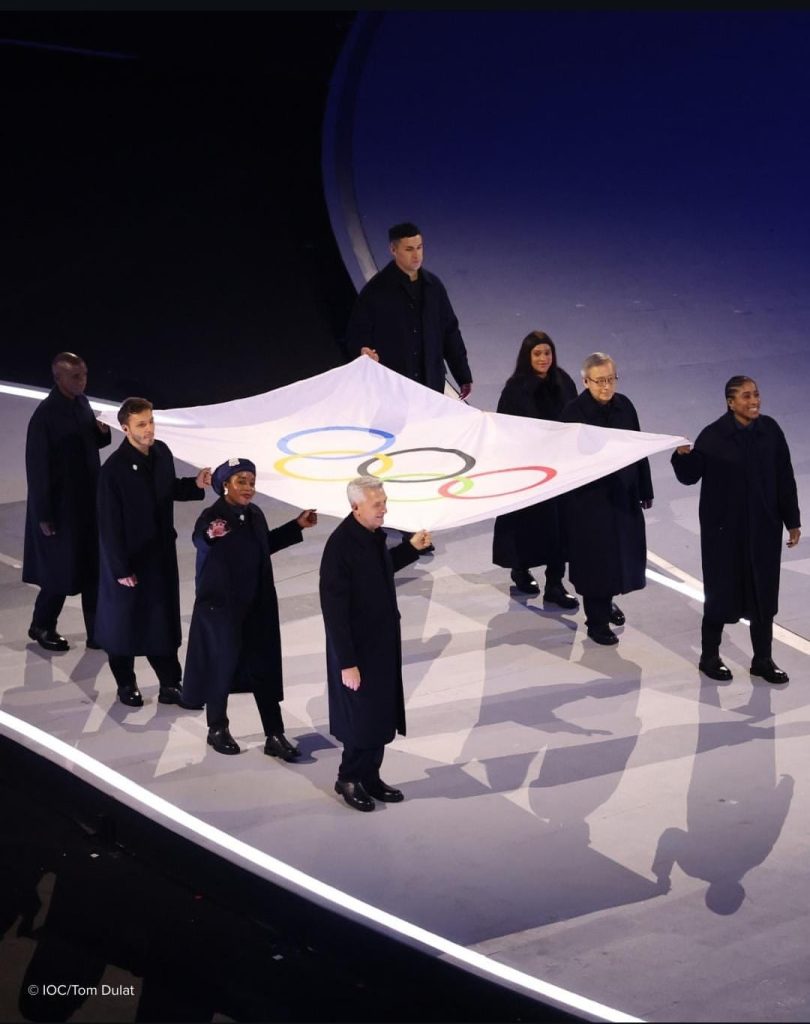
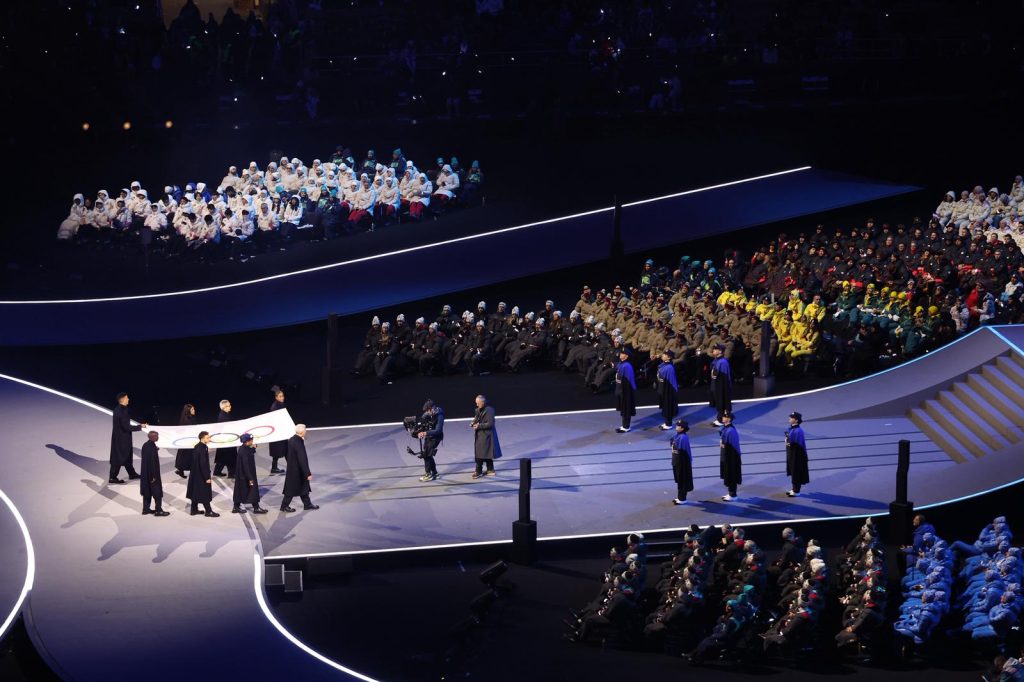
When I was invited to serve as an Olympic flag bearer in Milan, I understood quickly that this was not simply a ceremony. A flag is never just fabric. It carries history, memory, aspiration, conflict, and reconciliation, sometimes all at once. To carry one publicly is to carry humanity’s ongoing conversation about how we live together with dignity.
Yet what stayed with me most was not the stadium, the spectacle, or even the symbolism of the flag itself. It was the people beside me.
There was something profoundly intentional about who stood there. Young leaders rooted in education, refugee advocacy, community transformation, diplomacy, environmental consciousness, and cultural diplomacy. From youth education champions to voices representing displaced communities to the older generation who are a bridge, it became clear that this gathering was not accidental. It reflected a powerful truth: peace today is increasingly shaped by people who are bridging divides through education, culture, and imagination.
That realization echoed something beautifully captured by my acquaintance Abeer S. Bin Far Al-Saud, who is a peace builder and multilateral expert, where she reflected on the ceremony as a moment where “sport can be a canvas for peace,” reminding us that peace is not merely the absence of conflict but an active environment where humanity can flourish. Her words resonated deeply because they named what many of us felt that evening, that the Olympic stage, at its best, becomes a rehearsal space for coexistence.
And coexistence is not abstract.
It lives in education initiatives that give children tools to imagine futures beyond conflict like my fellow flagbearer Niccolo Govani is doing in Kenya. It lives in refugee advocates like my fellow Flagbearer Cindy Ngamba, who insist that displacement does not erase dignity. It lives in athletes who represent resilience like my fellow flag bearers Eliud Kipchoge, Rebecca and Pita Taufatofua, diplomats like my fellow flag bearers; The former Mayor of Hiroshima Tadatoshi Akiba and The former UN High commissioner for refugees Filippo Grande who hold the delicate thread of bilateralism and multilateralism together and storytellers like myself who translate complex human experiences into something we can all feel.
As someone whose work exists at the intersection of poetry, policy, and peacebuilding, I often think about imagination as infrastructure. Before systems change, before policies shift, someone must first imagine a different possibility. Sport, like art, allows that imagining to happen collectively. It temporarily suspends our divisions long enough for empathy to enter.
That is why moments like the Olympics matter more than we sometimes admit.
They remind us that unity is not naïve; it is practiced. In rituals, in shared celebration, in recognizing excellence across cultures rather than against them. And perhaps most importantly, in representation. When young Africans women leaders, refugee advocates, and educators stand visibly on global platforms, they expand the horizon of what future leadership can look like.
This is especially significant for Africa and the Global South, where youth populations are not simply demographic statistics but drivers of global transformation. Across the continent, young people are redefining entrepreneurship, climate advocacy, governance conversations, art, and social innovation. Yet they are too often framed primarily through deficit narratives: conflict, migration, crisis. Moments like flag-bearing disrupt that narrative. They show contribution, leadership, and cultural authority.
And they remind the world that peacebuilding is not solely diplomatic work. It is cultural work. Educational work. Environmental work. Community work.
There was also something deeply human about Milan itself; the warmth, the conversations that stretched late into the evening, the feeling that the city momentarily softened the edges of our global anxieties. It reinforced something I have come to believe strongly:
environments that invite connection often nurture peace. Place matters. Atmosphere matters. Culture matters.
Abeer’s reflection also extended peace beyond human interaction toward environmental stewardship and our relationship with the planet. That perspective feels urgent now. True peace cannot exist while ecological systems collapse or while some communities bear disproportionate climate burdens. Peace, in this sense, becomes holistic: human dignity intertwined with planetary wellbeing.
So what did carrying that flag ultimately mean for me?
It meant recognizing that peace is not an event. It is a practice.
A daily decision to humanize before politicizing.
To listen before labelling.
To create spaces, whether through sport, education, art, or policy, where dignity is non-negotiable.
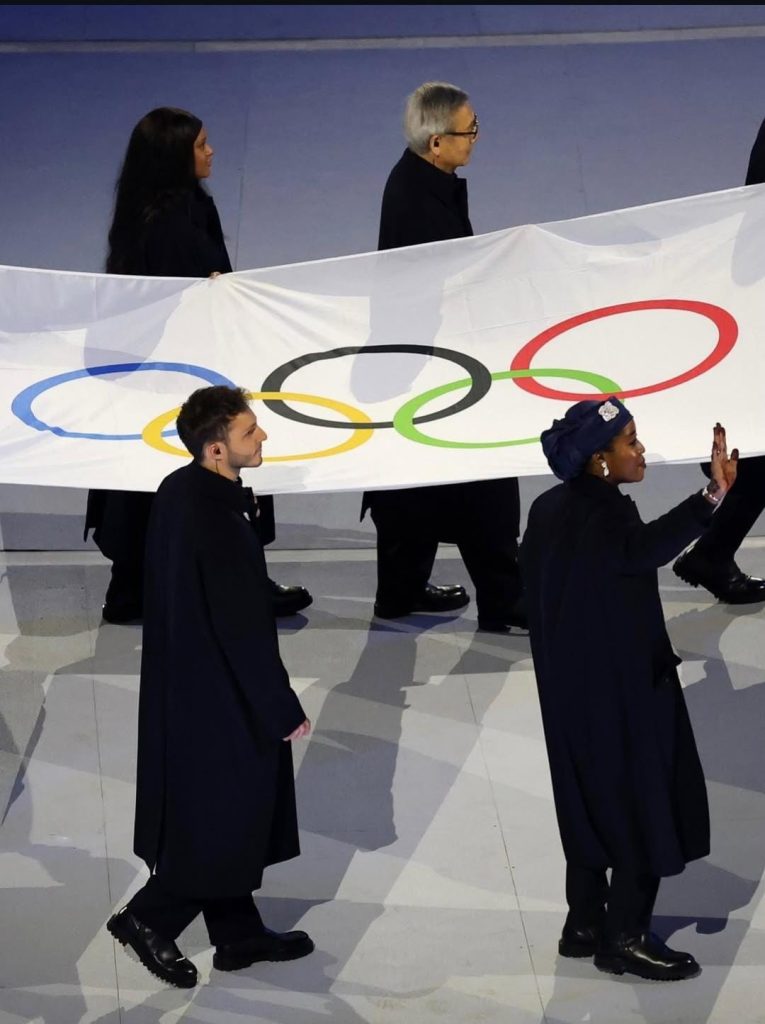
And perhaps most importantly, it meant understanding that none of us carries peace alone. We carry it collectively through conversations, friendships, collaborations, and sometimes through simple gestures that remind us we belong to one another.
The Olympics gave us a moment to remember that.
The responsibility now is to keep practicing it long after the stadium lights fade.
Maryam Bukar Hassan
-UN Global Peace Advocate-