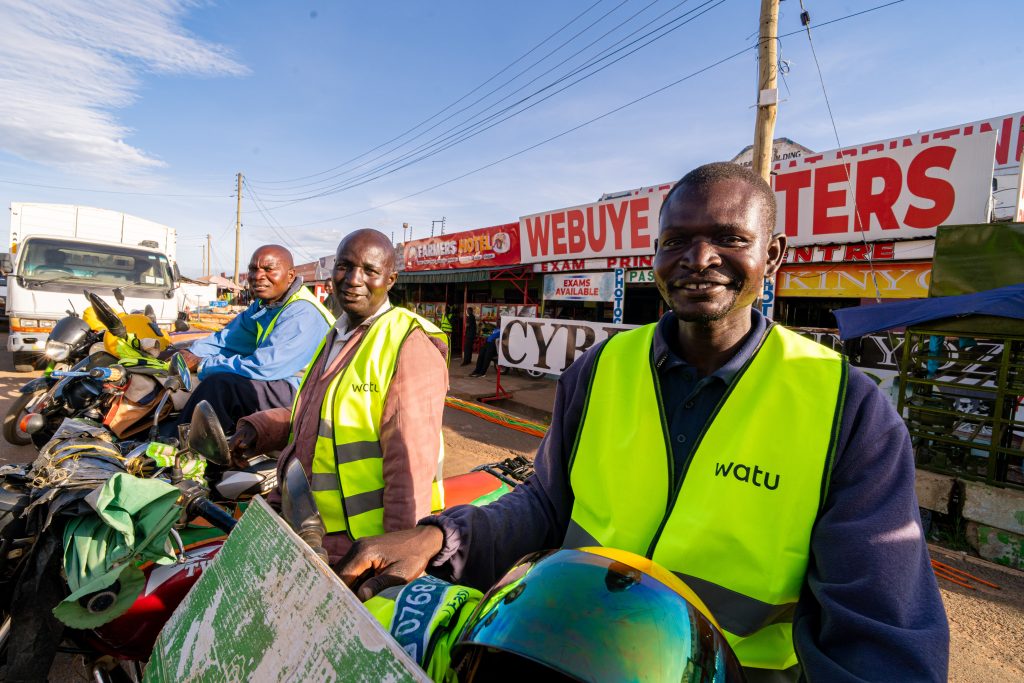

On the sun-baked asphalt of Nairobi’s industrial belt, the hum of two-wheelers is the soundtrack of daily commerce. For years, the story of East Africa’s informal economy was written in this constant rhythm of hustle: a boda boda rider weaving through gridlock to hand over half his daily takings to a fleet owner, or a market trader hawking goods without a digital trail, forever invisible to the gated compounds of traditional banking.
To view this ecosystem through the conventional lens of finance is to miss the point entirely. Spending a full day on the ground with Watu—the asset-financing outfit that has quietly deployed millions of loans across Africa—reveals a reality far richer than simple credit metrics. What begins as a transactional loan for a motorcycle or a smartphone is, in fact, the opening chapter of a radical shift, enabling the creation of a formal financial identity out of thin air.
The morning begins in the dense, vibrant core of Nairobi’s Central Business District. Inside a bustling electronics retail store, shelves are neatly lined with the latest smartphones and crisp TV sets to cater to a rapidly rising consumer client. “A few years ago, a high-end smartphone or a home TV set was out of reach for most informal workers,” the retailer remarks, gesturing to a customer finalizing a handset agreement. “Today, these devices are essential tools for growth.”

While mobility grants physical access to the market, connectivity grants access to information and digital commerce. Initially viewed by outside observers as a consumer commodity, a smartphone in the hands of an informal worker is an income-multiplying tool. It enables real-time price discovery, digital payments via mobile money, and operational efficiency—with some clients even utilizing AI tools like ChatGPT to draft emails and negotiate business terms.
More importantly, the smartphone creates a behavioral data trail. Daily micro-payments made via mobile app yield alternative credit data that traditional algorithms ignore. As connectivity and mobility converge, this data stack unlocks secondary financial products—from working capital cash-flow loans for school fees to upgrades into high-efficiency electric vehicles or home electronics.
“We trust the informal sector by giving them an asset for a fraction of its cost,” says Damien Gueroult, Watu’s Country Manager for Kenya, as he describes the company’s core proposition. Where a commercial bank sees non-salaried risk and no pledgeable collateral, Watu sees a cash-generating utility. For a downpayment of 20% to 30%, a rider gets the keys to their livelihood.
Yet the financed asset is not the destination; it is merely the starting point. In the historical structure, a rider was a daily laborer, trapped paying endless rent to a bike owner, and never able to accumulate equity. Under a 12- to 24-month hire-purchase arrangement with Watu, those same daily payouts build ownership. And when the final payment clears, a dramatic shift occurs: cash flow is suddenly unlocked. The daily revenue that once went toward servicing debt remains in the driver’s pocket.
What happens after repayment is where the true transformation takes place. Armed with an unblemished repayment track record, a borrower transforms from a credit ghost into a proven entrepreneur.
“We have people who have gone through six, seven, eight cycles of bikes and end up being business owners of a small fleet of bikes that they rent out,” Gueroult explains. The former daily wage-earner becomes an employer, extending opportunity to others while building his own balance sheet.
Behind this seamless narrative of financial progression lies an intense, hands-on operational reality. Watching Watu navigate the East African market from ground level makes it clear that this is not a business run from remote executive suites.
Unlike traditional banks that disburse funds and passively await interest, asset financing in the informal economy requires immersion in the daily chaos. On any given day, country operations are a balance of monitoring GPS telematics, preventing asset theft, managing localized default spikes, and fighting phone-hacking schemes designed to bypass automated locks.
Default, too, is handled with a nuanced philosophy. Recognizing that informal workers face unpredictable income disruptions—from personal illness to family emergencies—the system builds in patience. Instead of immediate repossession upon a missed payment, multi-tiered follow-ups and empathetic restructuring give borrowers every chance to get back on track.

Photo: Courtesy of Watu
This personalized involvement is precisely why legacy institutions have struggled to capture this market, leaving the field to agile operators who recognize, embrace, and adapt to operational friction.
By late afternoon, as peak traffic builds across the capital, the tour moves to the perimeter of the city beside the buzzing lanes of a partner driving school. Here, a driving school operator patiently adjusts a high-visibility helmet on a new rider. “Safety isn’t just about surviving Nairobi’s traffic,” the instructor explains, gesturing toward a line of students learning road signs and defensive maneuvering. “It is the bedrock of their business model. A rider who understands road safety, wears his helmet, and respects traffic flow protects both his life and his daily revenue.” For these hard-working drivers looking to connect with their community to make a living, the training provides the foundation to safely grow the business that Watu has enabled.
As the sun dips over the skyline, the nature of the assets themselves continues to shift. Across East Africa, the transition toward electric vehicles (EVs) is accelerating, driven by environmental mandates and dramatically lower daily running costs for riders.
For Watu, financing an EV is vastly different from financing a fuel bike. It requires managing battery swap networks, monitoring range limitations, and navigating a nascent charging infrastructure. Yet, it represents the next natural evolution of the platform by lowering operating costs further to maximize the borrower’s net income.
By blending mobility, connectivity, and data together into a single ecosystem, Watu has demonstrated that micro-entrepreneurs do not need charity, but rather structured access to productive capital. And that the true value of their business lies in the transformational journey from being a daily laborer to becoming a recognized, empowered actor in the modern economy.