
Our sight over food risks is dimming – business and society will pay the cost.
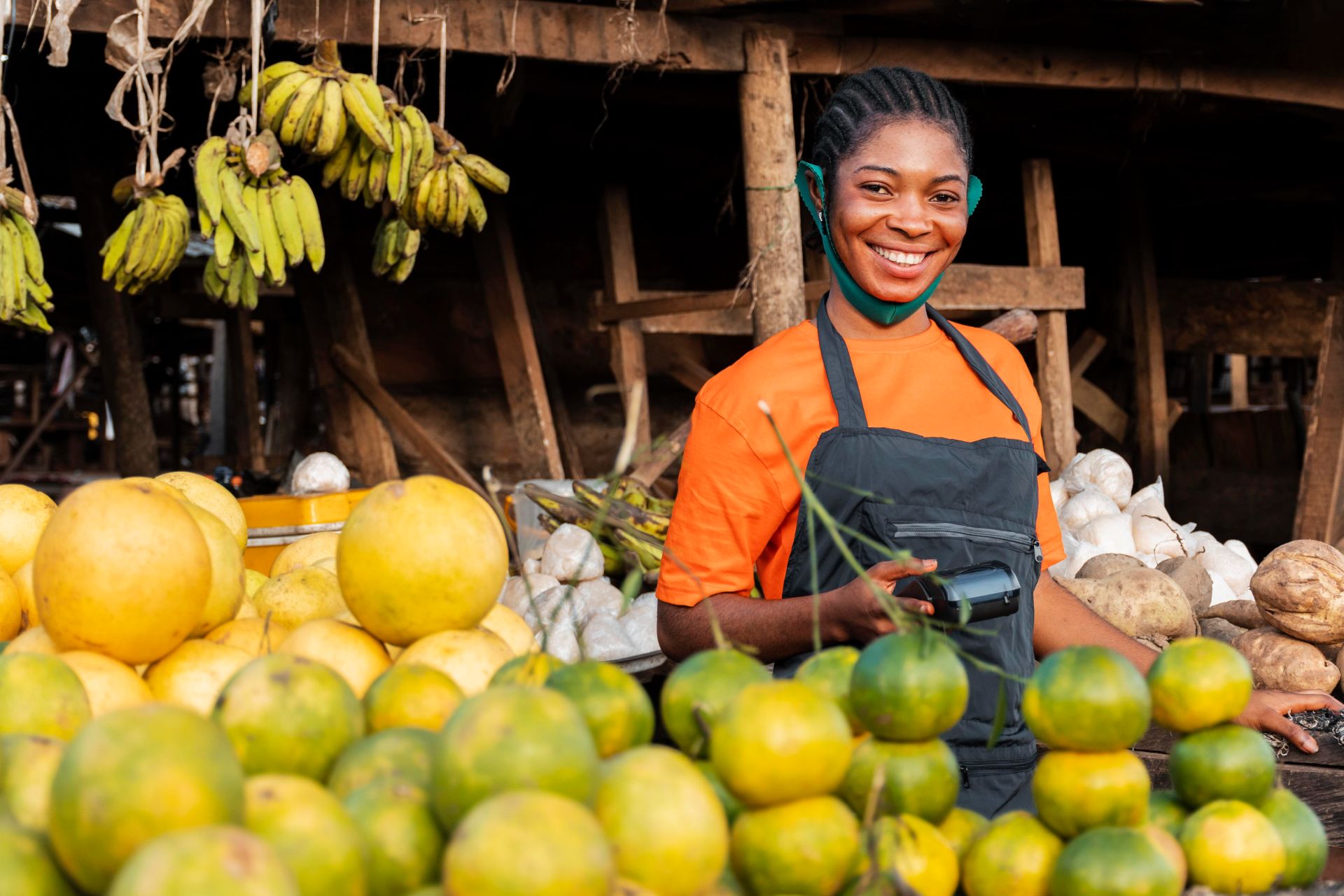
Our global food system is the bedrock of robust economies, nourished populations and national security, yet it is being severely neglected by the international community. In 2025, for the first time this century, there were two confirmed famines in Sudan and Gaza, and last month the UN warned that 6.5 million people in Somalia currently face acute food insecurity.
Despite this, hunger and food systems remain grossly overlooked on the global stage. World leaders must recognise that climate volatility, water stress, environmental degradation, conflict, and market concentration are interacting to make crop failure, price shocks, and food insecurity more frequent and severe – particularly in fragile and emerging markets. And, these shocks increasingly shape market behaviour, investment decisions, and political risk.
The Hidden Impact of Climate Volatility on Global Food Systems
The good news is that we have the technology to predict and monitor food shocks earlier, more accurately and more cheaply than ever, from satellite imagery and mobile data to cheaper sensors and advances in AI. Information platforms such as the Famine Early Warning System Network (FEWS NET) and NASA Harvest track weather conditions and agricultural production, enabling the prediction of drought, crop failures, and food price spikes before they escalate. Governments, NGOs, and businesses depend on these systems to guide where harvests may be at risk and when markets may become volatile.
Data and risk analysis also inform essential investments in adaptation and enable forecasting mechanisms to prevent the worst harm and loss. For example, risk estimation is critical for the design of insurance covers, in which an institution may be the policyholder, but the vulnerable farmer or small business is the beneficiary. Such measures can prevent the emergency sale of household assets or forced migration. The recent payout of $7.9m in Syria to support WFP operations in the face of drought proves that these instruments can be effective even in the most fragile contexts.
The $56 Billion Blind Spot: Financing Our Predictive Infrastructure
“The world spends less than $140 million annually on global food crisis monitoring systems”
The bad news is that the international community is not maintaining these data systems at the scale required. Critical information is not readily available to organizations in countries most exposed to food shocks at sufficient granularity or timeliness. An urgent, current example is the rapidly evolving drought in Somalia, announced as a national humanitarian emergency on Feb 5, 2026. They called for immediate international support, but while global early warning systems started to raise alerts, they were not connected to early action or effective locally led analysis. Despite these alerts, 6.5 million Somalis face food insecurity – nearly double the amount in 2025.
The financing model for this essential technology relies on voluntary, short-term donations from a small number of countries. Currently, we estimate the world spends less than $140 million annually on global food crisis monitoring systems – a fraction of what is required for reliable, accurate, real-time forecasting. In comparison, in 2014/15, we were spending an estimated $56 billion on weather forecasting and climate information systems globally. It is also a rounding error versus total global humanitarian spending, which is also facing significant headwinds. The result: the world’s agriculture and hunger warning systems are fragmented, underfunded, and ill-equipped for the challenges of the 21st century. For business leaders, policymakers and others involved in responding to food crises locally, this should be a major red flag.
A Shared Risk: Why Business and Society Must Act Now
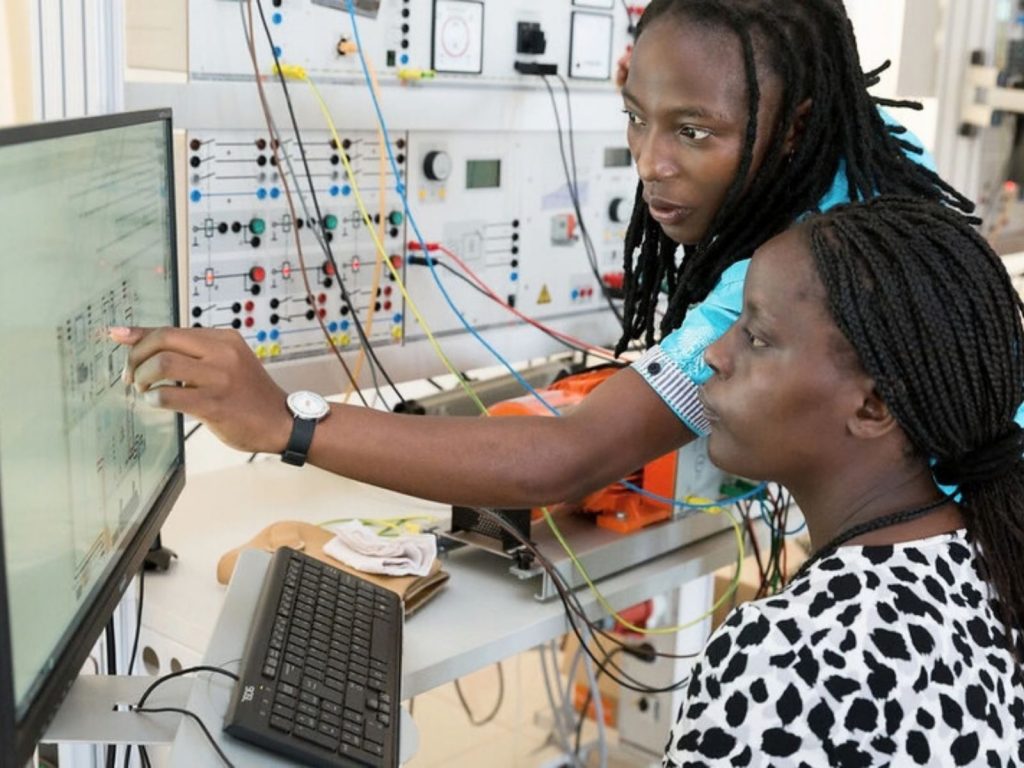
That failure to update our data systems and infrastructure leaves governments and humanitarian agencies slower to respond, farmers with less reliable information, businesses with weaker estimates of food production, and vulnerable regions more exposed to hunger and instability. Supporting the needed data systems and infrastructure collectively would be more effective and cheaper than a downward spiral that leads to higher volatility, more intense crises, insurance losses, and supply disruptions down the line. In other words, this is a shared risk. Bearing the costs to understand the risks should not be a humanitarian problem alone.
We must identify the critical systems, how they are financed and if they are using the best technology. Then, donors and investors need to commit to longer-term, predictable funding that treats food-risk monitoring as core infrastructure, not discretionary aid. Data holders, like NGOs, universities, and businesses, should share data in real time, harmonize systems, create shared standards, and establish feedback loops across institutions. Without these steps, the challenges will only get worse, resulting in higher bills compared to the cost of upgrading the systems now.
Failing to act will see increases in avoidable hunger, displacement, and instability. There will be inevitable spillovers into global markets, insurance portfolios, and political systems far beyond the countries where crises begin. We will end up with a higher-risk global economy with more frequent supply shocks, higher insurance and borrowing costs, more volatility in food and commodity markets, and greater political instability. The world will pay, not because we lacked the tools, but because we failed to develop and use them. The question is whether we spend a little more to understand better how to prevent crises now, or significantly more to respond later.
Written by:
-
Jean Martin Bauer, Director, Food Security and Nutrition Analysis, World Food Programme. He has served with the World Food Programme in the Sahel and central Africa and has responded to food emergencies in Afghanistan and Syria. Bauer has led WFP country offices in the Republic of the Congo and in Haiti. His work has also focused on leveraging digital tech and analytics to fight hunger.
-
Ekhosuehi Iyahen, Secretary General of the Insurance Development Forum (PPP led by the insurance industry and supported by the World Bank and UN). Ekhosuehi has extensive experience working with Governments, international development agencies, private sector entities and academic institutions on public financial management and strengthening risk management and financing systems and the role of insurance.
-
Simon Winter, Vice President, The Rockefeller Foundation, Reimagining Humanitarian Nutrition Security. Simon started with RF in August 2025 to lead a new initiative that looks to develop next-generation integrated models to deliver resilient food and nutrition security in fragile regions. At the end of 2024, he founded Sustainable Agriculture Foundations’ International Association, to support the legacy Asia and African country organizations spun out of the Syngenta Foundation for Sustainable Agriculture (SFSA).