
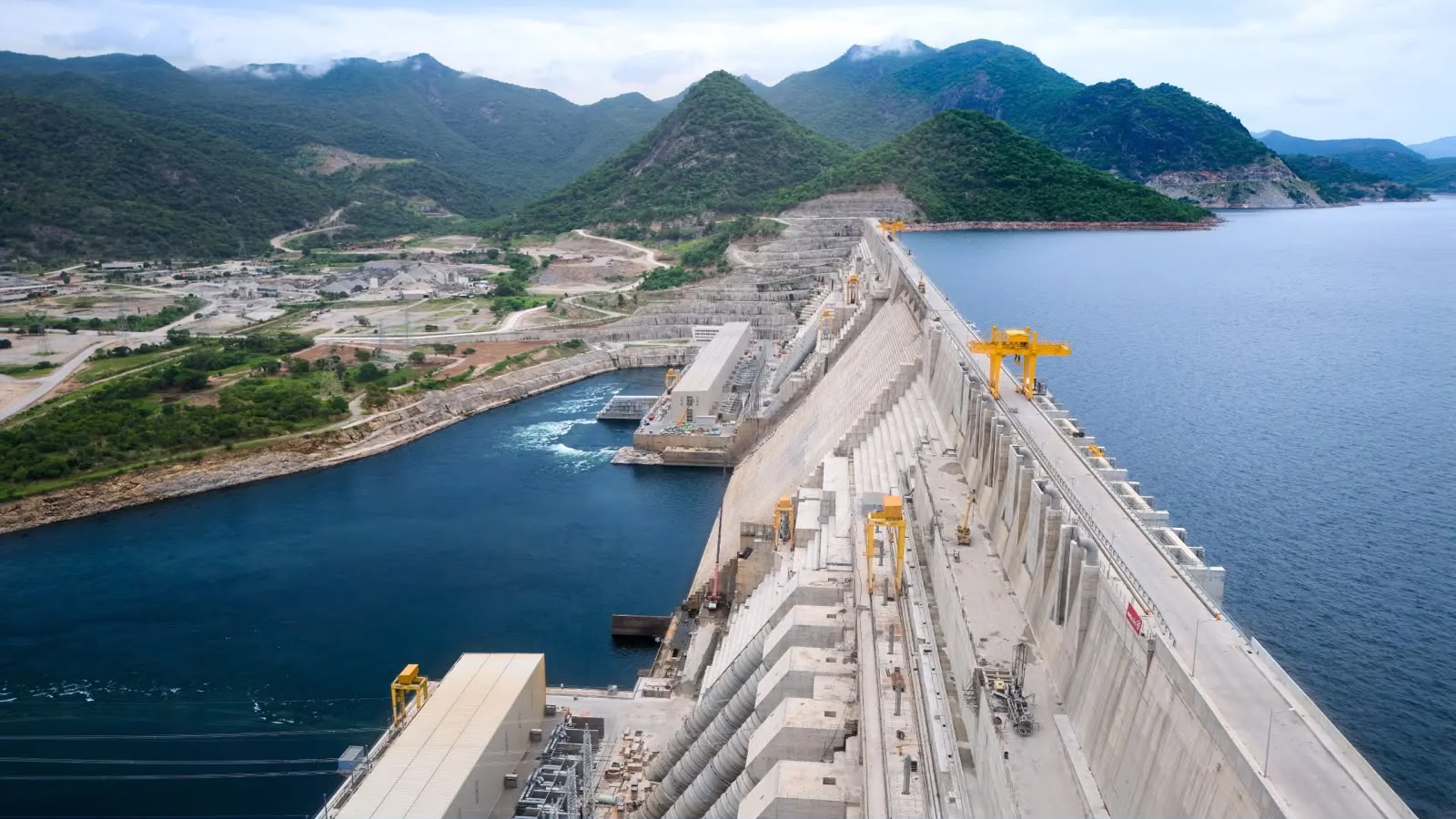
The Grand Ethiopian Renaissance Dam is more than a hydroelectric project. It is a demonstration of what African ambition, African capital and regional cooperation can achieve – and an opportunity to turn a potentially contested resource into a source of shared prosperity.
The Grand Ethiopian Renaissance Dam will likely be viewed as one of the great African stories of our time.
Built across the Blue Nile, it is the largest hydroelectric power plant in Africa and one of the most ambitious infrastructure projects the continent has undertaken. It has the capacity to transform Ethiopia’s energy landscape, support industrialisation and feed electricity into an increasingly interconnected regional market. But its importance goes beyond the power it can generate. GERD offers something larger: an opportunity to rethink how African countries build together, finance their own development and manage resources that do not stop at national borders.
There is another reason the project matters. Ethiopian citizens and diaspora helped pay for it.
At a time when the discussion around African infrastructure often begins with the question of which foreign government, development bank or international investor will finance it, GERD followed a significantly different path. The project was overwhelmingly financed domestically, including through government resources, domestic borrowing and bonds purchased by Ethiopians at home and abroad. The Renaissance Dam Bond was deliberately structured to allow relatively small investments, giving ordinary Ethiopians and members of the diaspora a means to participate in financing a project that was presented as part of the country’s national development.
That story deserves far more attention than it receives. Africa faces an enormous infrastructure financing gap, while African savings, pension capital, diaspora wealth and domestic financial markets remain underused as sources of development capital. GERD is not a financing model that can simply be copied from one country to another, but the principle behind it is powerful. A population was asked to participate directly in building national infrastructure, and a project costing billions of dollars was brought into existence with extraordinarily limited dependence on conventional international project finance. For a continent searching for ways to finance its own transformation, that experience is key. On top of that, there is the electricity.
The dam’s installed generating capacity is more than 5,000 megawatts. For Ethiopia, where access to reliable electricity remains a major developmental challenge, that power can support homes, businesses, manufacturing and a more industrial economy. Beyond Ethiopia, it can be traded. Transmission lines do not need to end at national borders. Ethiopia already trades electricity with neighbouring countries, and a deeper regional power market could allow energy generated on the Blue Nile to support economies far beyond the dam itself.
This is where GERD becomes much more interesting as an African project rather than simply an Ethiopian one.
For years, however, the dam has been discussed internationally through a very different lens. Rather than beginning with what this infrastructure could make possible – greater electricity generation, regional power trade, industrialisation, lower-carbon growth and a more interconnected East Africa – international involvement and commentary around GERD have repeatedly amplified the dispute between Ethiopia and Egypt. A technically complex disagreement over the management of a shared river has too often been pulled into the language of geopolitical confrontation.
The Nile has, in effect, become internationalised as a source of friction when it could be treated as an extraordinary platform for African cooperation.
Framing, as always, is important. Africa cannot allow – or afford – for outside influence to spur division again. Language creates political possibilities, but it can also close them. Once infrastructure is discussed principally as a threat, security begins to displace economics, diplomacy and engineering. Questions about electricity markets, transmission infrastructure, reservoir management and regional development become questions about winners and losers. Eventually, the backwards and illogical vocabulary of military action begins to enter a conversation that should fundamentally be about how neighbouring African countries share the benefits of a river upon which they all depend.
Egyptian Foreign Minister Badr Abdelatty has described the Nile as an existential issue for Egypt and stated that his country retains the right to defend itself under international law should harm occur that interrupts its water supply. Egypt’s concerns cannot just be dismissed. The Nile is fundamental to Egyptian life, agriculture and economic security, and no serious vision of African cooperation should require one African country to disregard the legitimate interests of another.
But accepting the legitimacy of Egyptian water security concerns is very different from accepting the inevitability of confrontation.
There is another way to look at the problem, and the research points towards it.
From Water Sharing to Benefit Sharing
Research published in Nature Water offers one of the most compelling arguments for changing the terms of the debate. Rather than modelling GERD purely as a question of how much water one country retains or another receives, researchers examined the relationship between water management and electricity trade across the region. Their conclusion deserves considerably more attention in African policymaking.
Greater electricity trade between Ethiopia, Sudan and Egypt is evidenced to create benefits for all three.
The researchers found that increased power trade could reduce irrigation water deficits in Egypt and Sudan, increase hydropower generation in Ethiopia, increase generation from existing hydropower facilities downstream, reduce Sudanese electricity shortages, lower regional carbon emissions and increase Ethiopia’s financial returns from electricity exports. Under the highest power-trade scenario examined, the model reduced Egypt’s maximum annual irrigation deficit by as much as four billion cubic metres compared with the baseline proposal used by the researchers.
The reason is remarkably straightforward. Hydroelectricity requires water to move. If Ethiopia has long-term agreements to sell electricity downstream, it has an economic incentive to release water through GERD’s turbines to generate that electricity. The commercial relationship itself can therefore reinforce the movement of water downstream. This changes the nature of the conversation.
Instead of negotiating only over water allocations, the countries can negotiate over benefits. Egypt and Sudan gain access to competitively priced renewable electricity and potentially more predictable river management. Ethiopia earns export revenues and creates demand for the enormous generating capacity it has built. Regional grids become more interconnected. Economic interdependence grows.
The river ceases to be something that must simply be divided and becomes something from which value can be created together.
That does not eliminate every difficulty. The operation of GERD during prolonged drought remains an important and legitimate issue, and different operating policies can produce different outcomes downstream. This is precisely why Ethiopia, Egypt and Sudan need permanent technical cooperation: shared hydrological data, transparent reservoir information, agreed drought-management mechanisms and direct communication between the institutions responsible for water and electricity.
But those are engineering and diplomatic problems capable of engineering and diplomatic solutions. They are not arguments for conflict.
A Monument to African Ambition
GERD represents something Africa desperately needs more of: infrastructure at scale.
Across the continent, unreliable and insufficient electricity continues to constrain economic growth. Businesses rely on generators, factories struggle with inconsistent grids, and communities remain disconnected from the power systems that modern economies take for granted. Africa cannot industrialise without electricity. It cannot process more of its own minerals, build globally competitive manufacturing industries, expand its digital economy or provide modern infrastructure for a rapidly growing population without vastly more generation and transmission capacity.
GERD should therefore not be understood solely as an Ethiopian asset. Its greatest potential may ultimately lie in the network around it.
Sudan can benefit. Kenya can benefit. Djibouti can benefit. Egypt can benefit. Other members of the Eastern African Power Pool can benefit as regional transmission infrastructure develops. The objective should not be for every African country to become an energy island, attempting to produce every megawatt it consumes within its own borders. Europe does not function that way. Neither should Africa.
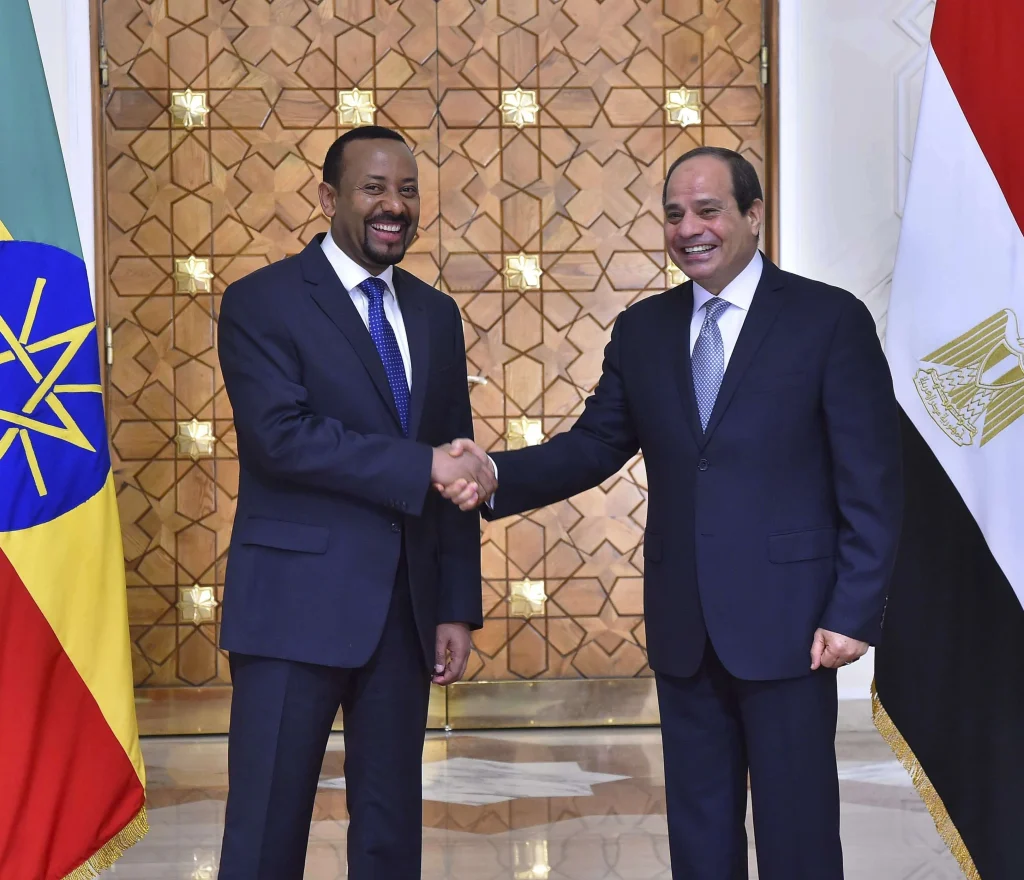
A genuinely interconnected African electricity market would allow countries with abundant hydroelectric, solar, wind, gas or geothermal resources to sell power across borders, improving resilience and allowing capital to flow towards the places where energy can be produced most efficiently. GERD could become one of the anchors of such a system in Eastern Africa.
Africa Cannot Bomb Its Way to Development
There is something deeply troubling about the ease with which military language enters discussions about African infrastructure.
The continent already faces a sizable infrastructure deficit. We need power stations and transmission lines, railways and ports, roads and fibre networks, water infrastructure, industrial corridors and logistics systems. Many of the projects capable of transforming African economies will inevitably cross borders or affect neighbouring countries.
If every major cross-border project becomes a geopolitical zero-sum contest, Africa’s development will remain hostage to its artificially created borders rather than accelerated by them.
The answer cannot be destroying infrastructure. It must be building more of it – and connecting it.
This matters even more as Africa attempts to create the world’s largest integrated trading area through the African Continental Free Trade Area. Trade integration without infrastructure integration is an illusion. Goods cannot move freely without transport corridors. Digital services cannot scale without fibre and data infrastructure. Industry cannot grow without reliable energy. A common African market ultimately requires physical systems that make national borders less economically consequential. GERD offers an opportunity to think in exactly those terms.
An African Solution
There is also a question of agency.
The future of the Nile should ultimately be determined by Africans.
International partners can provide expertise and finance. Scientists from around the world can contribute research. Multilateral institutions can facilitate negotiations. All of that has value. But Africa should be wary when disagreements between African states become theatres for wider geopolitical competition or when outside involvement hardens positions rather than helping neighbouring countries find common ground.
The continent knows that history too well.
The Nile Basin should instead become a demonstration of African diplomatic maturity: Ethiopia’s development aspirations recognised, Egypt’s water security protected, Sudan’s interests respected and a regional economic framework built around the things these countries can achieve together.
The African Union exists precisely because sovereignty and continental solidarity do not have to be opposing ideas. GERD presents an opportunity to prove that principle in practice.
The Renaissance Can Be Bigger Than Ethiopia
The name itself deserves consideration: the Grand Ethiopian Renaissance Dam.
Its renaissance need not belong only to Ethiopia.
Imagine a future in which GERD powers Ethiopian industry while exporting electricity throughout the region; where Egypt, Sudan and Ethiopia coordinate water and energy management rather than levying threats; where interconnected grids allow renewable electricity to move to wherever it is needed; and where the Nile supports African manufacturing, data centres, mineral processing, transport systems and rapidly growing cities.
There is a lesson in how it was built, too. Ethiopians did not wait for the rest of the world to decide that their infrastructure was worth financing. Citizens bought bonds. The diaspora contributed. Domestic institutions provided capital. Whatever the full scope of that model was, the underlying idea is worth carrying across the continent: Africans themselves can have a direct financial stake in the infrastructure that will determine Africa’s future.
That could mean infrastructure bonds. Diaspora instruments. Pension capital. Sovereign investment. Regional development finance. It could mean new vehicles that allow African citizens to invest directly in commercially viable energy, transport and digital projects. GERD should provoke a much broader discussion not only about what Africa needs to build, but about who should own and finance what it builds.
The dam is already there. The question facing Africa now is what the continent chooses to make of it.
A dam can become a wall, or it can become a bridge.
At a moment when Africa needs energy, infrastructure, industrialisation and greater continental integration, we should always choose the bridge.
The waters of the Nile have connected African civilisation for thousands of years. Now they can help power its future.