

The narrative surrounding African economies is undergoing a massive shift. For decades, discussions have often centered heavily on foreign aid, debt relief, and humanitarian assistance. Now, a new conversation dominates the boardrooms of global investment firms and the floors of African stock exchanges. This conversation revolves around capital formation, domestic liquidity, and a rapidly expanding consumer class that is redrawing the map of global finance.
Africa is stepping into a defining era. The continent boasts the world’s youngest population and some of the fastest-growing economies. Infrastructure projects are bridging regional gaps, while mobile technology has revolutionized financial inclusion. These structural changes are not just statistics on a page. They represent a fundamental rewiring of how business gets done across 54 distinct nations. At the center of this transformation is the “$4 trillion blueprint.” This figure represents the projected combined consumer and business spending on the continent in the near future. It also symbolizes the vast pool of capital required—and currently being mobilized—to fund the next generation of African enterprises. We all should understand this blueprint, and it’s essential for anyone looking to participate in the most significant emerging-market growth story of our lifetime.
From Aid to Investment: Redrawing Africa’s Economic Map

What Was Actually Said at AMC 2026 — And Why It Matters
The Africa Markets Conference (AMC) 2026 serves as an important milestone for institutional investors and policymakers. During these strategic discussions on February 22-24-2026, financial leaders outlined a clear departure from traditional resource-extraction investment models. The focus shifted entirely toward building resilient, self-sustaining capital markets across Africa. Speakers highlighted a glaring disconnect. While African startups and infrastructure projects generate highly attractive yields, global capital often struggles to find frictionless entry points. The discussions at AMC 2026 provided a roadmap to fix the plumbing of African finance. Leaders are committed to harmonizing cross-border payment systems and standardizing listing requirements across regional exchanges. This matters because it signals a transition from fragmented, illiquid markets to a cohesive financial ecosystem. When regulatory frameworks align, transaction costs drop. A unified approach reduces the perceived risk for international asset managers. The conference laid down actionable policies that prioritize market depth over quick, speculative wins, ensuring long-term capital formation in the African continent.

What the $4 Trillion Figure Really Represents
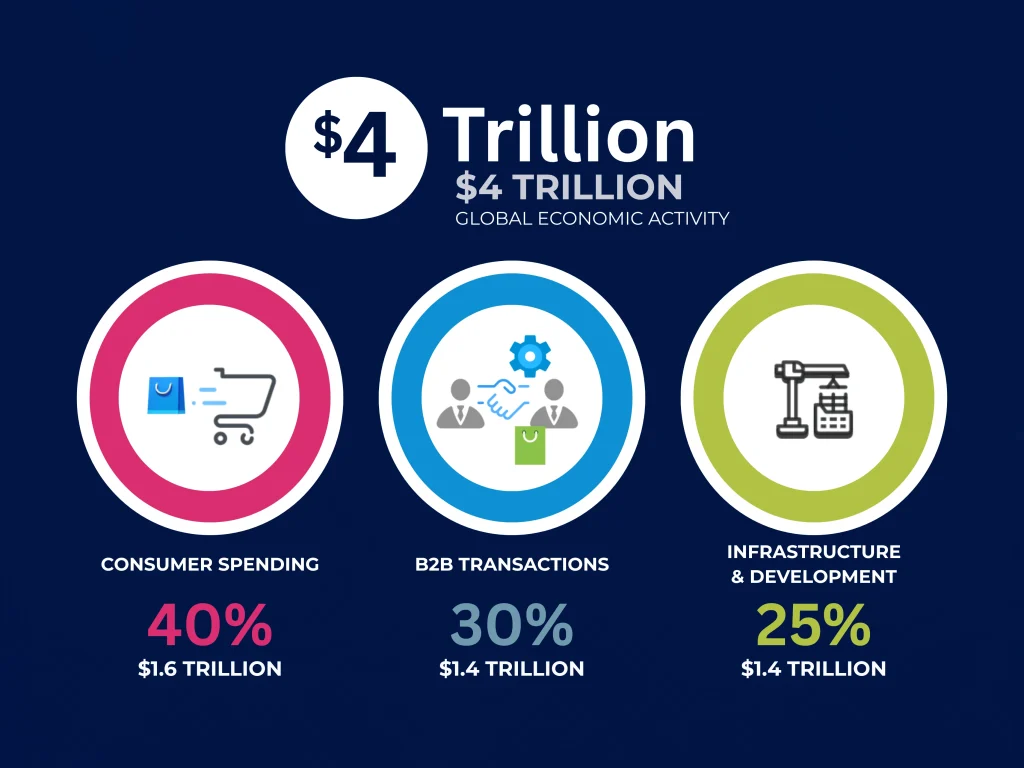
You will often hear the $4 trillion figure thrown around in macroeconomic outlooks for Africa. It is easy to view this number as a vague, abstract target. In reality, it represents a highly specific combination of consumer spending, business-to-business transactions, and infrastructure investments projected over the coming years. First, consider the demographic dividend. By 2050, a quarter of the world’s population will reside in Africa. This massive population requires housing, healthcare, education, transportation, and consumer goods. The $4 trillion figure captures the purchasing power of an expanding middle class that is increasingly urbanized and digitally connected. Second, the figure accounts for the massive industrialization effort currently underway. The African Continental Free Trade Area (AfCFTA) is eliminating tariffs and creating a single market for goods and services. Businesses are scaling up operations to meet regional demand, requiring significant capital expenditure. The $4 trillion blueprint is essentially the price tag and the payoff of fully integrating and modernizing these economies.
Why Domestic Liquidity Is Central to Making This Work
Foreign direct investment is highly beneficial, but it can be notoriously fickle. Global capital flows tend to reverse course at the first sign of rising interest rates in developed markets. To build a resilient $4 trillion economic engine, Africa must first mobilize its domestic liquidity. Local institutional investors are the key players and hold the key to this stability. Pension funds, insurance companies, and sovereign wealth funds across the continent manage hundreds of billions of dollars. Historically, strict regulations forced these funds to park their cash in low-yielding government bonds. Regulatory reforms are now allowing these massive pools of capital to flow into private equity, venture capital, and local stock markets. Furthermore, retail investment is experiencing a boom. Mobile investment apps have democratized access to financial markets, allowing everyday citizens to buy fractional shares and government securities. When local citizens and institutions anchor their own markets, they create a cushion against external shocks. This domestic backing builds confidence, which in turn attracts more sustainable foreign investment.
The Role of Market Intermediaries in Making This Work
Capital does not simply flow from a saver’s bank account to a growing business by magic. It requires a robust network of market intermediaries. These players include stock exchanges, clearinghouses, investment banks, and fintech startups that facilitate transactions and manage risk. For a long time, the lack of efficient intermediaries created bottlenecks. A company looking to raise $50 million might find the local stock exchange too small, while international exchanges might deem it too risky. Today, regional brokers and specialized advisory firms are bridging this gap. They are structuring deals that meet the compliance requirements of global investors while catering to the specific needs of local enterprises. Technology is dramatically accelerating this process. Blockchain-based clearing systems and digital registries are reducing settlement times from days to seconds. By lowering the operational costs of trading and providing transparent pricing data, these intermediaries are building the trust necessary for capital to move freely and efficiently across borders.
What Africa’s Capital Moment Means for Emerging Markets
The rise of African capital markets has profound implications for the broader emerging market asset class. For decades, investors seeking high growth naturally looked toward Asia or Latin America. But the good news is that Africa is now aggressively competing for a larger share of global portfolio allocations. This shift offers a new frontier for diversification. African markets often exhibit low correlation with traditional global indices. When tech stocks in the US or manufacturing outputs in Asia face headwinds, African consumer sectors and telecom operators frequently continue their growth trajectories. Portfolio managers are recognizing that they can improve their risk-adjusted returns by adding African assets to their mix. On the other hand, Africa’s rise alters global supply chain dynamics. As capital flows into local manufacturing and agribusiness, the continent is transitioning from a raw-materials exporter to a finished-goods producer. Other emerging markets will find themselves engaging in more South-South trade, creating new economic corridors that bypass traditional Western financial hubs entirely in the coming days.
What Investors Miss If They Ignore This Shift
Choosing to sit out Africa’s capital moment carries a substantial opportunity cost. Early movers are currently securing equity in companies that will become the blue-chip stocks of tomorrow. Waiting for the markets to reach perfect maturity means missing out on the steepest part of the growth curve. Investors who ignore this shift also miss out on the digital revolution reshaping the continent. Africa skipped the landline era and went straight to mobile. Now, it is leapfrogging traditional banking infrastructure through mobile money and decentralized finance. The companies facilitating this transition are capturing massive market share at valuations that are incredibly attractive compared to those of their Western counterparts. Finally, ignoring Africa means turning a blind eye to the global energy transition. The continent holds vast reserves of critical minerals. These minerals are required for electric vehicles and renewable energy storage. Capital is rushing in to develop green infrastructure and sustainable mining operations. So the investors who are denying or absent from this space will find themselves locked out of a vital component of the future global economy.
Africa’s Capital Moment Will Be Built, Not Declared
The realization of the African people of the $4 trillion blueprint will not happen overnight, nor will it be the result of a single policy announcement. It requires the continuous, grinding work of building institutions, refining regulations, and executing business strategies across the continent. The foundation is already being laid by local entrepreneurs, forward-thinking regulators, and strategic investors who understand the long-term mechanics of capital formation. For organizations and investors from local and global looking to engage, the next steps require a deep commitment to understanding local nuances. Partnering with on-the-ground intermediaries and focusing on businesses that solve real, scalable problems will yield the best results. The moment of capital is here, and it will favor those willing to invest in and build the infrastructure of tomorrow.