
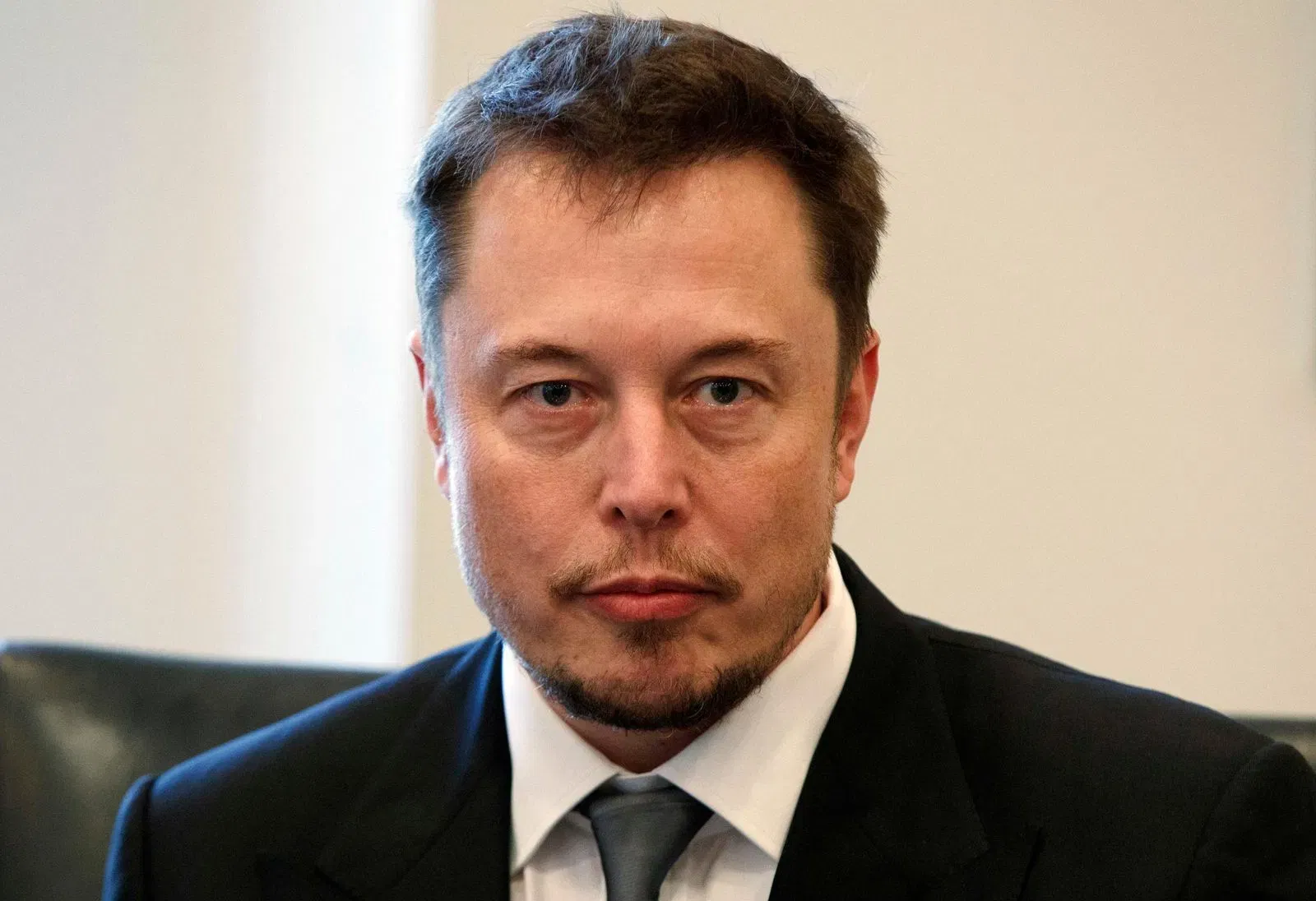
The billionaire’s claims about being excluded from South Africa misrepresent a system designed to address one of the most unequal economies in the world.
In a series of posts on X, Elon Musk, the world’s richest man and a South African-born entrepreneur, recently escalated his criticism of his birth country, calling it “racist” and suggesting its political leadership should not be respected globally.
The remarks, like his earlier claim that Starlink cannot operate in South Africa because he is “not Black,” were blunt. They were also misleading.
At a moment when South Africa is attempting to balance economic growth with long-overdue structural reform, Musk’s framing reduces a deeply complex policy environment to a narrative of personal exclusion, one that collapses under scrutiny.
The Policy Reality Musk Ignores
Starlink is not banned in South Africa. Its absence is the result of regulatory requirements that apply to all telecommunications operators, not just to Musk.
At the center of this framework is Black Economic Empowerment (BEE), a policy designed to expand participation in an economy historically structured around exclusion.
To understand BEE, one must understand Apartheid.
For nearly half a century, apartheid systematically excluded Black South Africans from ownership of land, businesses, and capital. When the system formally ended in 1994, political rights were extended, but economic power remained largely intact in the hands of a minority. Apartheid was a direct extension of colonialism that had plagued the continent for centuries.
To view Apartheid in isolation is to misunderstand its origins. The system was not an anomaly, it was an extension of the colonial order that had taken root across much of Africa decades earlier. That order was defined by genocide, land dispossession, murder, forced labor systems, and the extraction of natural resources for external gain; by violent repression of resistance movements, military occupation, mass kidnapping, and the imposition of rigid racial hierarchies codified in law.
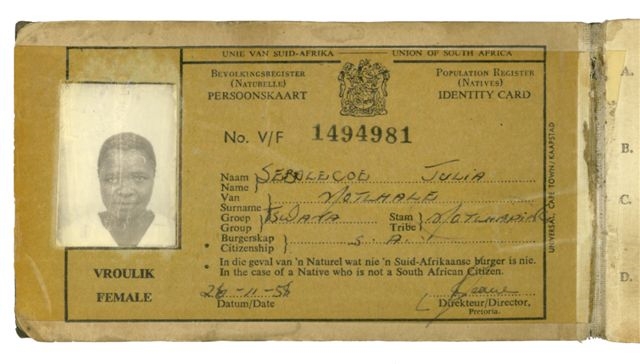
Across the continent, colonial administrations displaced populations, suppressed indigenous governance structures, and engineered economies in which the vast majority were excluded from ownership and participation. Apartheid did not invent these mechanisms. It formalized and intensified them, transforming a broader colonial logic into one of the most systematized regimes of racial exclusion in modern history.
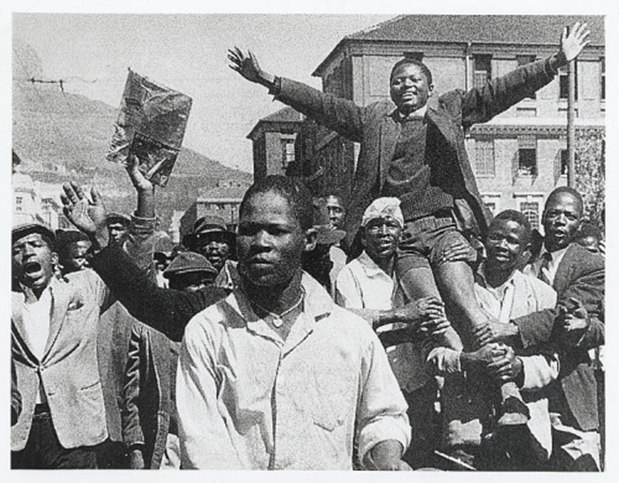
BEE was introduced as a corrective mechanism: not to exclude, but to include.
How BEE Actually Works
Contrary to Musk’s suggestion, BEE does not prohibit foreign companies or non-Black individuals from operating in South Africa.
Instead, it incentivizes:
- Local ownership participation
- Skills development and employment equity
- Enterprise and supplier development
- Broad-based economic inclusion
In regulated sectors such as telecommunications, companies are typically required to structure local equity participation – often around 30% – through partnerships, trusts, or public vehicles.
This is not unique to South Africa. Variants of local ownership rules exist across emerging markets globally.
The distinction is that South Africa’s model is explicitly tied to historical redress.
A Pattern in Public Commentary
The remarks on South Africa are not an isolated departure. Over the past 12–18 months, Elon Musk has repeatedly used his platform on X to engage with – and at times amplify – highly contentious narratives around race, identity, and national belonging.
In November 2023, Musk responded to a post invoking the “Great Replacement” theory – a widely discredited idea that has been linked to extremist movements – with the comment:
“You have said the actual truth.”
Elon Musk’s agreement with a user promoting elements of the Great Replacement theory isn’t the “truth.”
It is the deadliest antisemitic conspiracy theory in modern U.S. history and motivated the Pittsburgh synagogue shooting.
To amplify it on @X is incredibly dangerous. pic.twitter.com/2u5nQdEdes
— American Jewish Committee (@AJCGlobal) November 16, 2023
The response drew immediate backlash from civil rights organizations and major advertisers, many of whom suspended spending on X in the days that followed.
In separate commentary, Musk has also engaged in debates about the ethnic foundations of the United States, emphasizing origins in populations from England, Ireland, and Scotland – an interpretation widely rebuked by historians for omitting both the central role of Africans in building the American economy and the longstanding presence of Indigenous peoples, as well as numerous other groups.
For a country to survive, there has to be a common culture.
Nobody dies to defend a “multicultural economic zone”!
American culture, with its English-Scotts-Irish origin, is great and worth fighting for.
Some may not realize it, but that’s why people come here.… https://t.co/3qHYdyWp7k
— Elon Musk (@elonmusk) February 15, 2026
Elsewhere, Musk has amplified commentary on migration and demographic change, aligning at times with more hardline interpretations circulating in U.S. and European political discourse.
Civil war is inevitable
— Elon Musk (@elonmusk) August 4, 2024
Individually, these posts are often defended by Musk as expressions of “free speech.” Taken together, they form a pattern: complex historical and social realities reduced to stark, declarative claims, often stripped of context, and broadcast to an audience of hundreds of millions.
The Data Musk Doesn’t Acknowledge
South Africa remains one of the most unequal societies in the world.
- The country’s Gini coefficient remains above 0.60, among the highest globally
- White South Africans—less than 10% of the population—still hold a disproportionate share of private wealth
- Black South Africans, who make up over 80% of the population, continue to face structural barriers to asset ownership and capital access
Economists across institutions have consistently emphasized that inequality in South Africa is structural – not incidental.

What Regulators Have Said
South Africa’s communications regulator, Independent Communications Authority of South Africa (ICASA), has maintained that all operators must comply with licensing and ownership requirements.
Government officials have reiterated that international entrants are welcome – but must align with local policy frameworks.
A Question of Participation, Not Exclusion
Foreign companies have successfully navigated these requirements for decades.
The issue is not whether Starlink can operate in South Africa.
It is whether it is willing to participate on the same terms as everyone else.
Narrative Power – and Its Consequences
When Musk frames BEE as racial discrimination, the impact extends far beyond a single company.
It reshapes global perception. It risks portraying efforts at economic inclusion as barriers. And it reinforces a narrative that post-colonial reform is inherently hostile to business.
But that narrative is not borne out by reality.
Closing
Elon Musk is one of the most influential voices in global business. His words carry weight.
Which is precisely why they demand scrutiny.
South Africa is not beyond criticism. But neither is it what Musk describes.
To conflate economic redress with discrimination is to misunderstand both.
And in a country still shaped by its past, that misunderstanding carries consequences.