
In a remarkable sequence, two important speeches delivered by Western leaders—from two countries that have benefited greatly from being on the rules-making side of the international bargain— exposed the fallacy of the international rules-based order, which has long served as the dominant framework for cross-national global engagement, especially since the aftermath of World War II.
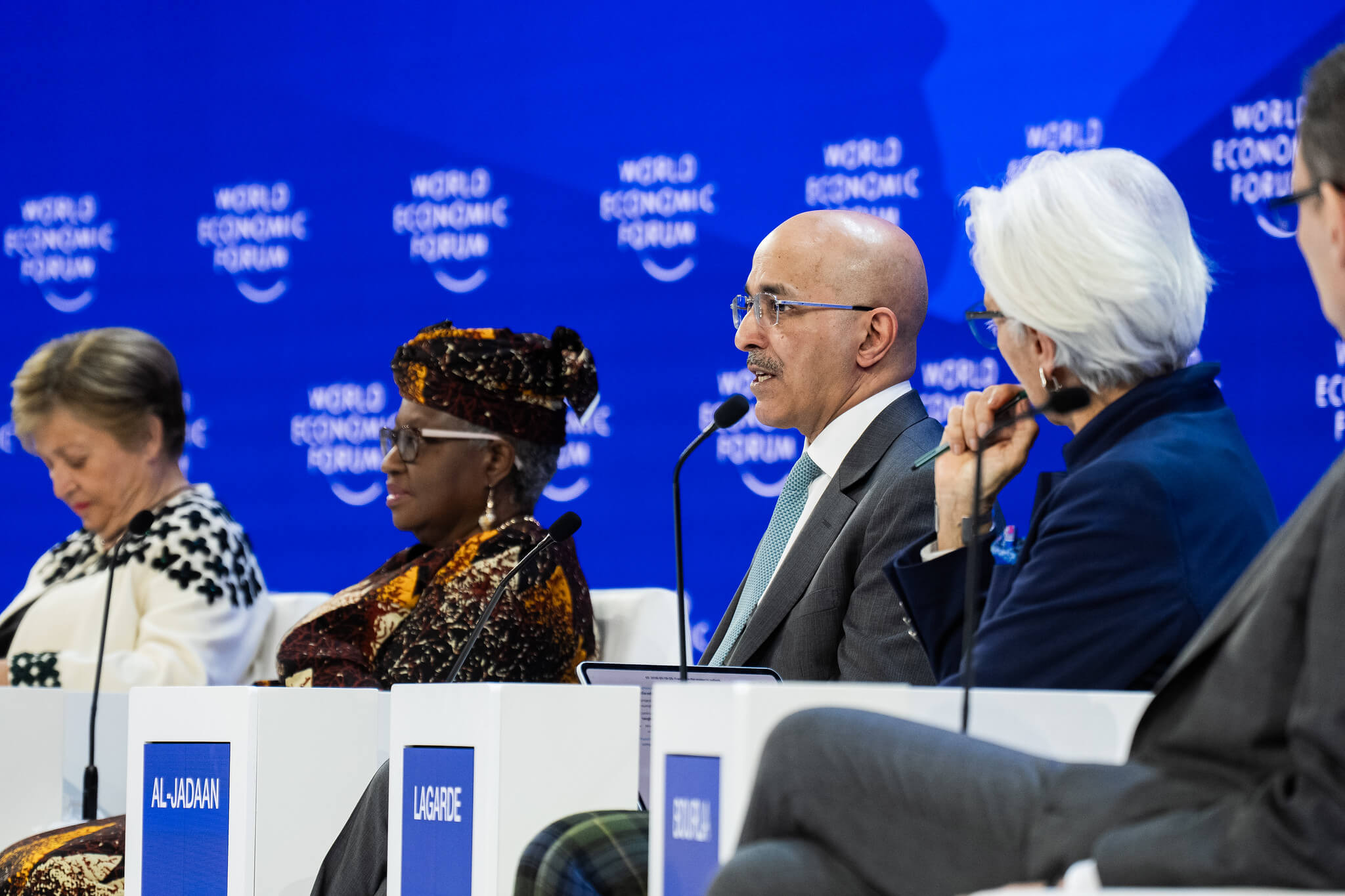
In January, at the World Economic Forum in Davos, Canadian Prime Minister Mark Carney startled audiences with a brutally honest speech describing the international rules-based order as it is—fraught with historical injustice and entrenched structural inequality. He argued that the order, nominally based on rules, predominantly advanced the interests of the Western world.
Then, earlier this month, in February, U.S. Secretary of State Marco Rubio echoed that realism at the Munich Security Conference, arguing that the liberal international system has historically been intertwined with American power and strategic interests. His remarks suggested the end of an era in which the United States portrayed itself primarily as the impartial steward of a universal order. The mask is off.
Two Divergent Visions: Strategic Alliances vs. Inclusive Multilateralism
Nevertheless, from these observations emerged two very different prescriptions. By defining US-EU ties as civilizational and rooted in shared history and heritage, Rubio pointed toward a world of openly interest-driven partnerships—alliances defined less by ideology or common commitment to the rule of law than by culture, consanguinity, and strategic alignment. Carney, by contrast, called for a new coalition of middle powers willing to confront these truths to build a more inclusive and genuinely multilateral system. “The power of the less powerful begins with honesty,” he argued.
Two straightforward acknowledgements of the same reality—supporting two conflicting visions of what the future holds, particularly for the Global South, where the majority of countries have borne a high cost for consistently being rule-followers. This includes ongoing structural inequalities rooted in colonial and imperial endeavours, which are lauded by Marco Rubio, who characterized the post-World War II era of decolonization not as a liberation and emancipation, but as a contraction of Western power.
For decades, the post-World War II era has been dominated by the dichotomy between developed and developing countries, reinforcing the hierarchization of sovereignty. This binary representation of the world, which solidified in the 1940s alongside decolonization, has shaped international relations, fueling and normalizing costly proxy wars and perpetuating the debilitating aid dependency model.
In his extraordinarily candid speech, Carney described the “international rules-based order” as only partially true and, more specifically, a fiction masking Western dominance. “We knew that international laws applied with varying rigour, depending on the identity of the accused or the victim,” he said. Powerful states invoke norms when convenient, ignore them when costly, and rewrite them when challenged. The result is not a rules-based order but a power-based order draped in legal language. Rubio’s intervention, meanwhile, reframed international cooperation not as a universal project but as a set of strategic alignments designed to advance the US national interests. What earlier eras masked in institutional language is now articulated as natural competition.
Recent events have made the gap between rhetoric and reality impossible to ignore, with great powers and their allies treating the sovereignty of some states as negotiable and that of others as sacrosanct. In a matter of days, Western leaders nodded along as one country’s resources were threatened, then rushed to defend another’s territorial integrity as if the two cases had nothing in common. The message was loud and clear: some countries are more equal than others in the hierarchy of sovereignty.

Economic rules have been just as skewed and unprincipled. International trade law is often sold as neutral and universal, but it has consistently favoured wealthier nations. Historically, these countries have maintained subsidies, quotas, non-tariff barriers, and tariffs on products for which developing countries have a comparative advantage (such as textiles and agriculture), while simultaneously promoting free trade in sectors where they have a comparative advantage, from high-end manufacturing to services. Advanced economies have spent hundreds of billions of dollars – estimates put these at over US$600 billion annually – on agricultural subsidies, depressing world prices and driving unsubsidized farmers in poorer countries out of business.
By leveraging trade barriers and subsidies, advanced economies have undermined the core economic principle of comparative advantage, artificially boosting less efficient industries and creating a highly distorted global marketplace that disadvantages low-income countries. The asymmetric enforcement of the international rules-based order has also hindered economic transformation in developing countries. Green subsidy disparities have become a fault line between advanced and developing countries over the growth of green industries and the pace of the transition to clean energy. At the same time, the Agreement on Trade-Related Aspects of Intellectual Property Rights (TRIPS) has created barriers to technology transfer and undermined industrialization, which has historically acted as a catalyst for prosperity.
The Financial Toll: Capital Flight and the Debt-Poverty Trap
Finally, the asymmetric allocation of risk and risk perceptions has created another economic anomaly—the Lucas paradox, in which capital flows from poor nations with low capital-per-worker to capital-rich developed countries, contradicting traditional economic models. The default-driven borrowing rates assigned to developing countries require them to pay disproportionately higher interest rates—often 5-10% higher per year than those paid by high-income countries.
The consequences of the asymmetric implementation of international rules have been devastating. The purported rules-based order has tilted the development playing field, slowed economic transformation, distorted markets, entrenched structural inequality, and perpetuated the debt-poverty trap. It has fueled proxy wars in Africa, Latin America, and the Middle East, where millions have paid with their lives in contests between distant powers. It has also corroded the legitimacy of the system itself, breeding cynicism and resentment that now extend well beyond the Global South.
For years, developing countries have pleaded for reform. They have argued that the rules restrict their policy space, stifle their development ambitions, and expose them to external shocks they did not create.
By acknowledging the gap between rhetoric and reality, Carney implicitly strengthened calls from developing countries for reform rather than for blind adherence to rules that have never delivered fairness and are unlikely to set the world on the path of global convergence.
Forging a New Path: Agency and Honesty in a Multipolar World
Recognizing a lie is only the first step in ceasing to live within it. As Václav Havel put it, the real power of the powerless lies in refusing to repeat the slogans that everyone knows are false. But the emergence of a truly equitable international rules-based order hinges on transcending the developed-developing country dichotomy, which has confined countries to predetermined roles tied to the hierarchization of sovereignty, an imperial legacy.
The power of the less powerful begins with honesty. Honesty and fundamental respect for human dignity and national sovereignty by all—both the most powerful and the less powerful—are also essential to projecting humanity into the post-colonial world of consistent enforcement of rules and international laws. It may also strengthen the foundation of institutional credibility at the global level, rekindling multilateralism.
However, honesty, as a fundamental virtue, requires more than mere rule compliance; it also demands consistency and institutional coherence. Just weeks into 2026, this honesty has manifested in two directions: Carney’s call to rebuild the system on genuinely inclusive foundations and Rubio’s acknowledgement that the international order will, at least for the foreseeable future, be influenced by national interests amid overt strategic rivalry. The question for the Global South is no longer whether the old order was unequal but how to navigate a new era in which power speaks more plainly and to assert its own agency within it.
Dr. Hippolyte Fofack, a former chief economist and director of research at the African Export-Import Bank and a former World Bank economist, is an SDSN Parker Fellow at Columbia University, a distinguished fellow at the Global Federation of Competitiveness Councils, and a fellow at the African Academy of Sciences.